Why this test (and what it really measures)
“Work–life balance” is neither a moral concept nor an aesthetic ideal. It’s an indicator of sustainability: how well your system (body, attention, motivation) can hold up over time, given how you work, recover, and handle daily demands.
This test doesn’t evaluate how “good” you are at organizing yourself. Instead, it looks for hidden patterns that often precede performance dips, irritability, emotional detachment from work, and intentions to leave (turnover).
The three profiling axes (mandatory)
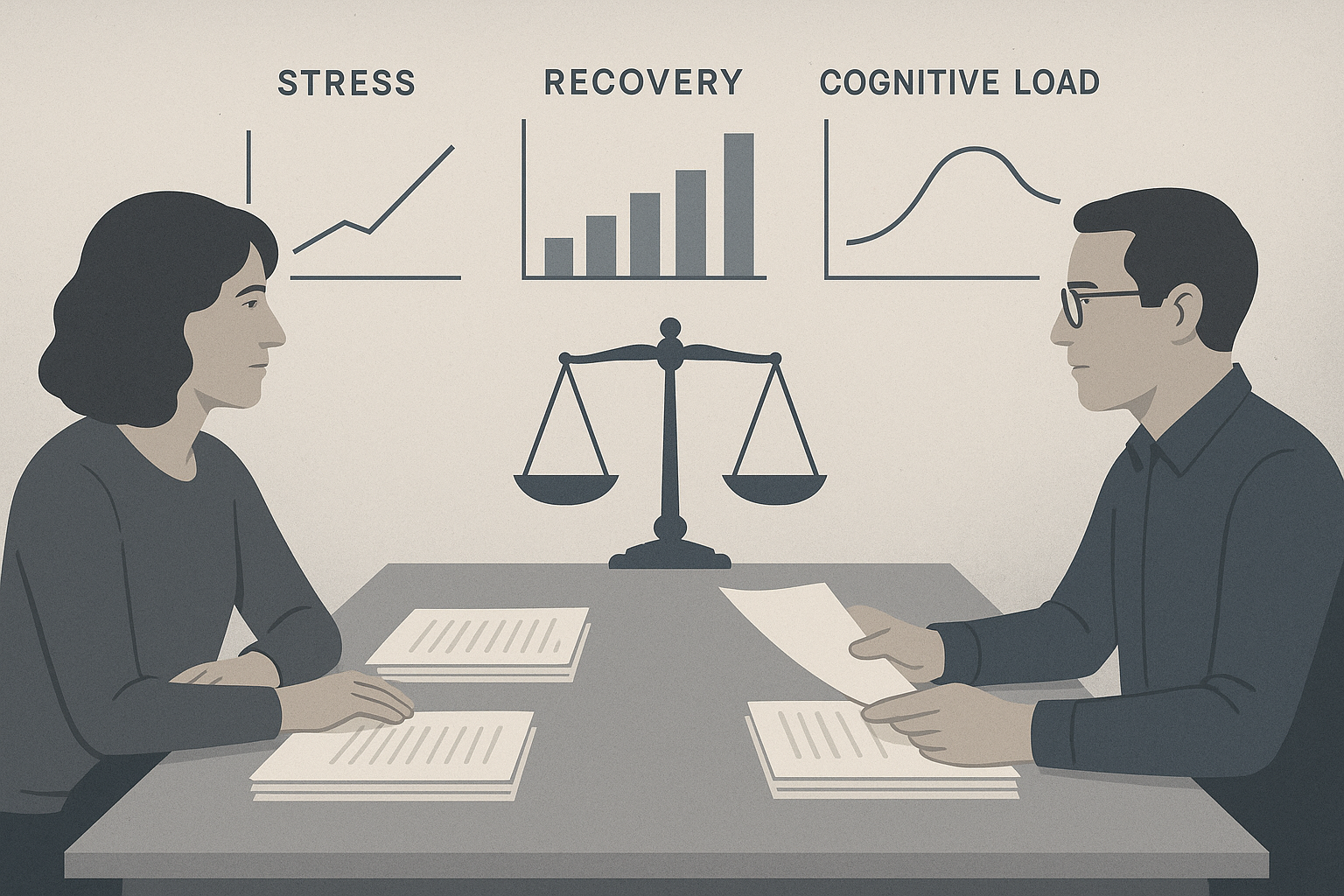
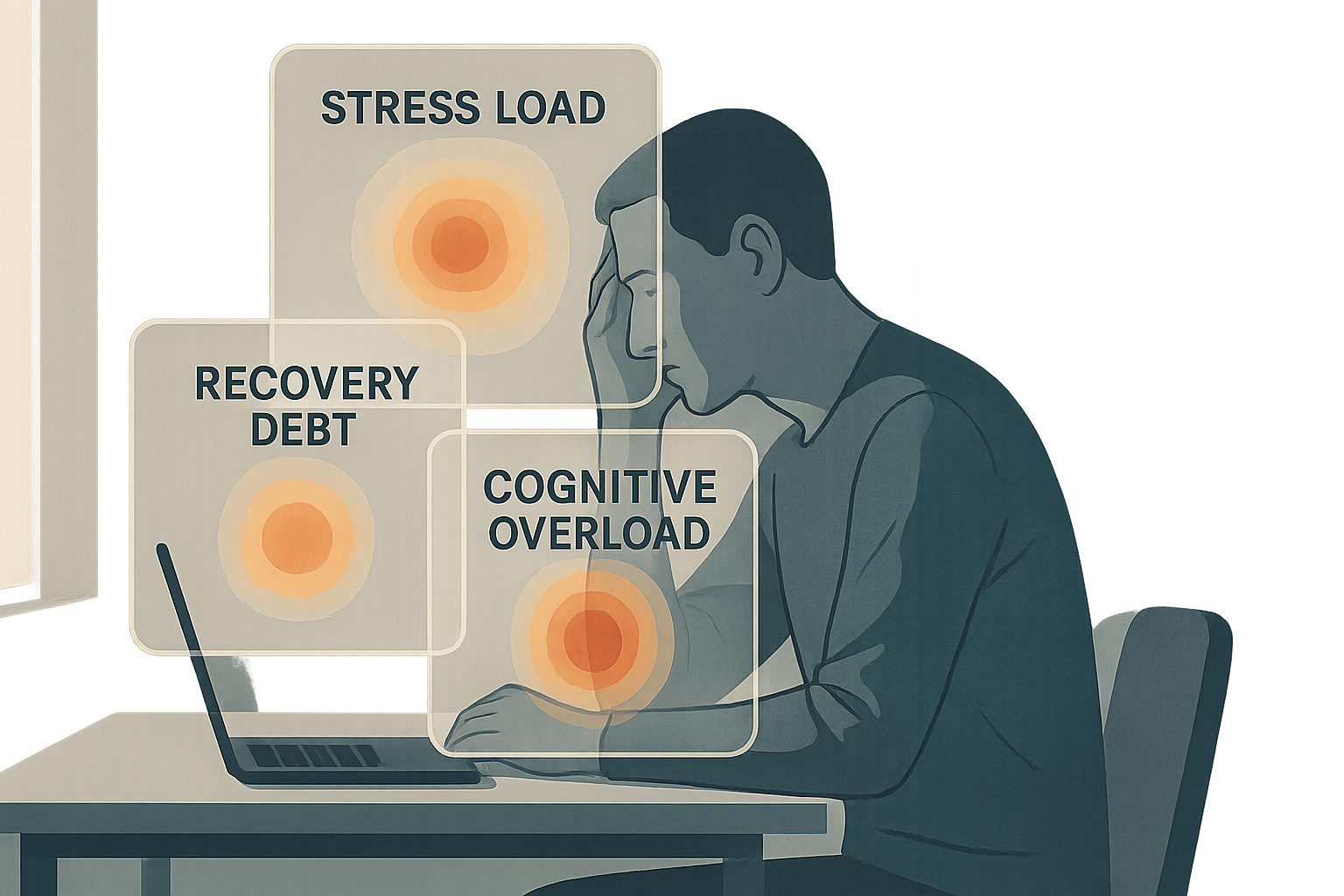
1) Stress load (axis_stress_load)
Measures how much pressure you’re absorbing: urgency, conflict, ambiguity, responsibility, unpredictability. It’s not just “how much you work,” but how much your work activates you (physiologically and mentally).
2) Recovery debt (axis_recovery_debt)
Measures the gap between what you expend and what you restore. Recovery isn’t the same as “lying on the couch”: it includes sleep, mental decompression, the quality of breaks, and your ability to switch off and come back with energy.
3) Cognitive overload (axis_cognitive_overload)
Measures how saturated your attention and decision-making capacity is: interruptions, multitasking, fragmented context, too many micro-decisions, always-on channels. It’s one of the main predictors of errors, procrastination, and emotional fatigue.
How to interpret results (without oversimplifying)
- High stress + Low recovery: risk of becoming chronic (irritability, light sleep, reduced tolerance for effort). It’s not a “lack of resilience”: it’s a negative energy balance.
- Medium stress + High cognitive overload: often shows up as “I’m always busy but I get little done.” The issue may be fragmentation, not the amount of work.
- High stress + High overload: a profile with high vulnerability to disorganization, conflict, and decision fatigue. Here, boundaries (hours, channels, priorities) become a matter of mental hygiene.
- Low recovery with not-very-high stress: suggests recovery is inefficient (non-restorative sleep, rumination, only apparent “switching off”). It’s a common pattern in cognitive roles.
What makes this test useful for turnover risk
Turnover rarely happens “all of a sudden.” More often, it’s the outcome of a sequence: load increases, recovery doesn’t compensate, attention fragments, and finally there’s a loss of meaning/control. This test aims to catch the phase where you can still intervene with realistic choices (not slogans).
Usage guidelines
- Answer with the last 2–3 weeks in mind, not an exceptional day.
- If you’re in an unusual period (closures, extraordinary deliveries), answer anyway: the test is also meant to measure your ability to hold up during a peak.
- Don’t aim for narrative consistency: if contradictions emerge, they’re often the most interesting data.
Related deep dives
If you want to complement your profile reading with a broader view, you can explore: