Why take a test on fair dispute resolution
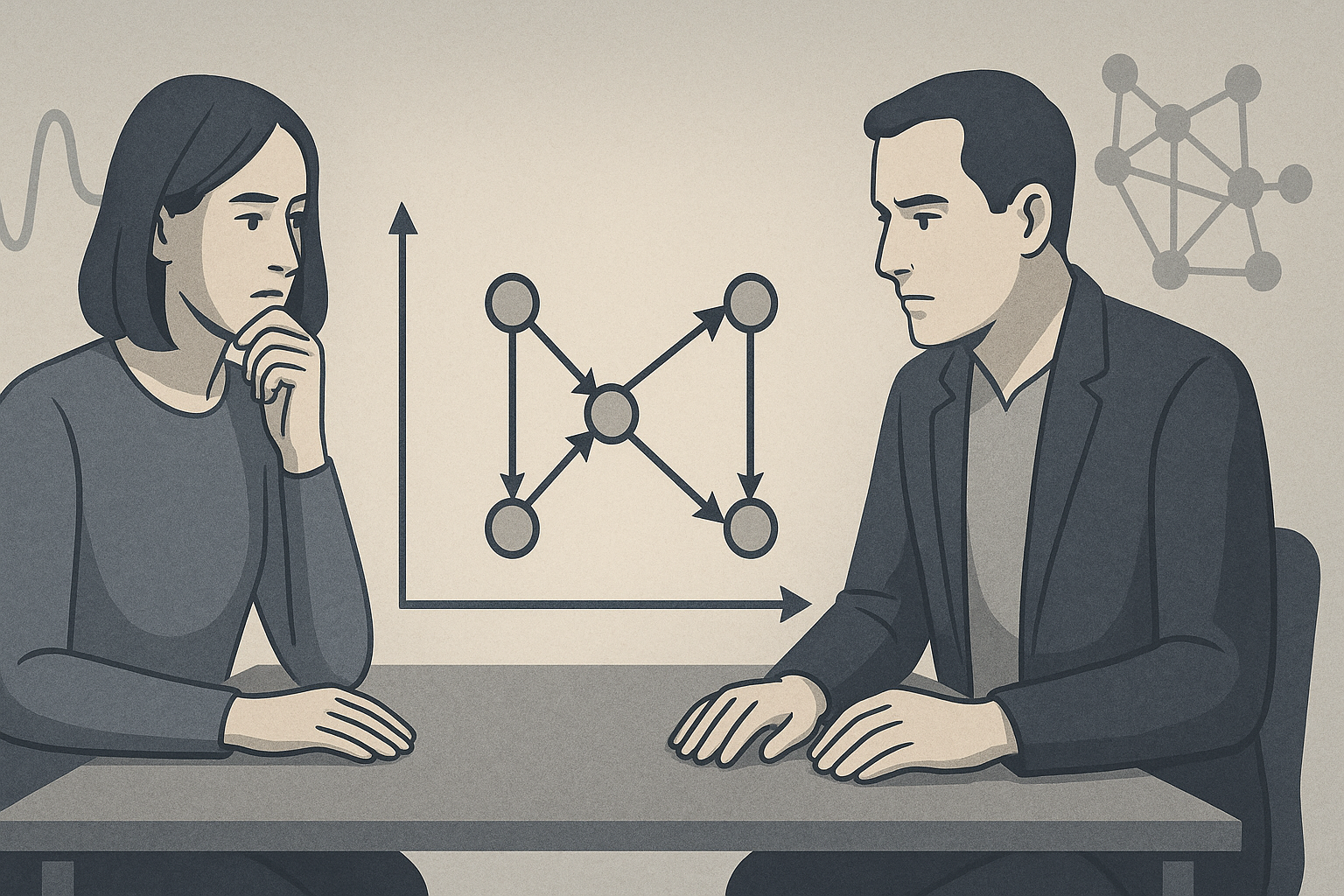
“Justice” in a dispute doesn’t depend only on moral principles or communication skills. It also depends on psychophysiological states (arousal, fatigue, recovery) and on cognitive constraints (attention, working memory, ability to integrate information). When these systems are under pressure, the following tend to increase:
- impulsive decisions (wrapping things up quickly, punishing, giving in out of exhaustion);
- unrecognized power asymmetries (whoever tolerates stress better “wins”);
- attribution errors (reading the other person as “acting in bad faith” rather than being under load);
- loss of traceability (not remembering what was agreed to and why).
This test isn’t meant to “prove you right.” It’s meant to map how you make decisions in conflict and which conditions lead you to be fairer, more rigid, or more accommodating.
What it measures (and what it doesn’t)
Measures
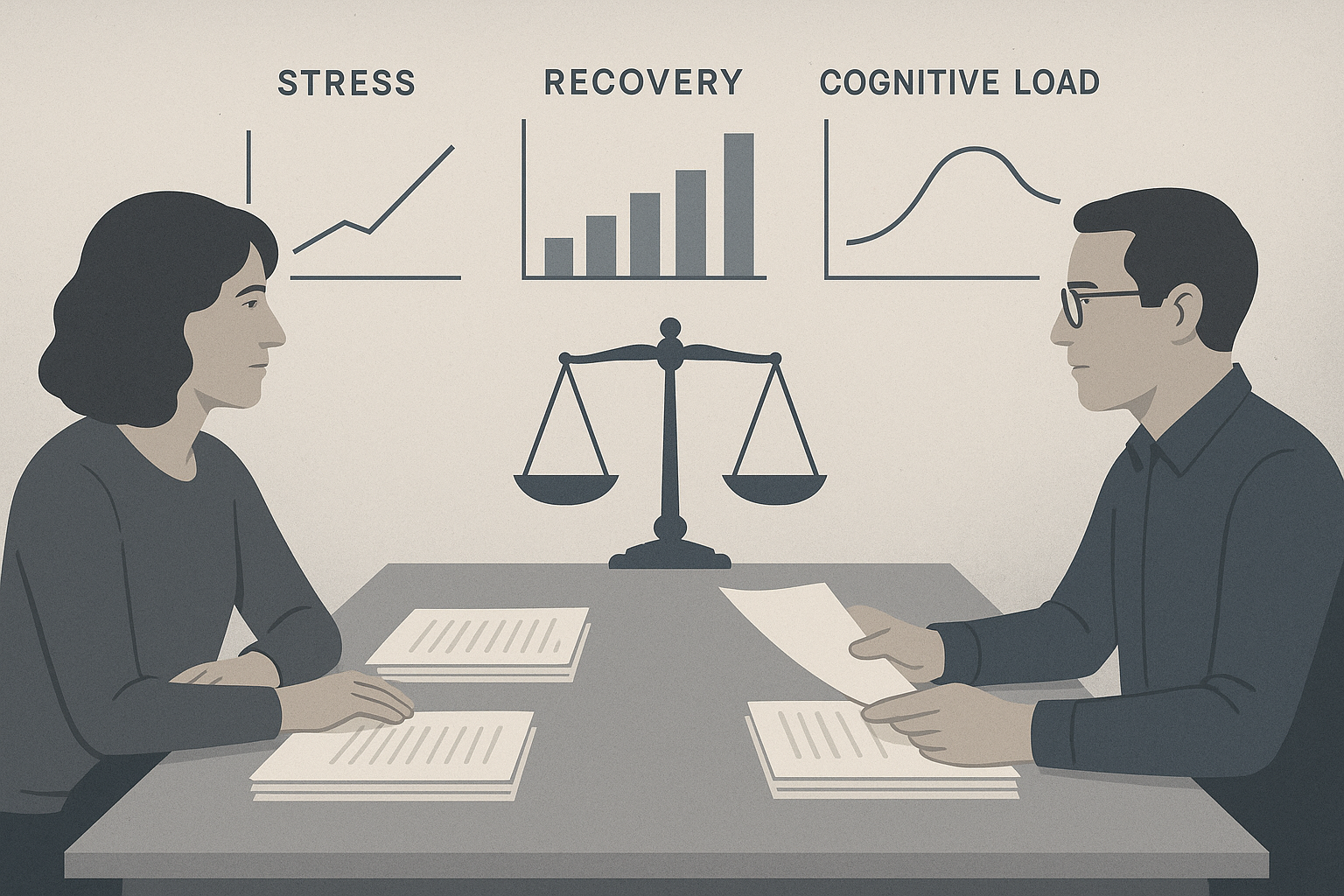
- axis_stress_load: how much conflict activates you and drains you in the short term (tension, reactivity, urgency to end it).
- axis_recovery_debt: how much it lingers afterward (rumination, disrupted sleep, residual irritability, drop in energy).
- axis_cognitive_overload: how much you lose integrative reasoning capacity during the dispute (confusion, oversimplification, “decision tunnel”).
Doesn’t measure
- Who is “right” in a specific dispute.
- Your morality or your personal worth.
- Clinical diagnoses.
How to answer to get a useful profile
- Think of real disputes from the last 3–6 months (work, partner, family, friendships).
- Answer based on what you usually do, not what you wish you did.
- If you see yourself in two options, choose the one that happens when you’re tired or under pressure: that’s where patterns show up.
If you want to explore your results more broadly, you can connect this test to a stress profile or to a reading on recovery. (Optional links: not required to complete the test.)
What “fair” means in a dispute (operationally)
In this test, “fair” doesn’t mean “meeting halfway” or “being nice.” It means:
- explicit criteria (rules, evidence, precedents, measurable impact);
- procedural symmetry (same time, same standard of proof, same chance to respond);
- proportionality (consequences consistent with the harm and with intent);
- traceability (verifiable agreements, clear definitions, follow-up).
As stress, recovery debt, and cognitive overload increase, the mind tends to replace these criteria with shortcuts: “who insists more,” “who makes me feel worse,” “who is like me,” “who rushes me.”
Expected output
At the end, you’ll get a profile on three axes. The value lies in seeing which combination makes you vulnerable to:
- escalation (increased harshness and conflict),
- capitulation (giving in to end it),
- opaque negotiation (unsustainable or unverifiable agreements).
If you want, you can then compare the results with conflict styles to understand how your internal states influence the strategy you adopt.