Supplements & Functional Nutrition
Unstable energy throughout the day: stress, recovery, and cognitive overload
Assess why you struggle to sustain energy throughout the day: stress load, recovery debt, and cognitive overload. Results oriented toward awareness and autonomy.
Why this test exists
Difficulty maintaining energy throughout the day is rarely “just tiredness.” It’s often a pattern that emerges from the interaction between stress load, recovery debt, and cognitive overload. At the same time, diet, hydration, stimulants, and meal timing can amplify or dampen physiological fluctuations (e.g., post-meal sleepiness, caffeine “crashes,” changes in attention).
This test does not provide a diagnosis and does not replace a clinical evaluation. It is designed to map signals, identify plausible imbalances, and clarify what to observe before making nutritional changes or adding supplements.
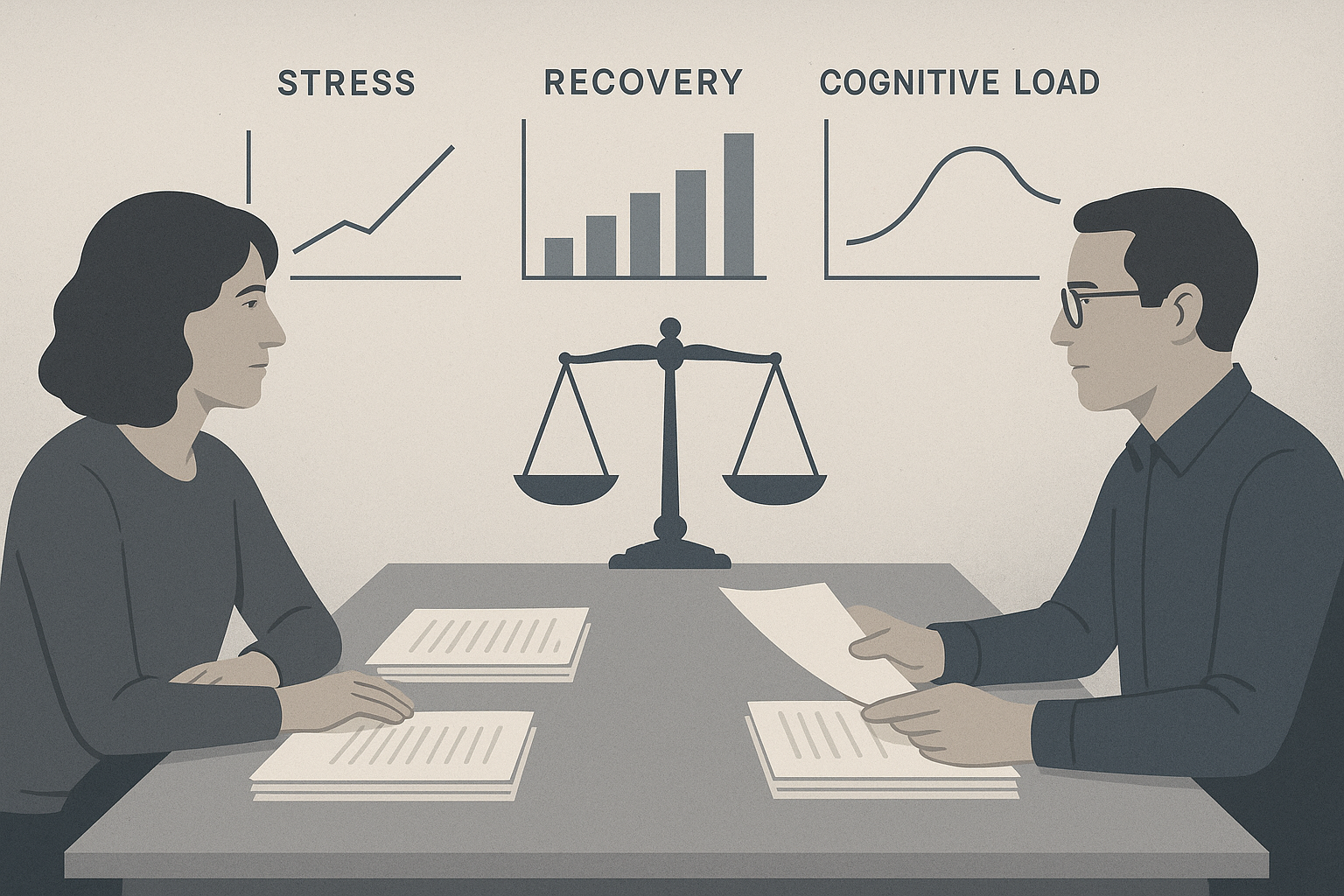
What we measure (three required axes)
-
Stress load (axis_stress_load)
How much your system is exposed to ongoing demands (urgency, conflict, multitasking, internal pressure). A high load can sustain sympathetic activation and affect appetite, sleep quality, and how fatigue is perceived.
-
Recovery debt (axis_recovery_debt)
How much recovery you “lack” relative to what you expend: insufficient or fragmented sleep, poor decompression, training that isn’t adequately compensated for, ineffective breaks. Recovery debt often shows up as unstable energy, irritability, cravings, and reduced stress tolerance.
-
Cognitive overload (axis_cognitive_overload)
How saturated your mind is with decisions, inputs, and task switching. It’s not just “a lot to do”: it’s a lot to manage. Cognitive overload consumes attentional resources and increases the likelihood of reactive food choices (sugars/stimulants) that can worsen energy swings.
How to answer to get a useful profile
- Answer with the last 2–3 weeks in mind, not your “best” or “worst” day.
- If you’re in an atypical period (flu, jet lag, shift work), note it mentally: the profile may reflect a temporary phase.
- Don’t look for the “right” answer: what matters here is consistency across signals.
Interpretation: what you might discover
Based on your answers, the test highlights common combinations:
- High stress + low recovery: “spiky” energy, irritability, non-restorative sleep, reliance on stimulants.
- Low recovery + cognitive overload: early mental fatigue, procrastination, difficulty starting/finishing tasks, afternoon “brain fog.”
- High stress + cognitive overload: mental hyperactivity, difficulty switching off, stress eating or forgetting meals, an evening crash.
If you want to go deeper in a targeted way, you can explore internal resources such as stress and recovery or sleep and circadian rhythm. (Optional links: they will be shown only if available.)
Note on functional nutrition and supplements
When energy is unstable, the temptation is to “add something” (caffeine, adaptogens, nootropics, fast sugars). In many cases, however, the supplement becomes a compensator for an imbalanced axis (stress/recovery/overload). The value of this test is to help you understand what kind of compensation you’re relying on—and at what cost (sleep, anxiety, crashes, appetite).
If significant signals emerge (marked sleepiness, sudden drops, palpitations, unintentional weight loss, excessive thirst, suspected anemia), consider speaking with a physician and/or getting targeted tests before starting any protocol.
Frequently asked questions
Does this test tell me which supplement to take to have more energy?
No. The test doesn’t prescribe supplements. It identifies patterns in stress, recovery, and cognitive overload that often drive energy instability. If supplements are used, they should be a secondary choice and consistent with the profile that emerges (and with any clinical evaluation).
Why do you measure stress and mental load if the topic is “energy”?
Because perceived energy doesn’t depend only on calories or sleep: it also depends on how much activation and mental load you’re sustaining. Stress and overload increase the use of attentional resources, worsen recovery quality, and make compensatory strategies (caffeine, quick snacks) more likely—strategies that can amplify crashes.
Does an energy drop after lunch mean I have a blood sugar problem?
Not necessarily. Post-meal sleepiness can depend on meal size and composition, timing, sleep quality, sedentary behavior, dehydration, and stress load. If the drop is intense, recurrent, and associated with tremors, sweating, urgent hunger, or confusion, it makes sense to talk to a professional and consider tests.
Caffeine helps me but then I crash: is it just tolerance?
Tolerance is one possibility, but not the only one. A “crash” can reflect a recovery debt, late caffeine use (with an impact on sleep), taking it on an empty stomach, or an activation/compensation pattern: you push when you’re depleted and pay for it later. The test aims to clarify which driver is fueling the cycle.
How much does sleep matter compared to nutrition?
Often more than people think, because sleep regulates attention, appetite, stress sensitivity, and perceived fatigue. However, even decent sleep may not be enough if stress load and cognitive overload remain high, or if the timing of meals and stimulants creates fluctuations.
If my profile comes out “high” on multiple axes, where do I start?
In general, you start with the axis that creates the most day-to-day instability: often recovery debt (sleep, breaks, decompression) because it’s the foundation that makes stress and mental load more manageable. But the priority depends on your signals: the test is meant to make that choice less arbitrary.
Is this test suitable if I work shifts or have irregular hours?
Yes, but interpret the results with the understanding that circadian variability and sleep fragmentation can artificially raise the recovery-debt and stress-load scores. In these cases, it’s useful to observe patterns over multiple weeks and distinguish “shift days” vs “days off.”
When is it better to seek a medical evaluation instead of doing self-analysis?
If you have significant or new symptoms (palpitations, shortness of breath, fainting, sudden drops with confusion, unintentional weight loss, bleeding, persistent low-grade fever), if your energy has been drastically reduced for weeks, or if you suspect anemia, thyroid issues, blood sugar problems, or sleep disorders. Self-analysis is useful, but it shouldn’t delay a clinical evaluation.