Why this test exists
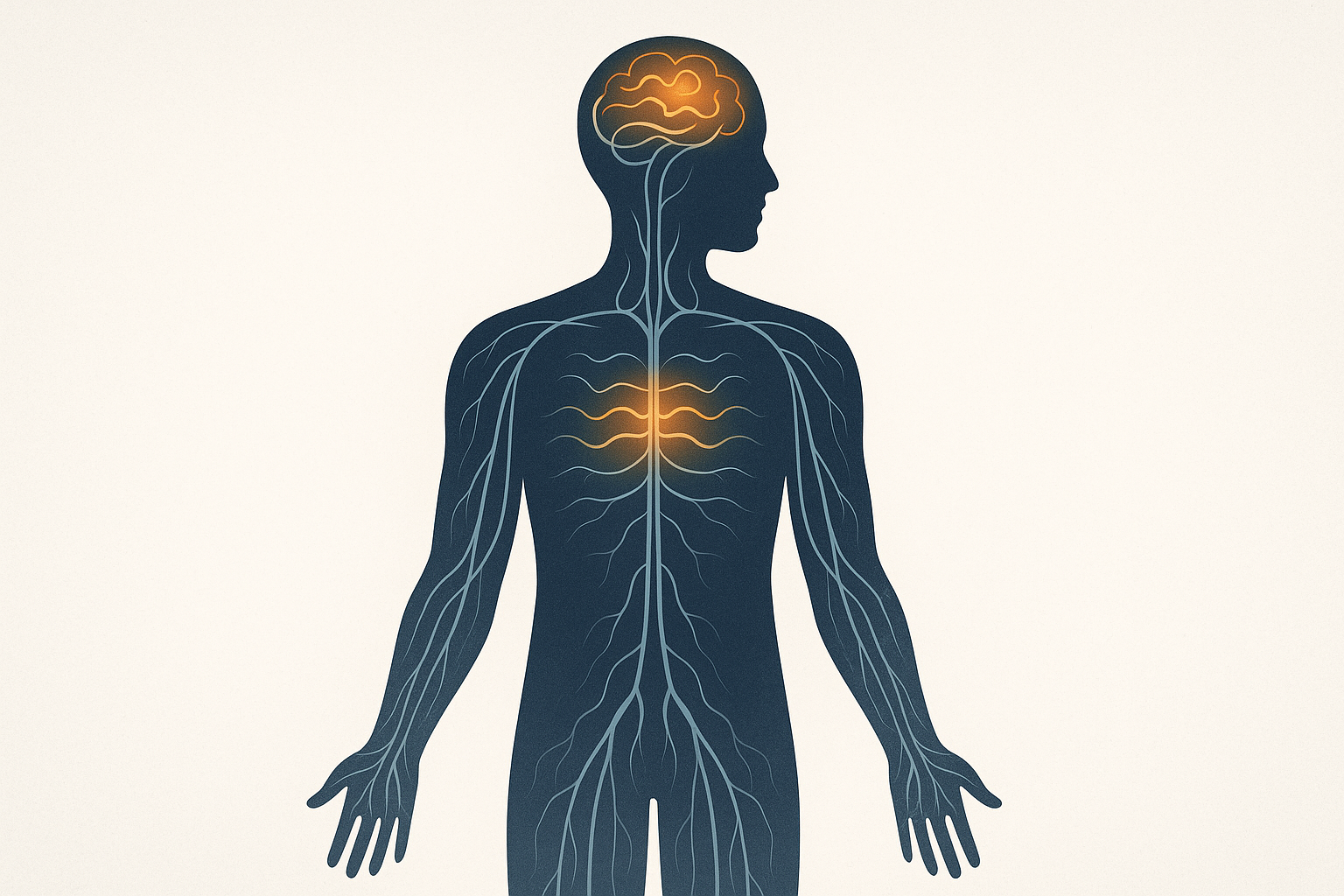
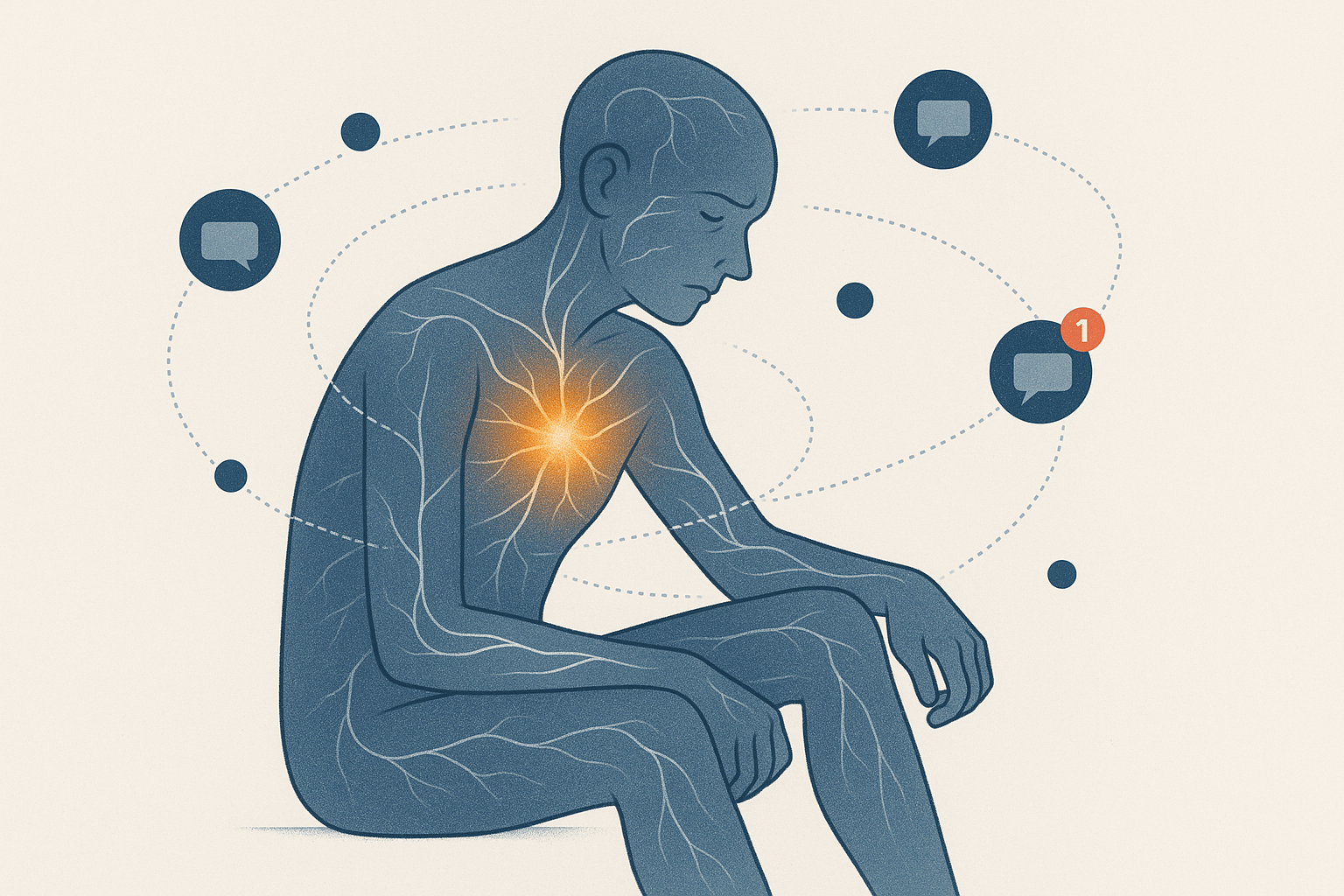
“I can’t slow down” isn’t just a figure of speech: it often reflects a neurophysiological setup (high activation), a behavioral pattern (urgency, control, hyper-responsibility), and an environment (constant stimulation) that reinforce one another.
This test doesn’t measure your “willpower.” It maps three dimensions that, together, explain why slowing down can feel impossible—or even threatening:
- Stress load: how much pressure (external and internal) you’re carrying.
- Recovery debt: how much energy you’re lacking to return to a stable baseline.
- Cognitive overload: how much mental capacity is taken up by tasks, decisions, information noise, and self-monitoring.
What you’ll get (and what you won’t)
You’ll get
- A structured reading of your patterns: activation, recovery, overload.
- Imbalance indicators: early warning signs vs. late-stage signs.
- Language to describe what’s happening to you without reducing it to “that’s just how I am.”
You won’t get
- A clinical diagnosis.
- Generic advice like “breathe and go for a run.”
How to answer to get a useful profile
- Answer with the last 2–3 weeks in mind, not an exceptional day.
- If you’re torn between two options, choose the one that describes what happens most often.
- Don’t judge whether a behavior is “right”: assess whether it’s automatic and what it costs you.
Methodological note: some questions distinguish between being “very active” and being “hyperactivated.” The difference is recovery: if you can switch off, you’re not trapped.
Interpretation: three dimensions, one system
Difficulty slowing down often arises from specific combinations:
- High stress load + High recovery debt: the body asks for a break, but activation stays high. Typical: fatigue with restlessness.
- High stress load + High cognitive overload: the mind doesn’t “close loops.” Typical: rumination, multitasking, decision fatigue.
- High recovery debt with moderate stress: it’s not just “too much to do”; it’s insufficient recovery (sleep, quality breaks, decompression).
If you want to go deeper after the test, you can consult: Guide to stress load and Guide to recovery.
Signals often mistaken for “personality”
- Internal urgency: doing things to reduce tension, not by choice.
- Intolerance of pauses: emptiness triggers restlessness or guilt.
- Preventive control: anticipating everything so you don’t feel vulnerable.
- Ineffective recovery: “I rest,” but I stay mentally switched on.
When it makes sense to take the result seriously
If the test highlights high scores on one or more dimensions, it doesn’t mean you’re “wrong.” It means your system is operating at a high cost. Sustained cost tends to show up in three areas:
- Physiology: fragmented sleep, tension, somatization, irregular appetite.
- Cognition: difficulty prioritizing, overloaded working memory, irritability from overload.
- Behavior: hyperproductivity, “anxious” procrastination, difficulty delegating.
For a targeted deep dive into mental overload: Guide to cognitive overload.
Privacy and data use
Your answers are used to generate a personal profile. Avoid entering identifying information in open-ended responses (if any). If you’re experiencing intense symptoms or rapid worsening (severe insomnia, panic attacks, thoughts of self-harm), consider seeking qualified clinical support.