Why this test
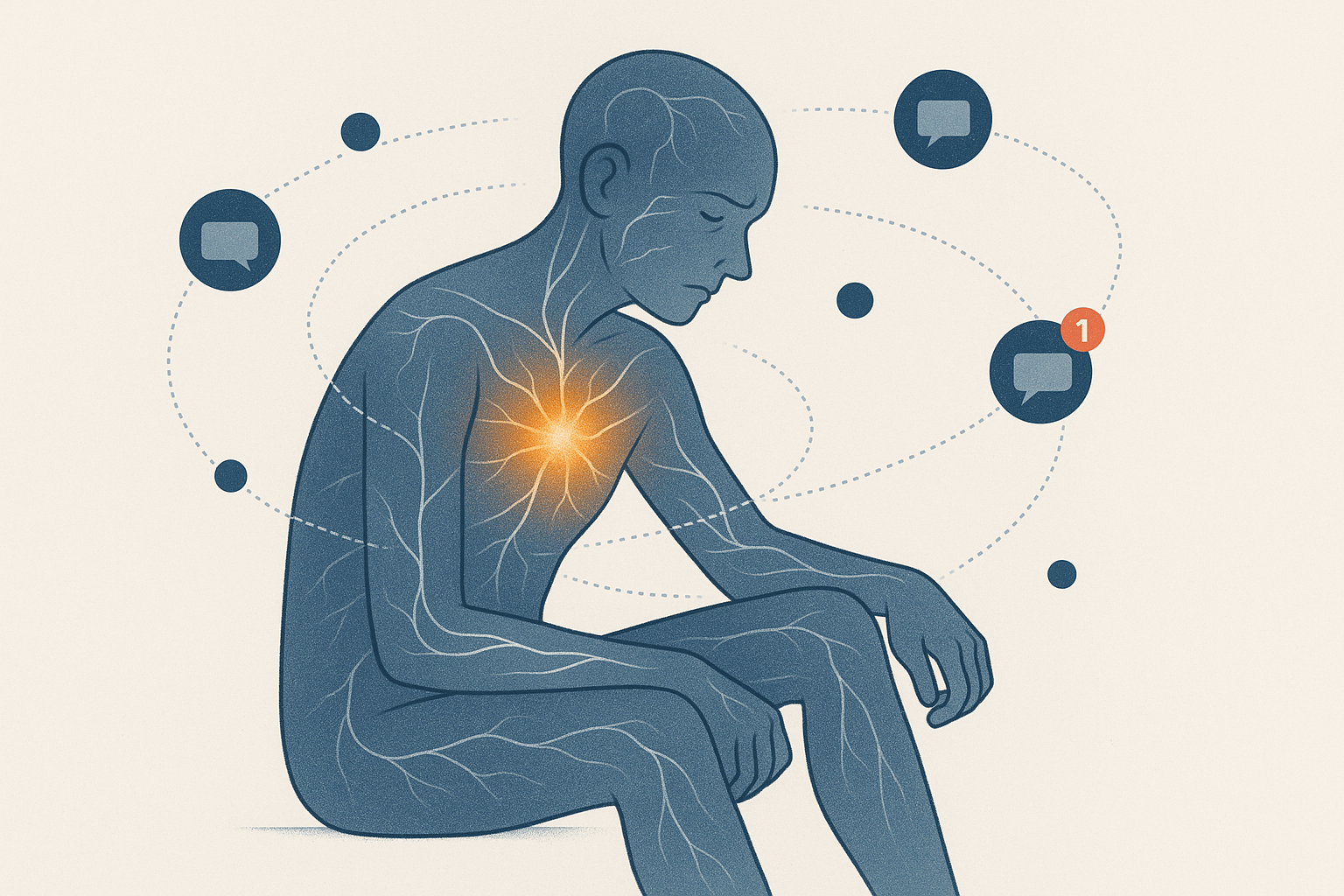
Internal agitation with no apparent reason is often described as a “background” tension: the body stays on alert, the mind searches for a cause, but can’t find one. In many cases, it’s not that there’s no reason—it’s that there’s no obvious reason. The nervous system can remain activated due to cumulative strain, insufficient recovery, or cognitive saturation, even when life “seems normal.”
This test isn’t meant to entertain or to label you. It’s meant to map patterns that often slip under the radar: subtle physiological signals, recovery habits, and ways of managing attention and control.
What it measures (and what it doesn’t)
Profiling axes
- Stress load (axis_stress_load): perceived pressure, reactivity, signs of hyperactivation.
- Recovery debt (axis_recovery_debt): the quality/continuity of rest, decompression, and the ability to “return to baseline.”
- Cognitive overload (axis_cognitive_overload): attentional saturation, rumination, multitasking, difficulty closing mental loops.
How to interpret it properly
The result is not a diagnosis. It’s a structured hypothesis about how your internal activation is organized. Its value lies in distinguishing three common scenarios:
- High stress with still-adequate recovery: “reactive” agitation, often tied to contexts and deadlines.
- Recovery debt: “baseline” agitation—more constant—with a lower tolerance threshold.
- Cognitive overload: “mental” agitation, with difficulty switching off your thoughts and completing tasks.
How to answer
- Answer with the last 2 weeks in mind, not a single day.
- If you’re torn between two options, choose the more frequent one.
- Consider both body (sleep, tension, breathing) and behavior (avoidance, control, hyperproductivity).
Typical signals this test helps clarify
Physiology
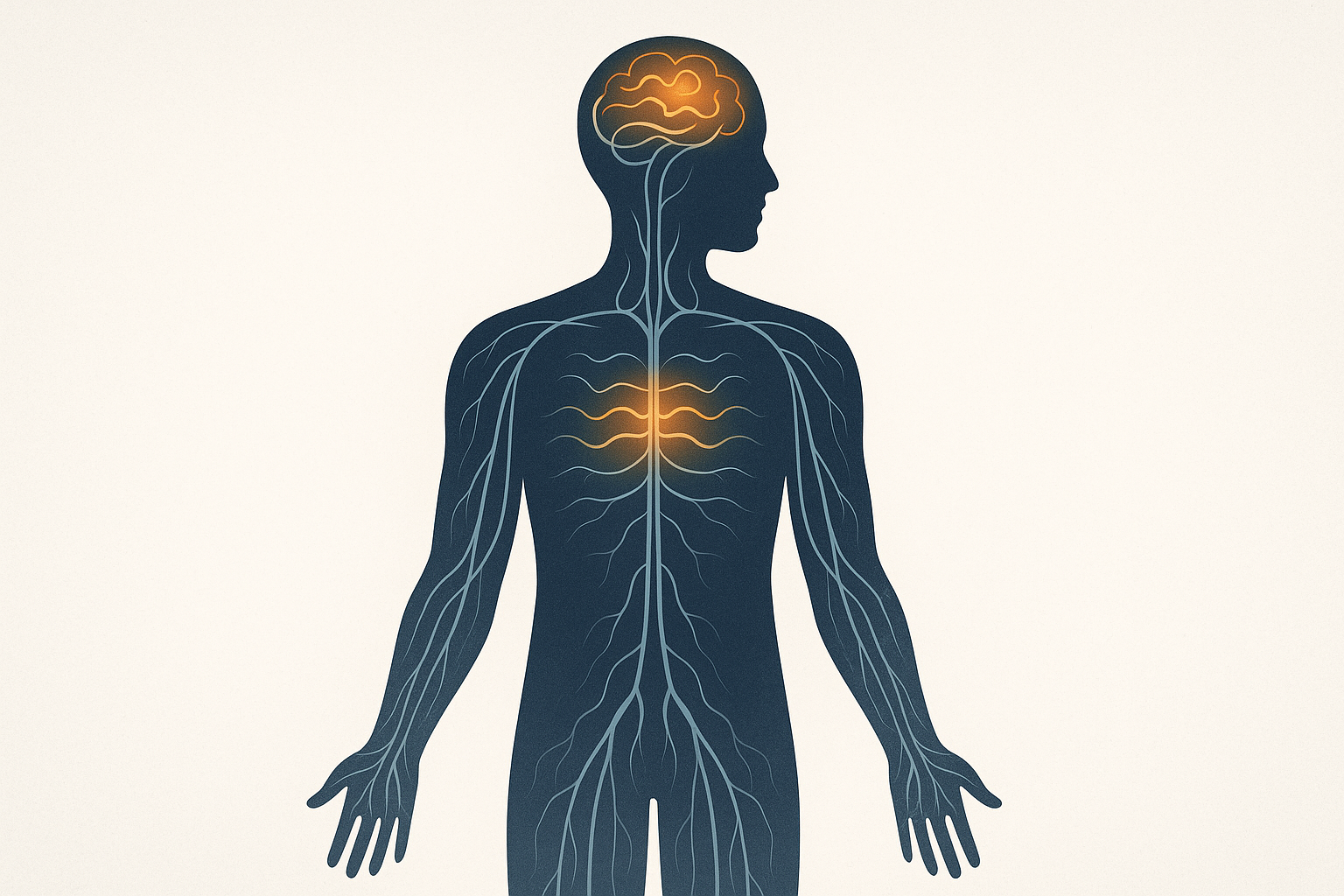
- chest tightness or a “knot” in the stomach without a triggering event
- rapid, shallow breathing; difficulty fully exhaling
- motor restlessness (legs, hands), micro-contractions
- non-restorative sleep even with enough hours
Behavior and cognition
- the need to check, anticipate, “keep everything under control”
- rapid task-switching, difficulty finishing
- rumination: mentally replaying conversations, scenarios, decisions
- a sense of urgency even when there’s no real urgency
When it’s appropriate not to stop at the test
If agitation is accompanied by chest pain, significant shortness of breath, fainting, persistent tachycardia, or if it significantly interferes with work, relationships, or sleep, it’s wise to speak with a healthcare professional. This test can help describe the picture more clearly—it doesn’t replace a clinical evaluation.