Nervous System & Recovery
Test: difficulty relaxing deeply
Assess stress load, recovery debt, and cognitive overload that can make it hard to truly relax. Results with profiling axes and practical, non-superficial guidance.
Why this test exists
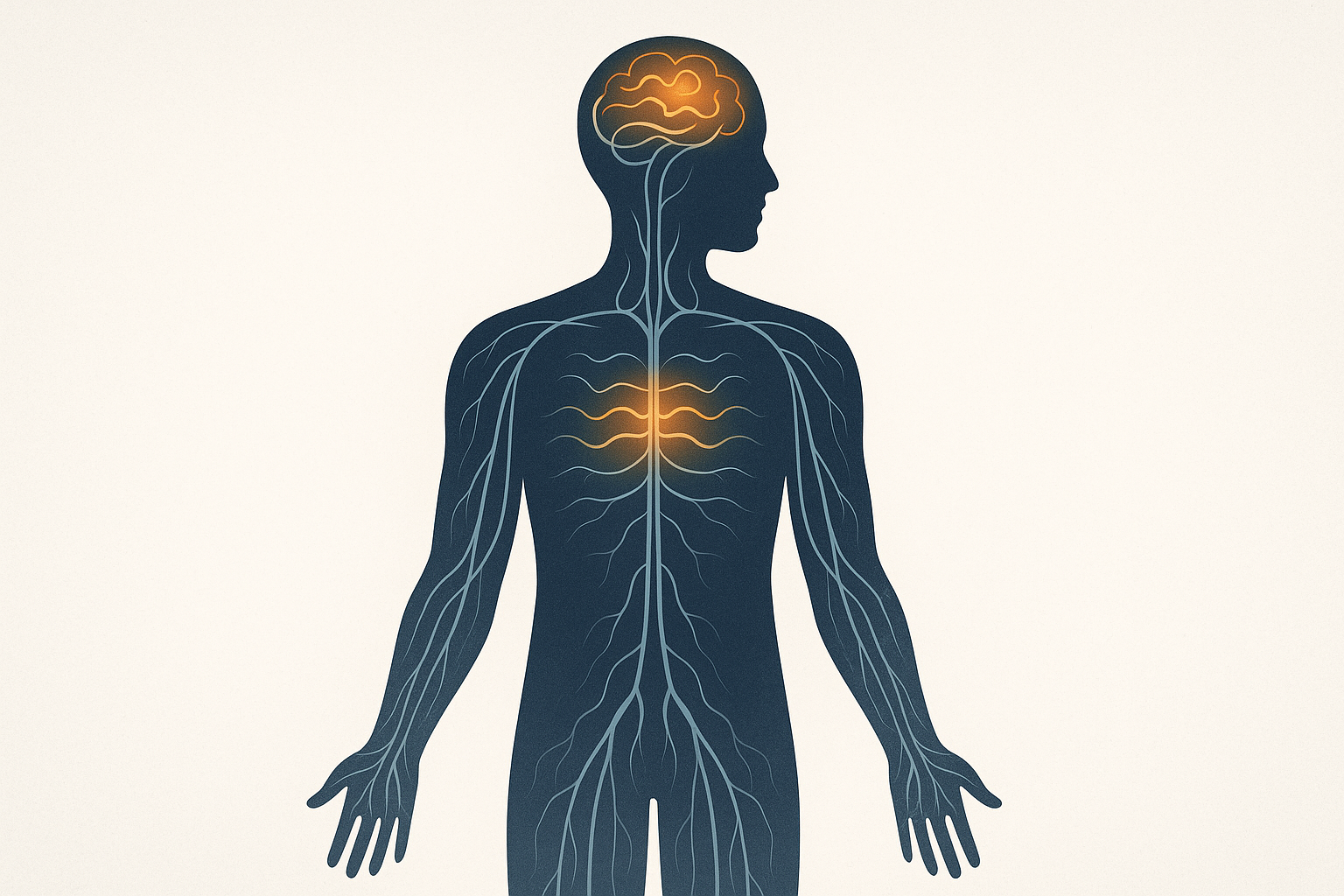
“Relaxing” isn’t a matter of willpower: it’s a neurophysiological shift in state. When the nervous system stays in alert mode, you may stop, but you don’t recover. This test doesn’t measure your generic “ability to switch off”: it explores three axes that often overlap and that, together, explain why rest doesn’t translate into regeneration.
What it assesses (and what it doesn’t)
It assesses
- Stress Load axis: how much stress load (physical, emotional, organizational) you’re carrying, and how continuous it is.
- Recovery Debt axis: how much “missed” recovery you’re accumulating (sleep, breaks, decompression, quality of rest).
- Cognitive Overload axis: how much cognitive pressure is active (rumination, multitasking, information input, decision fatigue).
It does not assess
- Clinical diagnoses (anxiety, depression, sleep disorders). If symptoms are intense or persistent, consider speaking with a professional.
- “Willpower” or personal morality: hyperactivation is not a character flaw.
How to answer to get a useful profile
- Answer with the last 2–3 weeks in mind, not your best or worst day.
- If you’re unsure between two options, choose the one that reflects the most common frequency.
- Don’t aim for narrative consistency: here we care about physiological consistency (sleep, tension, attention, recovery).
How to read the results (the logic of the three axes)
Difficulty relaxing deeply tends to show up in three typical configurations:
- High Stress Load: the alert state is “justified” by real, ongoing demands. The issue isn’t relaxing; it’s that there’s no window to do it.
- High Recovery Debt: stress may not even be extreme, but recovery is insufficient or low-quality. The system remains “behind.”
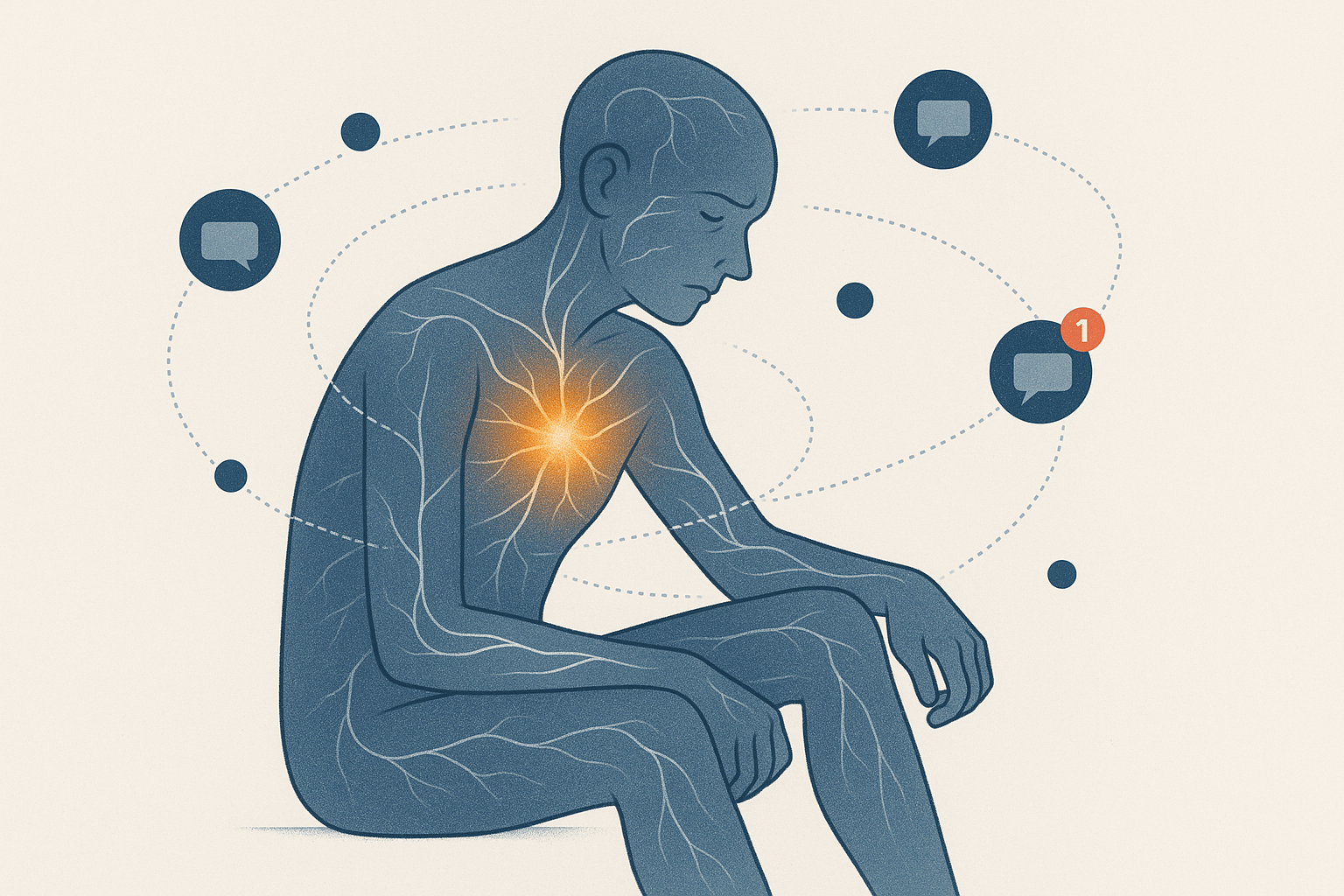
- High Cognitive Overload: the body may be still, but the mind stays active (analysis, anticipation, control). Relaxation is undermined by residual cognitive activity.
The key is understanding which axis is driving the others. Targeting the wrong axis often leads to frustration: for example, adding more relaxation techniques when the real issue is sleep debt can produce minimal and unstable benefits.
Practical (non-generic) guidance after the test
Based on your profile, the platform will suggest micro-interventions aligned with the dominant axis. Examples of directions (not “quick tips”):
- If Stress Load is dominant: reduce the load and protect decompression windows (not just “breathe”).
- If Recovery Debt is dominant: redesign recovery (sleep, breaks, weekly rhythm) with attention to quality, not just quantity.
- If Cognitive Overload is dominant: attention hygiene, closing open loops, reducing decision load and information noise.
If you want to go deeper, you can cross-reference this test with: Stress and the nervous system and Sleep quality.
Frequently asked questions
What’s the difference between “not being able to relax” and “being stressed”?
Being stressed describes a load (demands, pressures, perceived threats). Not being able to relax describes an outcome: the nervous system can’t shift into a recovery state even when demands decrease. You can have moderate stress but poor recovery (a recovery debt), or high stress with still-sufficient recovery—these are different profiles.
Why do I feel “on alert” even when everything is under control?
Often for two reasons: (1) recovery debt: the body hasn’t restored resources (sleep, breaks, decompression) and maintains a higher activation threshold; (2) cognitive overload: the mind keeps processing, anticipating, or controlling, keeping vigilance circuits active even when there are no real dangers.
Can this test replace a clinical evaluation for anxiety or insomnia?
No. The test is a self-analysis tool focused on patterns and functional imbalances (stress/recovery/cognition). If you have persistent insomnia, panic attacks, depressive symptoms, increasing use of alcohol or sleep medications, or a significant decline in daily functioning, a clinical consultation is recommended.
If I sleep 7–8 hours but don’t feel recovered, what could it mean?
Hours of sleep and quality of recovery don’t always match. Possible signs include fragmented sleep, evening hyperarousal, waking up with an active mind, high cognitive load before bed, or insufficient daytime recovery. The test aims to distinguish whether the issue is more related to recovery debt or to cognitive overload.
Why do relaxation techniques sometimes “not work”?
Because they may be applied on the wrong axis. If Stress Load remains high (continuous demands) or Recovery Debt is significant (insufficient sleep/breaks), a technique may provide momentary relief but not change the baseline state. Also, with high Cognitive Overload, the technique becomes another task to perform, increasing control and frustration.
How long does it take to see a real improvement in the ability to relax?
It depends on the dominant axis. Reducing Stress Load can have quick effects if you create real windows for decompression. Paying back a Recovery Debt often takes days or weeks of consistent recovery. Reducing Cognitive Overload can be quick if you close open loops and reduce multitasking, but it requires stabilizing attentional habits.
Does the test also consider physical signals (tension, breathing, digestion)?
Yes, because difficulty relaxing is often visible in bodily markers: muscle tension, high and shallow breathing, restlessness, sensitivity to stimuli, “nervous” digestion. These signals help distinguish hyperarousal from simple fatigue.