What we mean by “total energy dependence”
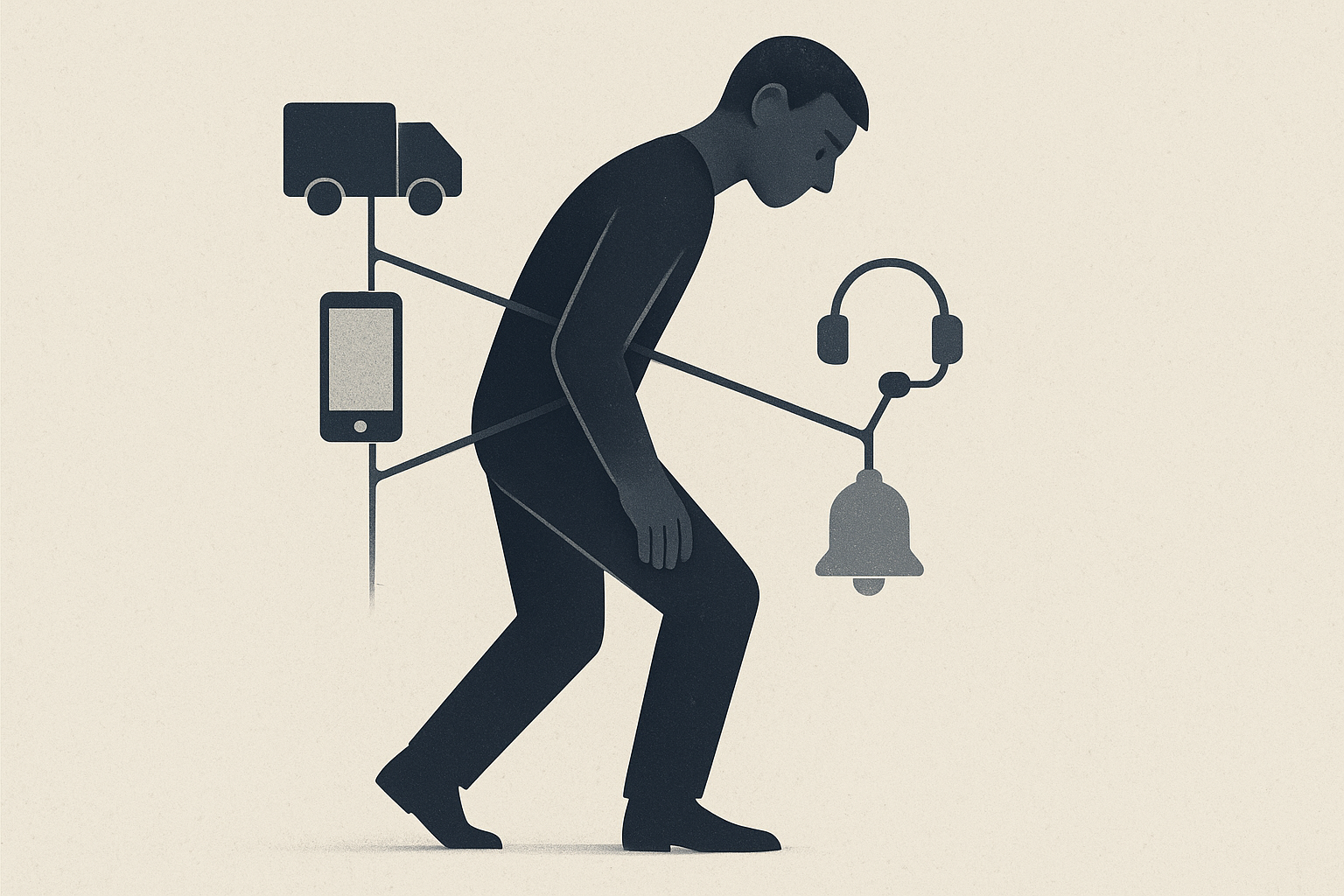
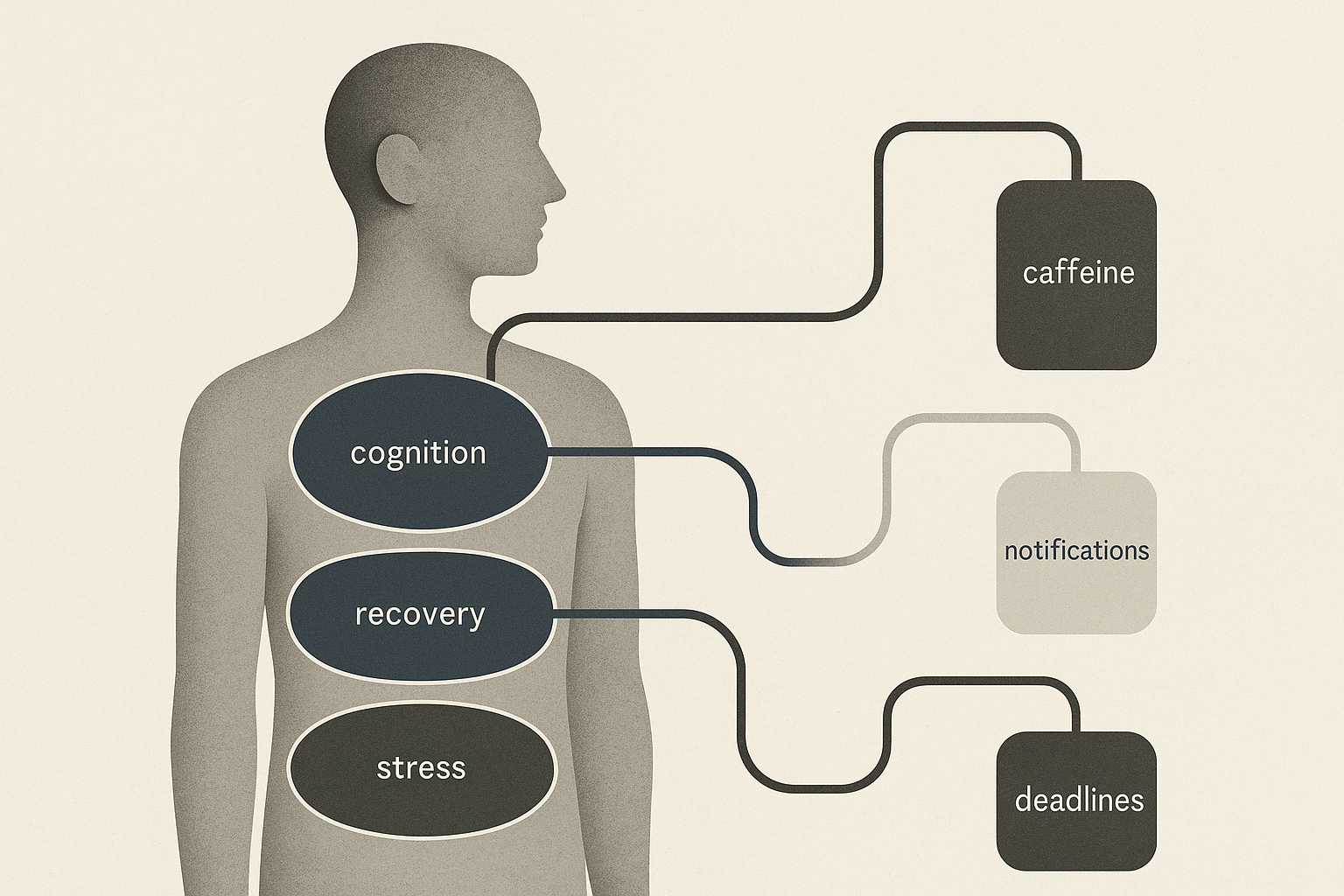
In this test, total energy dependence doesn’t mean “drinking coffee” or “having intense days.” It refers to a situation in which your ability to function (attention, initiative, emotional stability, continuity) depends heavily on external fuel: stimulants, urgency, social pressure, digital micro-rewards, rigid routines, or excessive control. When those supports are missing, performance collapses or becomes unstable.
The test explores three dimensions that often reinforce one another:
- Stress load: how much physiological activation and perceived pressure you’re sustaining to “stay operational.”
- Recovery debt: how much recovery (sleep, decompression, cognitive rest) falls short relative to what you’re consuming.
- Cognitive overload: how much of your energy is absorbed by decisions, context switching, informational noise, and managing unprocessed complexity.
Why this test is different from a “fatigue” questionnaire
Many tools ask only “how tired are you?” Here we look at mechanisms: signs of compensation, fragility when the stimulus is missing, rigid routines, swings between hyperactivation and collapse, and hidden costs (irritability, anhedonia, procrastination, a need for control).
This is not a medical diagnosis, nor does it replace a clinical assessment. It’s a map of functional patterns that can help you build autonomy and strengthen self-regulation.
How to answer (to get a useful profile)
- Answer with the last 2–4 weeks in mind, not your best or worst day.
- If you go through “phases,” choose the option that describes the most common state.
- Don’t rate what you “should do”: describe what actually happens when the stimulus is missing or when pressure increases.
How to read the results
The final profile highlights:
- Whether you’re getting through the day via activation (high stress load) rather than through recovery and stability.
- Whether you’re accumulating debt (high recovery debt): you pay later, often with sudden drops or irritability.
- Whether your energy is being “eaten up” by cognitive noise (high cognitive overload): too many decisions, too many open tabs, too many micro-tasks.
If you want to dig deeper into the underlying mechanisms, you can consult: Guide to Stress and Recovery and Cognitive Hygiene: Reducing the Invisible Load.
Typical signs of energy dependence (not always obvious)
- You only function “with a push”: urgency, deadlines, adrenaline, caffeine, notifications.
- Rest that doesn’t restore: you sleep but wake up already chasing the day, or you recover only through “crashes.”
- Rigidity: if a routine breaks (workout, coffee, checklist), the day loses coherence.
- Seeking micro-stimuli: scrolling, snacking, multitasking as emotional regulation.
- Decision fatigue: even small choices feel heavy; you procrastinate or become rigid.
When it makes sense to pay attention (without alarmism)
If high scores show up across all three dimensions, it’s often not a “lack of willpower,” but a system that’s compensating: stress to keep going, insufficient recovery, overloaded cognition. In these cases, the realistic goal isn’t “do more,” but reduce the cost per unit of living: less friction, less noise, more effective recovery.
If you have significant physical symptoms (palpitations, severe insomnia, unintentional weight loss, panic attacks, problematic substance use), consider speaking with a healthcare professional. For a broader view of your patterns, you can also explore the Self-Regulation Profile.