Why this test exists
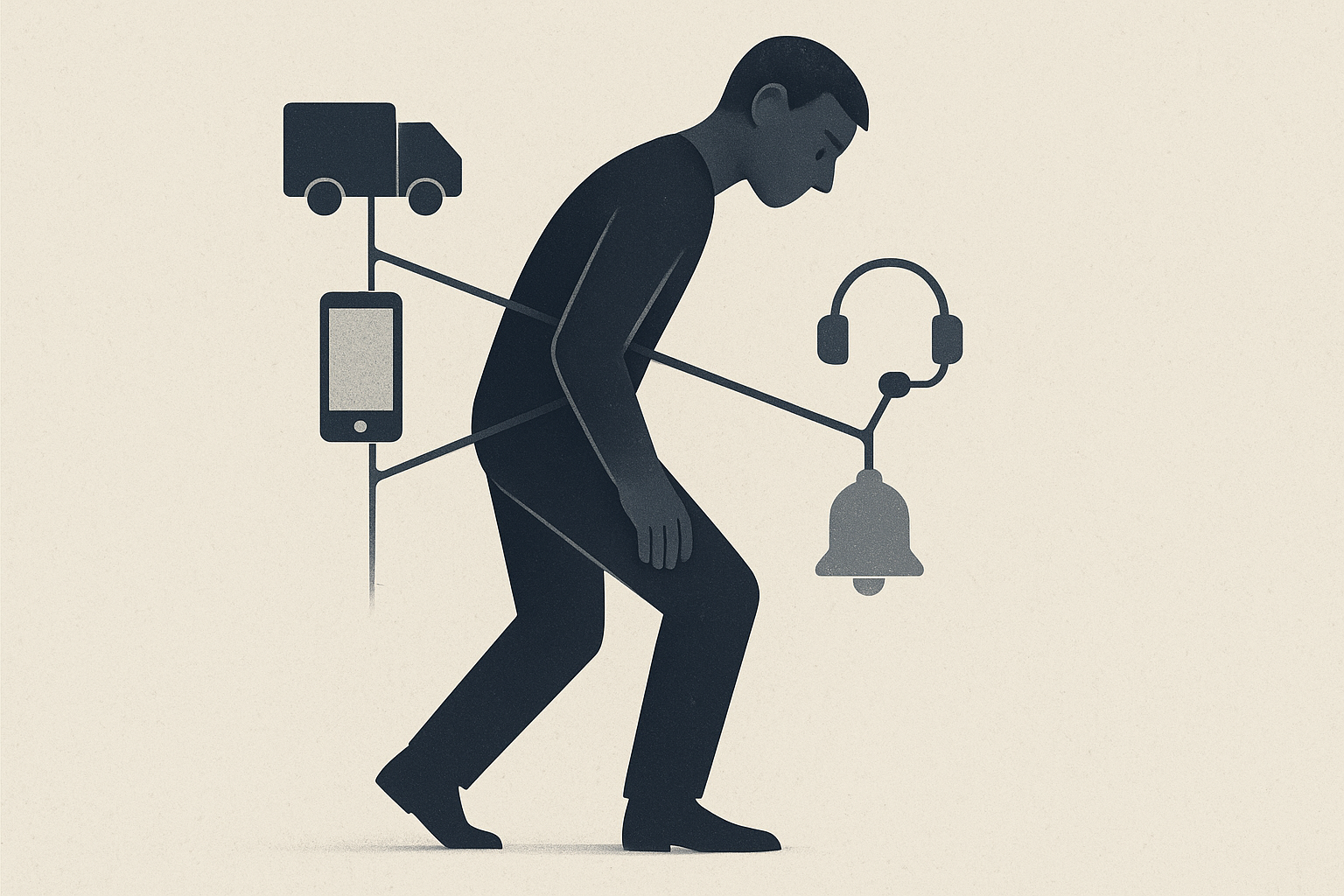
Relying heavily on external services is neither a moral failing nor a simple “modern vice.” It’s often a functional setup: a stable way to manage energy, time, emotional friction, and complexity. But when the external ecosystem (apps, deliveries, assistance, delegation, family/organizational support) becomes the only way to make your day work, three measurable risks emerge:
- Stress load higher than you realize (lots of micro-tension from coordinating, monitoring, waiting, and handling unexpected issues).
- Recovery debt (rest that doesn’t restore: sleep that “happens” but isn’t restorative, weekends that don’t reset you).
- Cognitive overload (too many tiny decisions, too many interfaces, too many exceptions: the mind protects itself by reducing initiative and tolerance for frustration).
This test doesn’t measure “how capable you are,” but how much your system (body + attention + habits + context) can sustain without external crutches. The goal is to make patterns visible that usually remain implicit.
What umanindex means by “external services”
In this test, “external services” include:
- food/grocery delivery, ready-made options (meal kits, prepared meals, subscriptions);
- apps and automations that replace planning and memory (reminders, to-do lists, assistants, notifications);
- operational delegation (cleaning, paperwork management, maintenance, ongoing support from partners/family/colleagues);
- external decision support (seeking reassurance, constantly checking reviews, comparison sites, chats);
- infrastructure that reduces friction (ride-hailing, concierge, “on-demand” services).
Using them is normal. The point is the threshold: when a temporary absence of these services leads to disorganization, irritability, shutdown, or giving up.
How to read the results (without self-deception)
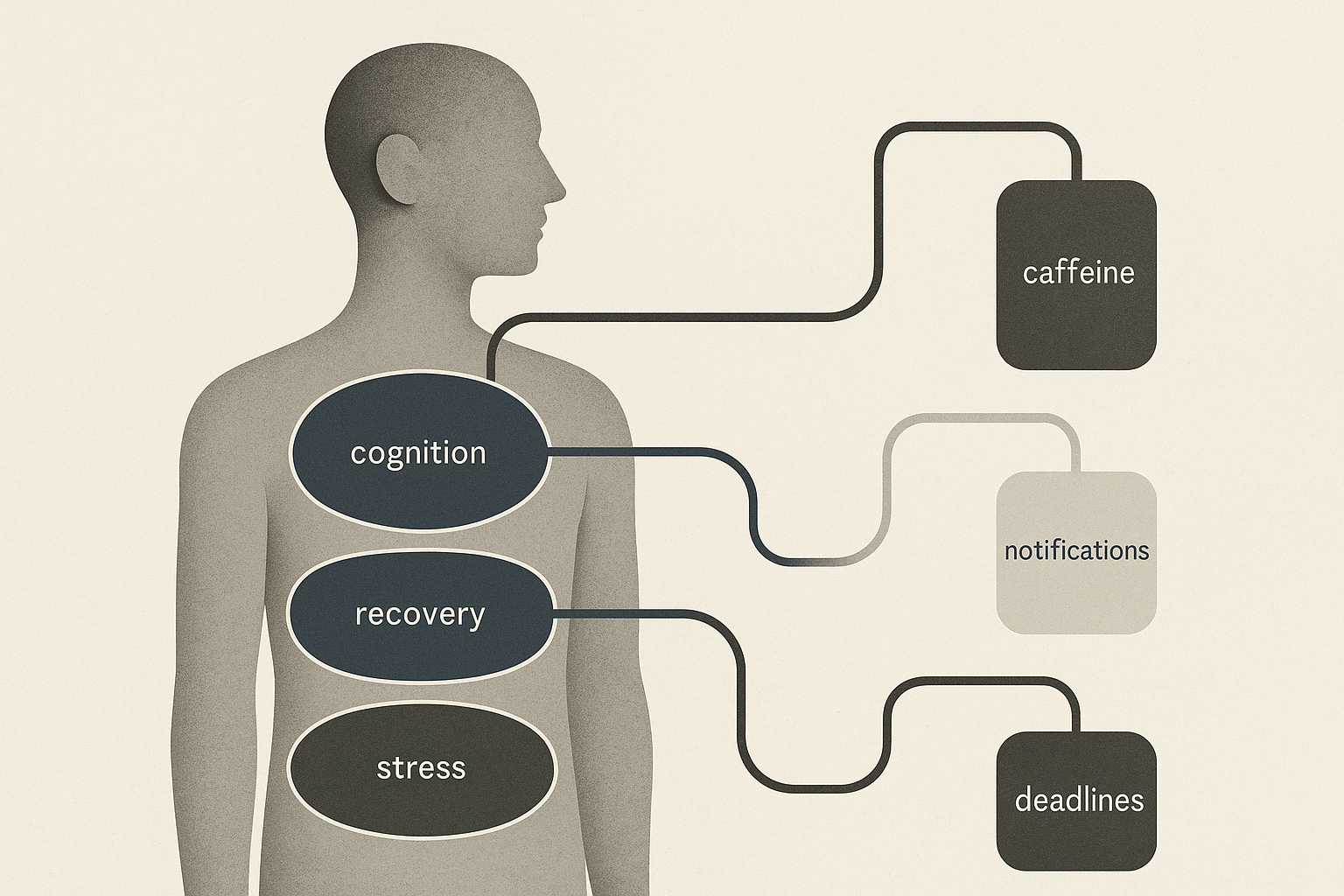
Your scores will be distributed across three axes:
- axis_stress_load: how much physiological and psychological pressure builds up in keeping your daily functioning going.
- axis_recovery_debt: how insufficient your recovery is relative to the load (even if you “stop”).
- axis_cognitive_overload: how much attentional and decision saturation you’re managing (or avoiding) through externalization.
Important note: heavy use of external services can coexist with strong resilience if it’s a strategic choice rather than a compensation. The test looks for compensation signals: reactivity, fragility in the face of the unexpected, dependence on reassurance, and reduced tolerance for friction.
The “silent” signs of total dependence
Many people recognize dependence only when a service is missing. Before that, subtler signs appear:
- Shrinking repertoire: you can do fewer “basic” things because you no longer practice them.
- Aversion to friction: small tasks start to feel disproportionately heavy.
- Coordination micro-anxiety: waiting, tracking, messages, confirmations, returns, complaints.
- Decision fatigue: lots of tiny choices (what to order, which service, which option) drain you more than it seems.
- Intermittent autonomy: “okay” days alternating with days when everything collapses if something deviates from the plan.
Guidance for answering
Answer based on the last 4 weeks, not on how you’d like to be. If you’re in a specific situation (shift work, caregiving, illness, moving), answer anyway: the test is also meant to distinguish real load from a habitual setup.
If you want to go deeper after the test: Stress & Recovery profile and decision autonomy.
What you’ll do with the outcome
A useful outcome isn’t “use fewer services.” It’s understanding which functions you’re externalizing:
- Energy (I don’t have the resources to do it)
- Attention (I can’t keep the steps together)
- Emotional regulation (I avoid frustration, uncertainty, waiting)
- Decision-making (I seek reassurance to reduce perceived risk)
Once you identify the function, you can intervene in a targeted way: recovery, simplification, training basic skills, or reducing decision noise. If you’re interested in a more operational approach, also see cognitive hygiene.