Why this test exists
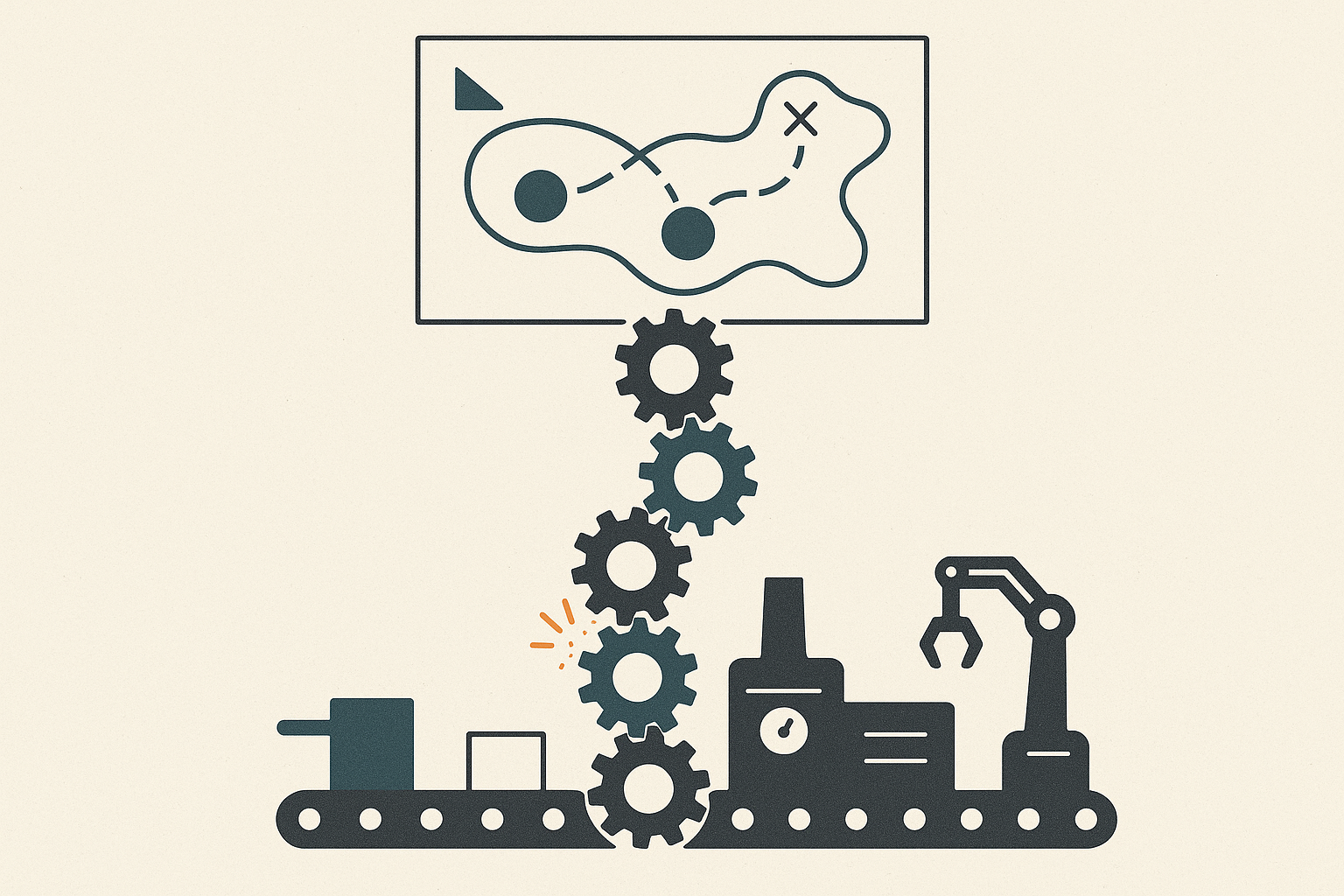
Alignment between strategy and operations isn’t a “personality” trait—it’s a system. When the strategy is clear but execution derails, it’s usually not a lack of willpower. What’s missing are constraints, feedback, and cognitive protection. This test is designed to identify where the chain breaks: in setting priorities, translating them into decisions, managing energy, or maintaining continuity.
It doesn’t measure “how good you are.” It measures patterns that, when repeated, produce predictable outcomes: dispersion, reactivity, micro-optimizations—or, conversely, rigidity and shutdown.
What it assesses (operationally)
- Consistency between goals and calendar: how closely your actual week reflects your stated priorities.
- Decision quality under pressure: how your criteria and thresholds shift as workload increases.
- Integrity of the execution system: whether minimal rituals are in place (review, defining the next action, closing loops).
- Physiological costs: stress and recovery as variables that affect attention, working memory, and inhibitory control.
How to interpret the results
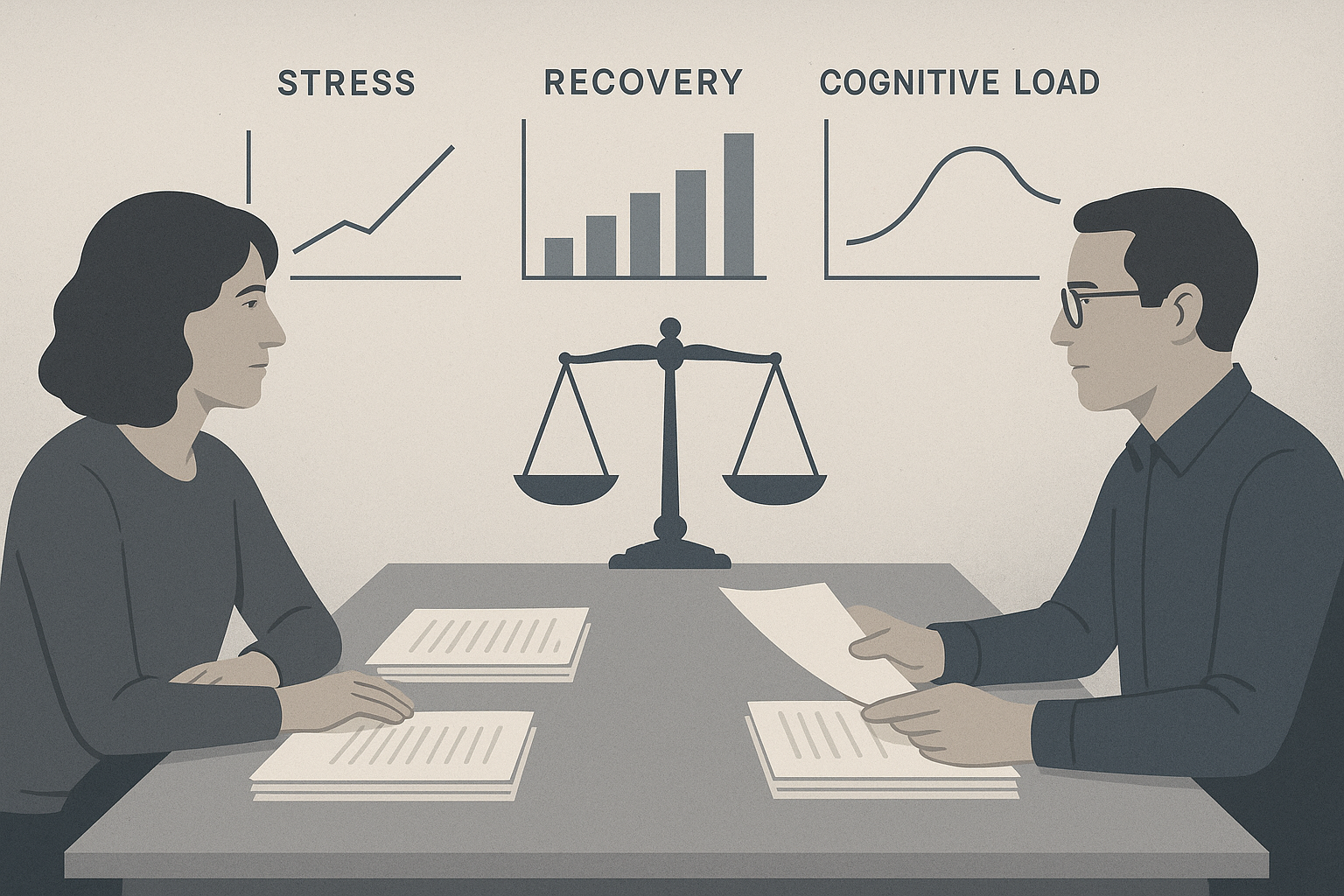
You’ll receive a profile across three axes:
- Stress load (stress-load-axis): the intensity and continuity of perceived demands and decision pressure.
- Recovery debt (recovery-debt-axis): the extent to which the system (sleep, breaks, decompression) fails to compensate for the load.
- Cognitive overload (cognitive-overload-axis): working-memory saturation and attentional fragmentation that degrade the strategy→action translation.
Note: high scores don’t mean “failure.” They indicate that your system is operating close to thresholds where errors, delays, and defensive decisions increase. The goal is to make those thresholds visible, not to judge them.
Before you start: brief instructions
- Answer with the last 2–3 weeks in mind, not an ideal period.
- If you work in a team, answer based on what depends on you (decisions, boundaries, rituals, attention management).
- If a question feels “too true,” don’t correct it—it’s often a useful signal.
Micro-reading: where the “execution gap” comes from
The gap between strategy and operations tends to emerge when the following coexist:
- Competing priorities without exclusion criteria (everything is important → nothing is protected).
- Frequent interruptions that prevent deep-work blocks (switching costs).
- Unclosed decisions (open loops) that occupy working memory and increase control anxiety.
- Insufficient recovery: fatigue reduces the ability to plan and inhibit reactive impulses.
If you want to explore how Umanindex interprets stress and recovery, see: Guide to stress and recovery. For the attention and overload side: Guide to cognitive overload.