Breathing & Autonomic Regulation
Shortness of breath under stress: a map of triggers, load, and recovery debt
Assess the feeling of shortness of breath under stress: identify activation patterns, recovery debt, and cognitive overload. Results designed to support awareness and autonomy.
Why this test exists (and what it actually measures)
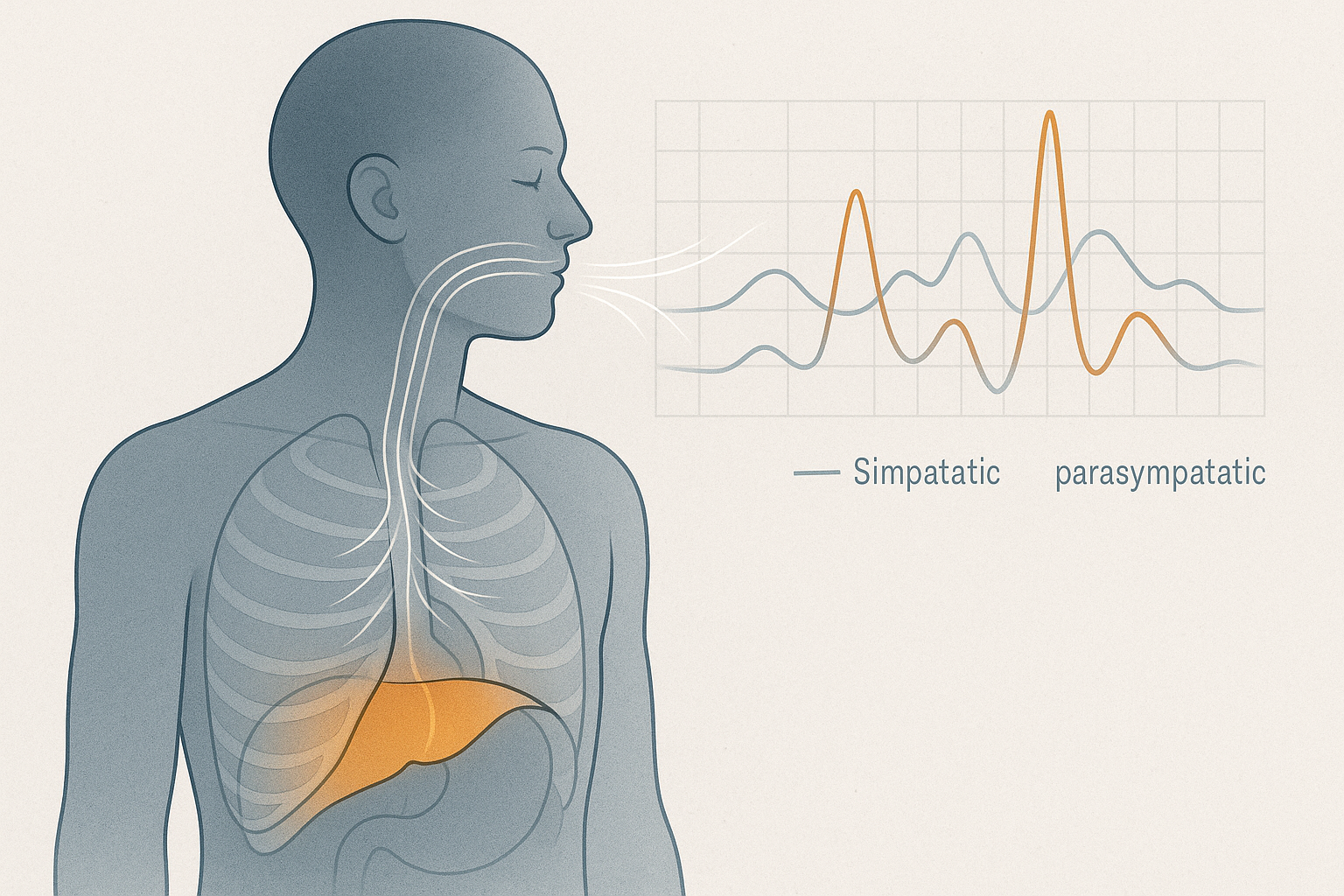
The sensation of shortness of breath under stress isn’t always a “lung” problem. Often, it’s a sign of autonomic regulation under pressure: the nervous system ramps up activation, changes your breathing pattern (faster and more shallow), and the brain interprets certain bodily sensations as urgent.
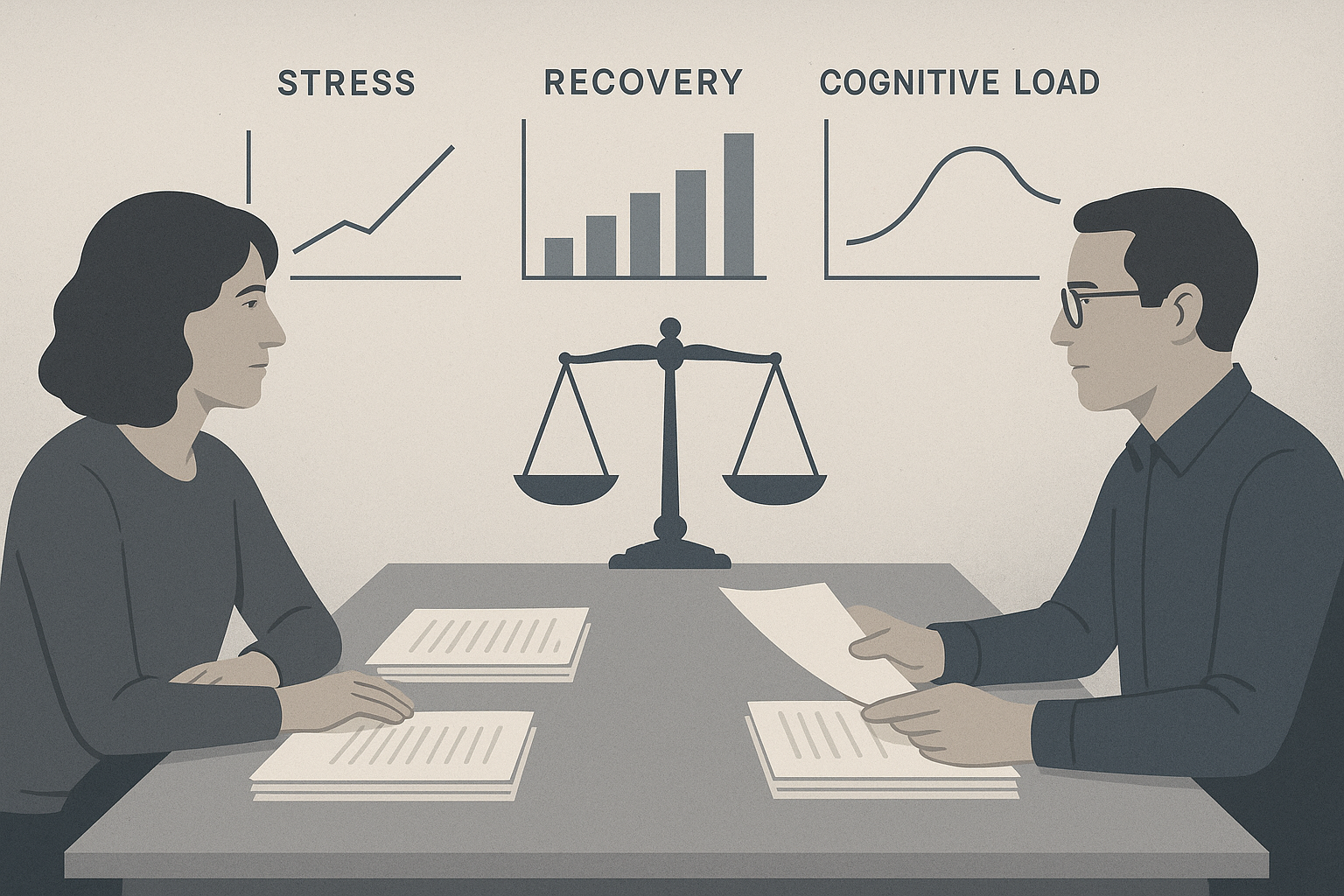
This test does not provide a diagnosis and does not replace a clinical evaluation. Its purpose is to build a functional map of three dimensions that, together, explain why your breath “isn’t enough” precisely when you need clarity:
- Stress load: how much activation you’re sustaining, and for how long.
- Recovery debt: how much your body isn’t “coming back down” between one peak and the next.
- Cognitive overload: how much mental bandwidth is taken up by control, anticipation, multitasking, and internal noise.
What Umanindex means by “shortness of breath” in a stress context
In everyday language, “shortness of breath” can refer to different experiences. Here, we mainly mean:
- Air hunger (the feeling that you can’t fully “fill” your lungs).
- Upper-chest breathing with tension in the shoulders and neck.
- Frequent sighing or the need to take repeated deep breaths.
- Irregular breathing (breath-holding, sudden speed-ups).
- Hyper-focused attention on breathing (constant monitoring).
These patterns can also occur with normal oxygen saturation. The point isn’t “how much oxygen gets in,” but how the system interprets and regulates threat—internal or external.
How to answer to get a useful profile
- Answer with the last 2 weeks in mind, not a single episode.
- If you’re unsure between two options, choose the one that’s more frequent.
- Don’t look for the “right” answer: what matters here is the consistency of the pattern.
How to interpret the results (practically)
The final report will give you three indices:
- axis_stress_load: intensity and continuity of activation (pressure, urgency, conflict, hyper-responsibility).
- axis_recovery_debt: quality of downshifting (sleep, decompression, ability to “switch off,” persistent alarm signals).
- axis_cognitive_overload: mental saturation (rumination, control, multitasking, anticipation, decision fatigue).
A typical profile is: high load + low recovery → shortness of breath becomes a sentinel signal. Another profile is: high cognitive overload → breathing becomes an object of control, and the control itself amplifies the sensation.
When it makes sense to stop and consult a professional
If the sensation of shortness of breath is new, intense, or associated with chest pain, fainting, fever, cyanosis, rapid worsening, or a significant limitation of activities, a medical consultation is appropriate. This test is designed for recurring stress-related patterns, not emergencies.
Frequently asked questions
Can this test tell me if I have a lung or heart problem?
No. The test is not diagnostic and does not measure clinical parameters. It is meant to identify patterns consistent with a stress response (autonomic activation, breathing control, mental overload). If you have new, severe, or worsening symptoms, or warning signs (chest pain, fainting, high fever, cyanosis), a medical evaluation is recommended.
Why, under stress, does it feel like I can’t take a “full” breath?
Under stress, sympathetic activation increases: breathing tends to become higher and faster, with greater involvement of accessory muscles (neck, shoulders). At the same time, attention may lock onto internal sensations. The result is a feeling of “not getting enough air” even when ventilation is adequate.
What’s the difference between stress load and recovery debt?
Stress load describes how much activation you are sustaining (pressure, urgency, conflicts, hypervigilance). Recovery debt describes how little the system is able to come back down: unrefreshing sleep, difficulty decompressing, bodily signals that stay switched on even after the stress is over. You can have a moderate load but a high debt if recovery is ineffective.
Can cognitive overload really affect breathing?
Yes. When the mind is overloaded (multitasking, rumination, anticipation, control), the likelihood of micro breath-holds, compensatory sighs, and monitoring your breathing increases. Breathing becomes an “object to manage,” which can amplify the sensation of air hunger.
If I notice I’m controlling my breathing, does that mean I’m having a panic attack?
Not necessarily. Breathing control can show up in many situations: prolonged stress, interoceptive hypervigilance, periods of poor sleep, or after episodes in which breathing was perceived as threatening. The test helps clarify whether the control is a stable behavior and in which contexts it is triggered.
How reliable are my answers if I feel fine on some days and not on others?
Variability is informative. That’s why the test asks you to refer to the last two weeks: it doesn’t look for an “absolute” value, but for frequency and contexts. If symptoms fluctuate a lot, it’s often useful to observe what changes from day to day (sleep, mental load, caffeine, conflicts, recovery time).
What changes if my shortness of breath happens mostly in the evening or at night?
Evening/nighttime symptoms may indicate load accumulation during the day, difficulty downshifting (returning to parasympathetic tone), or a spike in rumination when distractions drop. In the profile, this tends to raise the recovery-debt axis and/or the cognitive-overload axis.
Does the test also consider factors like caffeine, nicotine, or training?
Yes, indirectly: some questions explore physiological accelerators (stimulants, routines, sleep) and the relationship between exertion and symptoms. It doesn’t replace a personalized assessment, but it helps clarify whether shortness of breath is more tied to physiological triggers or to stress-and-control patterns.