Mental Performance

Productivity loss during the day: load map, recovery, and cognitive overload

14 questions 7 min116 people have taken this test
Productivity loss during the day: load map, recovery, and cognitive overload

Assess why your productivity drops during the day: stress load, recovery debt, and cognitive overload. Results focused on real patterns and imbalances.

Sign up or log in to take the test

Registration is required to start any test.

What this test analyzes

Stress load
Index of sustained pressure (urgencies, external scrutiny, conflicts, required self-control) and its persistence throughout the day.
Recovery debt
Index of the gap between consumption and recovery: sleep, genuinely restorative breaks, decompression, and the ability to switch off.
Cognitive overload
Index of attentional and working-memory overload: interruptions, task switching, concurrent complexity, decision fatigue, and information noise.

Why this test exists (and what it actually measures)

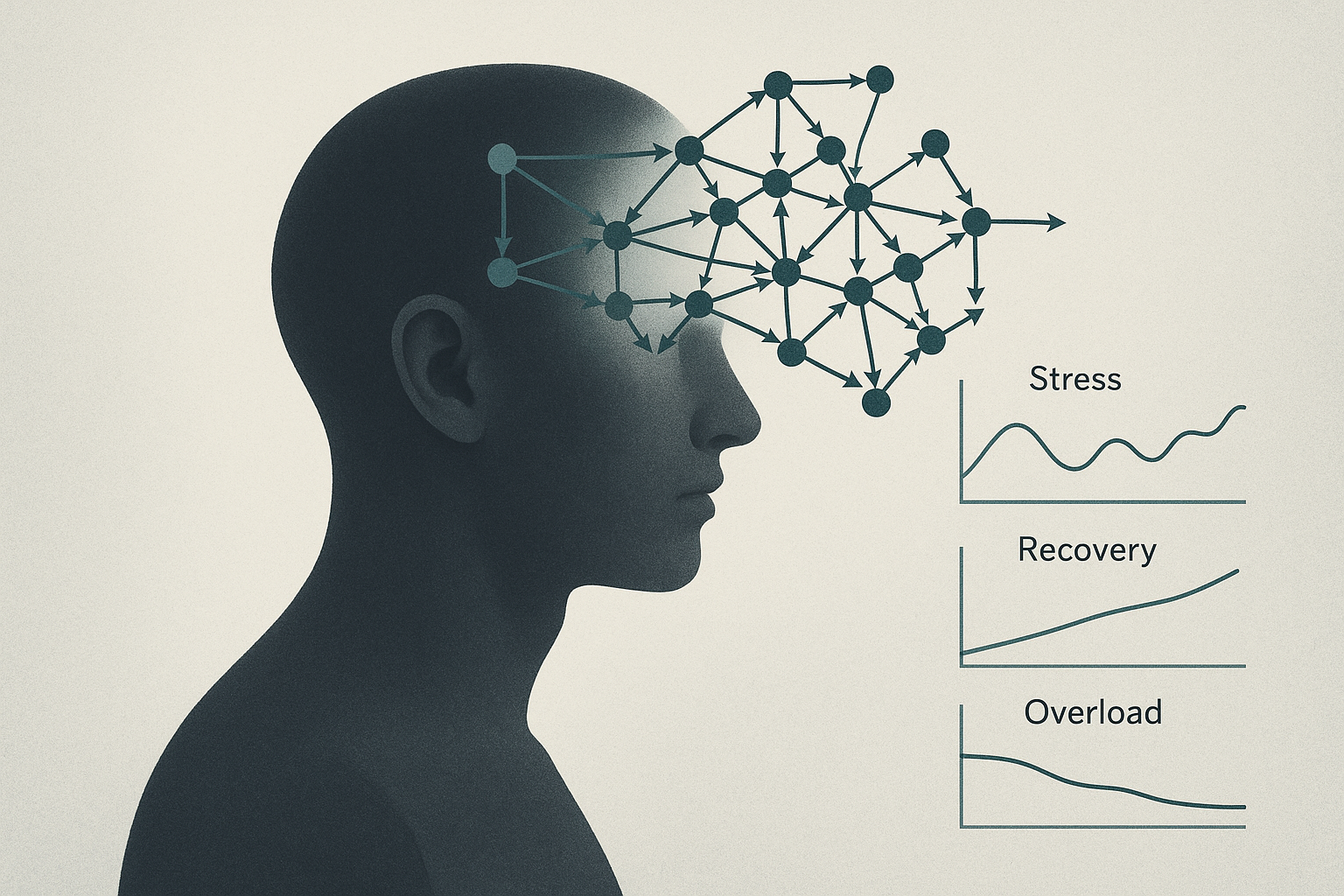
Daytime productivity loss rarely comes down to a “lack of discipline.” More often, it’s the measurable result of three dynamics that reinforce one another:

  1. Stress load: how much pressure (external and internal) you’re carrying—and for how long.
  2. Recovery debt: how much physiological and mental recovery you’re missing relative to what you’re expending.
  3. Cognitive overload: how much complexity, fragmentation, and “noise” you’re placing on your attentional system.

This test is not intended to provide a diagnosis and does not replace a clinical assessment. It’s designed to build an operational map: where the cost accumulates, when the drop shows up, and which conditions make it predictable.

How to interpret the drop: three signals, three mechanisms

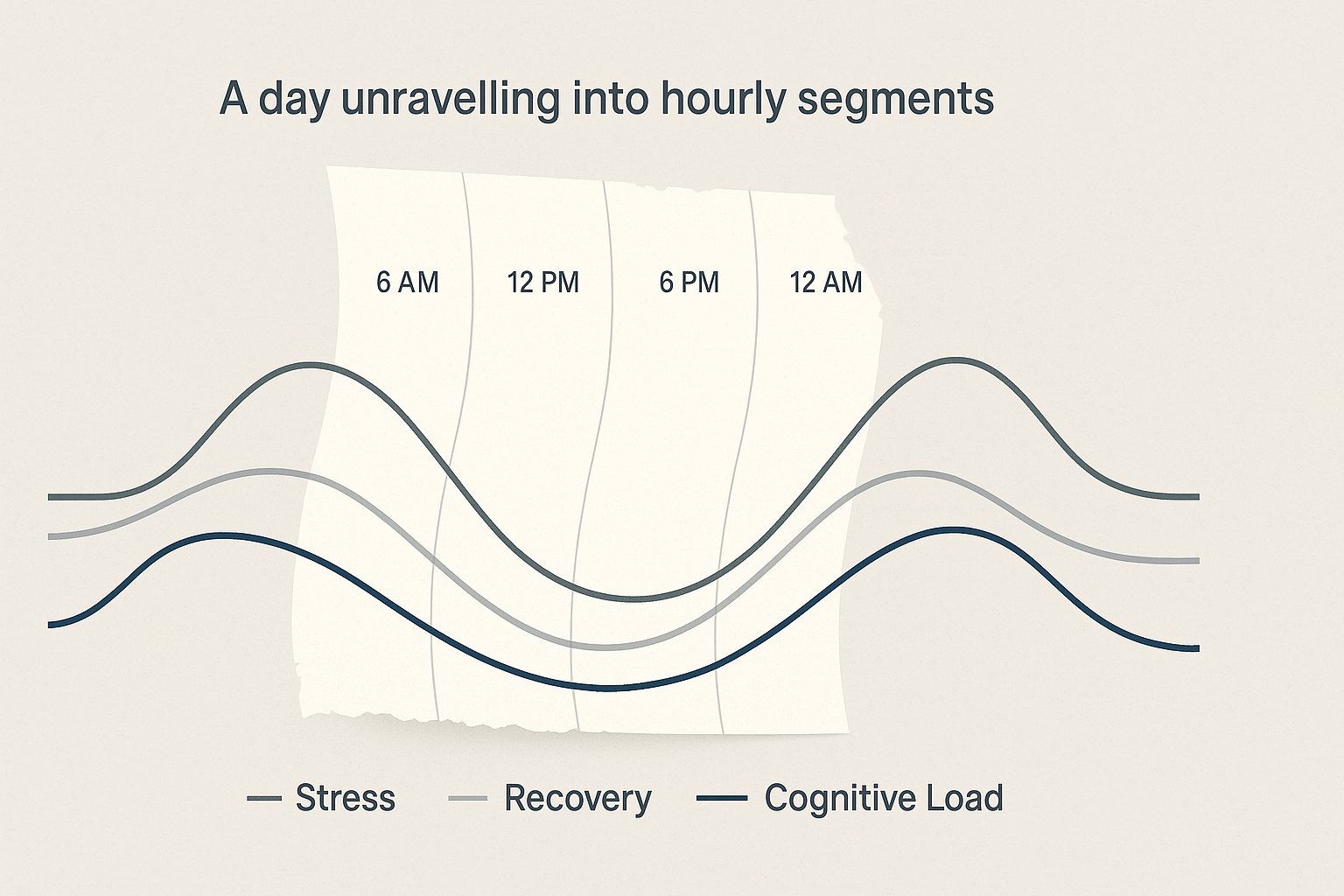
1) A “cliff” drop

Strong productivity followed by a sudden crash: this often points to cognitive overload (task switching, interruptions, rapid decisions) or acute stress (urgencies, conflict, perceived threat).

2) A “sliding” drop

Performance that gradually tapers off: typical of recovery debt (insufficient sleep, fragmented recovery, ineffective breaks) and sustained load without decompression.

3) A “blocky” drop

Alternating productive phases and stalled phases: often a mismatch between work rhythm and ultradian rhythms (energy/attention cycles), or a context management issue (tasks that are too dissimilar, noisy environments, interruptive tools).

The three profile axes (required)

  • axis_stress_load: the intensity and continuity of load (pressure, urgency, conflict, required self-control).
  • axis_recovery_debt: the quality/quantity of recovery relative to expenditure (sleep, breaks, decompression, truly “switching off”).
  • axis_cognitive_overload: saturation of the attentional system (interruptions, multitasking, complexity, decision fatigue).

The value of the test lies in the pattern: for example, high cognitive overload can masquerade as “tiredness,” while high recovery debt can show up as irritability, slower decision-making, or cravings for stimulation.

How to fill it out (to get useful data)

  • Answer with the last 2 weeks in mind, not an exceptional day.
  • If you work shifts or have variable hours, think in terms of your typical week.
  • If you’re unsure between two options, choose the one that describes what happens most often, not what you wish would happen.

What you’ll get at the end

A three-axis profile, interpreted with a focus on:

  • accumulation points (where the cost is created)
  • collapse points (when the system gives way)
  • high-yield levers (small but structural changes, not “generic advice”)

If you want to go deeper, you can cross-check the results with a test on sleep and recovery or with an assessment on attention and interruptions. (Optional links: if not available, ignore.)

Frequently asked questions

Does this test measure my “willpower”?
No. It measures conditions that make productivity more or less sustainable: stress load, recovery debt, and cognitive overload. Willpower can compensate for a while, but it often increases the cost and accelerates collapse.
Why do you treat stress and cognitive overload as separate?
Stress concerns the response to pressure/threat and the demand for self-control; cognitive overload concerns the saturation of attention and working memory (interruptions, task switching, complexity). They can coexist, but they require different levers.
If my problem is only after lunch, what does it mean?
It may be a combined effect of circadian/ultradian rhythm, sleep quality, morning load, and the type of tasks you do. The test helps you understand whether recovery debt (physiological baseline) or cognitive overload (fragmentation/decisions) is more prevalent.
How reliable are self-reported answers?
They are useful for identifying recurring patterns and contextual conditions, especially when referring to a period (2 weeks) rather than a single day. They do not replace clinical or instrumental measures, but they help guide operational hypotheses.
What should I do if a very high recovery debt emerges?
The test does not provide therapy. In general, high recovery debt suggests checking: sleep regularity, recovery quality (awakenings, rumination), evening load, and your ability to truly “switch off.” If the problem is persistent or associated with significant symptoms (severe insomnia, marked anxiety, depressed mood), it’s advisable to talk to a professional.
Is it possible to be productive even with high stress?
Yes, in the short term. But if stress stays high without adequate recovery, the likelihood of errors, irritability, poorer decision-making, and performance swings increases. The point isn’t to “eliminate stress,” but to make it compatible with recovery and cognitive load.
Why do you include questions about interruptions and notifications?
Because frequent switching consumes attentional resources and increases re-orientation time. Even when it “seems” like you’re working, part of the system remains busy rebuilding context and priorities.
Can this test indicate burnout or ADHD?
It may highlight patterns consistent with overload, recovery debt, and chronic stress, which can also be present in burnout or attentional difficulties. It is not a diagnostic tool: if results are extreme or distress is significant, a clinical evaluation is needed.

Recommended tests

All tests