Assess post-meal drowsiness and energy dips: identify dietary and behavioral triggers, stress load, recovery debt, and cognitive overload. Results designed to support autonomy.
Why this test exists
An energy dip after meals isn’t a lack of willpower, nor a “normal” thing you simply have to tolerate. It’s often an integrated signal: digestion, blood-sugar regulation, sleep quality, stress load, and cognitive demands all compete for the same physiological resources. When the system is already running a deficit, a meal becomes an amplifier, revealing what was previously only latent.
This test does not provide a diagnosis. Its purpose is to build a pattern map and to distinguish three components that are often conflated:
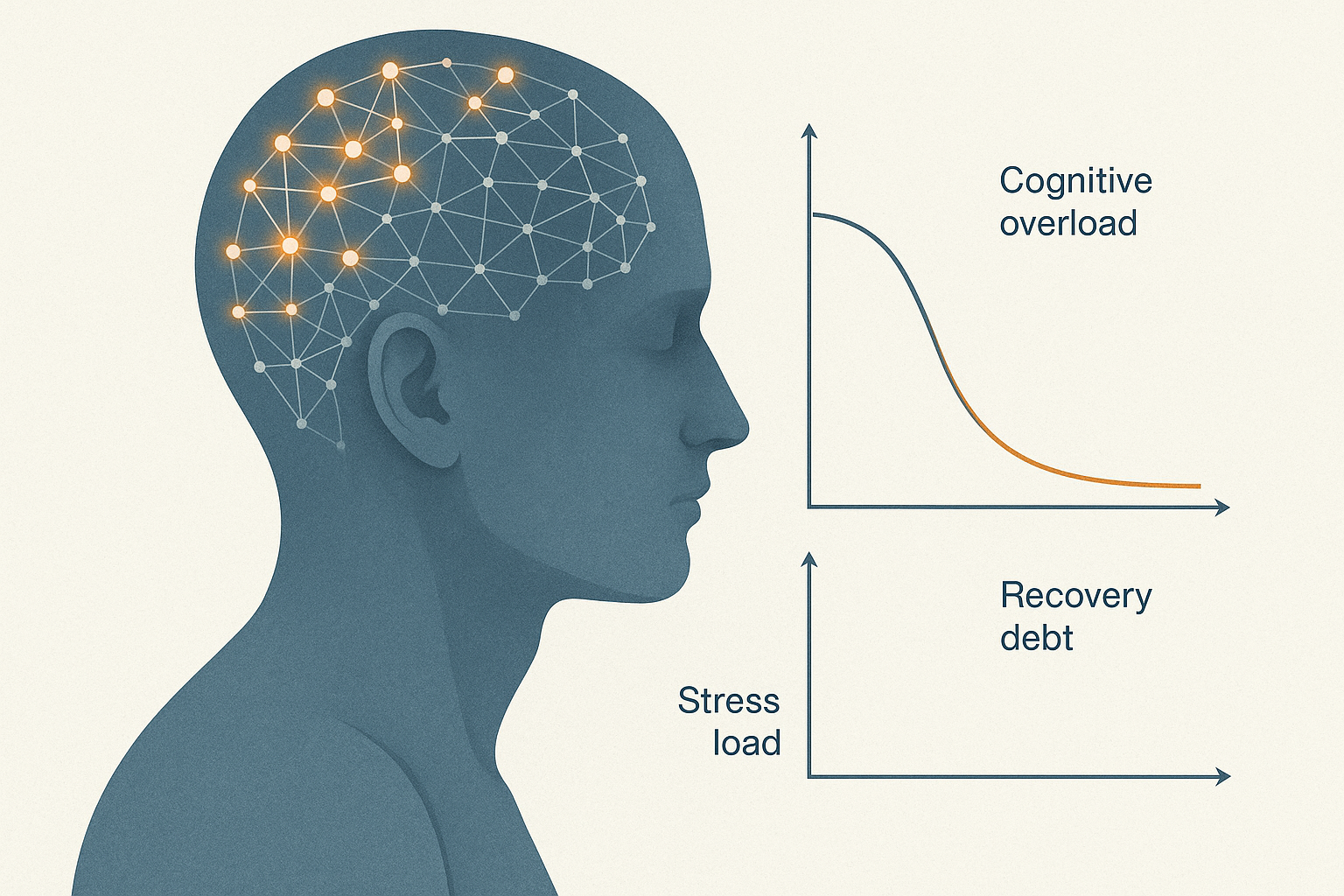
- Stress load: how much your body is in “push” mode, and how much that interferes with digestion and stable energy.
- Recovery debt: the extent to which sleep, breaks, and recovery are not keeping pace with your expenditure.
- Cognitive overload: how much energy is being consumed by decisions, multitasking, information noise, and attentional pressure (before and after the meal).
What we measure (operationally)
1) Timing and quality of the dip
“I get sleepy” 15 minutes after a meal is not the same as 90 minutes later. The timing guides the hypothesis: insulin response, meal composition, volume, eating speed, activation/stress state, and sleep quality.
2) Repeatable triggers
The test looks for regularities: specific meals, contexts (work, home, restaurant), combinations (carbohydrates + sedentary time + screens), and baseline factors (hydration, alcohol, coffee timing).
3) Recovery capacity
If the dip resolves with a short walk or a real break, that points to a different issue than if you need sugar/caffeine or if the “down” lasts for hours. This is where recovery debt tends to show up.
How to answer (to get a useful profile)
- Answer with the last 2–3 weeks in mind, not a single episode.
- If you work shifts or have an irregular routine, think in terms of your typical week.
- If you’re torn between two options, choose the one that describes what happens most often.
How to read the results
The final report will give you three main axes:
- axis_stress_load: the extent to which stress (physical/psychological) raises the “background noise” and reduces your tolerance for meals.
- axis_recovery_debt: the extent to which you’re carrying a sleep/break/recovery debt that makes energy stability fragile.
- axis_cognitive_overload: the extent to which your mental energy is already committed, and the meal becomes the point where attention collapses.
Based on the combination, the system will highlight likely patterns and testable levers (measurable micro-interventions, not generic advice).
When it makes sense to go deeper with a professional
Consider a clinical consultation if the dip is new and pronounced; if it’s associated with unintentional weight loss, intense thirst, frequent urination, significant palpitations, tremors, or fainting; or if it significantly affects safety (e.g., driving) or work. The test can help you describe the problem more clearly, but it does not replace medical evaluation.
Internal deep dives (optional)
Frequently asked questions
Is it “normal” to feel sleepy after lunch?
A mild drop in alertness can be compatible with the circadian rhythm (especially in the early afternoon). However, a crash that drastically reduces performance, attention, or mood—or that requires sugar/caffeine to function—is not really “normal.” In that case, it’s useful to distinguish between meal composition, recovery debt, and stress/cognitive load.
How much does meal composition matter compared to stress?
Both matter, but in an interactive way. A meal with a high load of rapidly available carbohydrates can increase the likelihood of a dip; however, high stress and insufficient sleep reduce your “tolerance” and make a downshift more likely even with moderate meals. The test is meant to clarify which factor is weighing more in your case.
Does an energy crash right after eating always indicate a blood-sugar issue?
No. A very early dip can also be related to meal volume, eating speed, a parasympathetic (“rest and digest”) response, dehydration, or a context of cognitive overload that releases as soon as the attentional push stops. Timing and associated signals (sudden hunger, tremors, irritability, sweating) help point you in the right direction.
Are coffee and sugar an effective solution?
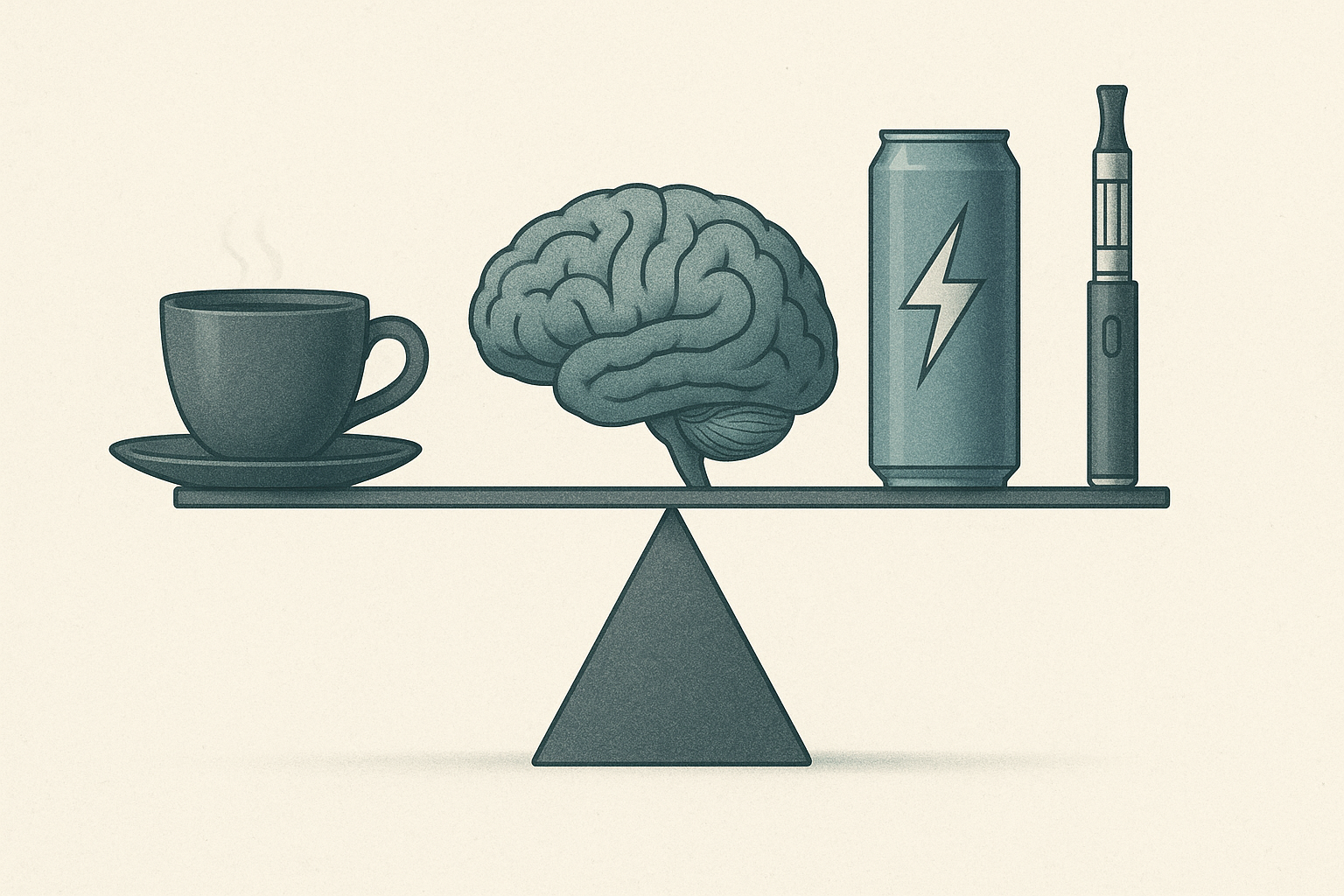
They can mask the problem in the short term, but they often increase energy variability: spike → compensation → new dip. If they become necessary “to get going again,” it’s a useful indicator for the recovery-debt axis and perceived metabolic stability. In the report, it will be flagged as a compensation pattern.
Why do you also measure cognitive overload?
Because many people interpret as “digestion” what is partly an attentional collapse: after hours of decisions, notifications, multitasking, and pressure, the meal becomes an involuntary break and the brain lowers alertness. If this axis is high, the most effective levers often involve attentional boundaries and the quality of breaks, not just food.
How reliable is a self-analysis test on this topic?
It’s reliable for identifying repeatable subjective patterns (when it happens, with which triggers, how you recover) and for estimating the relative contribution of stress, recovery, and cognitive load. It is not a diagnostic tool: if red flags or a rapid worsening emerge, a clinical evaluation is appropriate.
What can I do right away without overhauling my diet?
The test doesn’t replace a personalized plan, but in general the most “measurable” levers are: slow down your eating pace, reduce distractions during the meal, add 8–12 minutes of light walking after eating, and check whether the dip changes with a real break (no screens) versus a “noisy” break. The report will indicate which of these levers make the most sense based on your profile.