Nutrition & Mindful Eating

Mindful Eating Test: how present are you when you eat?

14 questions 7 min45 people have taken this test
Mindful Eating Test: how present are you when you eat?

Assess signs of low mindful eating and the factors that fuel it: stress load, recovery debt, and cognitive overload. Results oriented toward patterns and autonomy.

Sign up or log in to take the test

Registration is required to start any test.

What this test analyzes

Stress load
How much stress (pressure, tension, emotional reactivity) is influencing your decisions and portions, making it harder to tune in to your body’s signals.
Recovery debt
How sleep deprivation, too few breaks, and fatigue affect appetite, self-control, and sensitivity to fullness.
Cognitive overload
How fragmented attention, multitasking, and decision fatigue are turning meals into a secondary activity—encouraging automatic habits and a loss of feedback.

Why this test exists

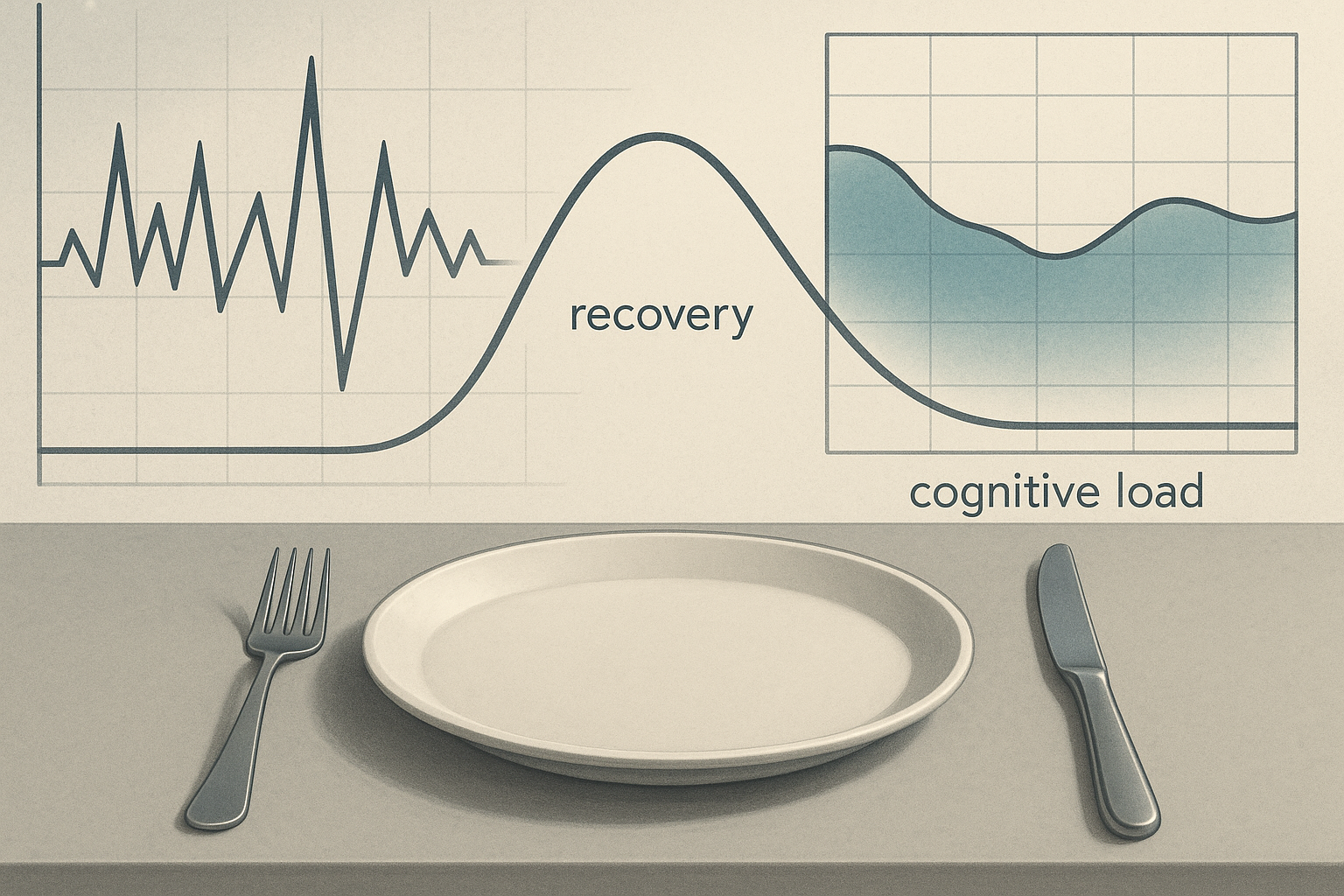
Low mindful eating is not a “lack of willpower.” It is often the result of three forces that add up: stress load, recovery debt (not enough sleep or breaks), and cognitive overload (too many decisions, too many notifications, too many urgent demands). When these systems are under pressure, eating tends to become automatic: you eat faster, lose touch with hunger and fullness, reach for energy-dense or highly palatable foods, and struggle to remember what—and how much—you ate.

This test does not measure “how good you are at eating.” It maps patterns: bodily signals, context, speed, attention, and emotional and environmental triggers. The goal is to increase autonomy: to understand when you lose presence and why, so you can intervene at the right point (not just treat the symptom).

What it assesses (and what it does not assess)

It assesses

  • Eating interoception: your ability to recognize hunger, fullness, and early signals.
  • Automaticity: how often you eat without making a conscious decision.
  • Stress reactivity: using food as a quick way to regulate tension.
  • Recovery debt: how sleep and breaks affect appetite regulation.
  • Cognitive overload: distraction, multitasking, decision fatigue, and their impact on meals.

It does not assess

  • Clinical diagnoses (eating disorders, depression, etc.).
  • A diet plan or calorie guidance.
  • “Right/wrong”: here we observe mechanisms, not judge.

How to answer to get a useful profile

  • Think about the last 2 weeks, not just the last day.
  • Answer based on real situations (work, home, commuting), not how you wish things were.
  • If you’re torn between two options, choose the one that happens more often.

At the end, you will receive a profile across three axes: axis_stress_load, axis_recovery_debt, axis_cognitive_overload. These axes are not “flaws”: they are system conditions that make automatic eating more likely.

Interpretation: what “low mindful eating” means in practice

In functional terms, mindful eating tends to drop when:

  1. The body speaks softly (hunger and fullness signals are muted by stress, poor sleep, or irregular rhythms).
  2. The environment speaks loudly (screens, work, socializing, food always within reach).
  3. The mind is saturated (fragmented attention, too many decisions, constant urgency).

The typical outcome is not only “eating more”: it is eating with less feedback. Without feedback, self-regulation becomes difficult.

If you want to go deeper (optional)

If, after the test, patterns related to stress and recovery emerge, it may be helpful to compare your results with complementary tools. See: stress profile and recovery and sleep assessment.

Safety note

If you frequently have binge episodes with loss of control, compensatory behaviors (self-induced vomiting, laxative use), rapid weight loss, or intense food-related anxiety, consider speaking with a professional (doctor, psychologist, dietitian). This test is a self-observation tool; it does not replace a clinical assessment.


Frequently asked questions

What does “low eating awareness” mean?
It’s the tendency to eat with low presence: unclear hunger and fullness signals, automatic decisions, poor memory of the meal, and a strong influence of stress, context, and distractions. It doesn’t necessarily mean “eating too much”: it mainly concerns the quality of the mind–body feedback during eating.
Does this test measure my discipline or willpower?
No. It measures conditions and patterns that make automatic eating more likely: stress load, recovery debt and cognitive overload, as well as interoceptive signals and the meal context.
Why do stress and sleep affect the way I eat so much?
High stress and insufficient recovery affect attention, self-control, and sensitivity to bodily signals. In these conditions, the drive for quick gratification and the likelihood of reactive or distracted eating increase, with a reduced perception of fullness.
If I score high in cognitive overload, what does it imply?
It implies that your attention is often fragmented and that the meal is competing with other demands (screens, work, notifications, decisions). This generally reduces your ability to notice early fullness cues and increases eating speed, making self-regulation harder.
How reliable is a self-assessment test on these topics?
It’s useful for identifying recurring patterns and contextual conditions, but it remains a subjective measure. Reliability increases if you answer thinking about the last two weeks and if you compare the results with concrete observations (timing, context, sleep quality, stress levels).
Can this test replace a nutritionist or a psychologist?
No. It can help you ask better questions and bring clearer data to a professional. If there are signs of an eating disorder or significant distress, clinical support is recommended.
What can I do right away if I recognize myself in automatic eating?
Before changing “what” you eat, observe “when” you lose presence: moments of stress, poor sleep, multitasking, skipped meals. Working on recovery and mental load often automatically reduces the urge to eat reactively.
Why doesn’t the test provide a diet or meal plan?
Because the issue here is often regulation and context, not nutrition knowledge. A plan can fail if stress, recovery, and cognitive overload remain unchanged. The test is meant to identify the main bottleneck.

Recommended tests

All tests