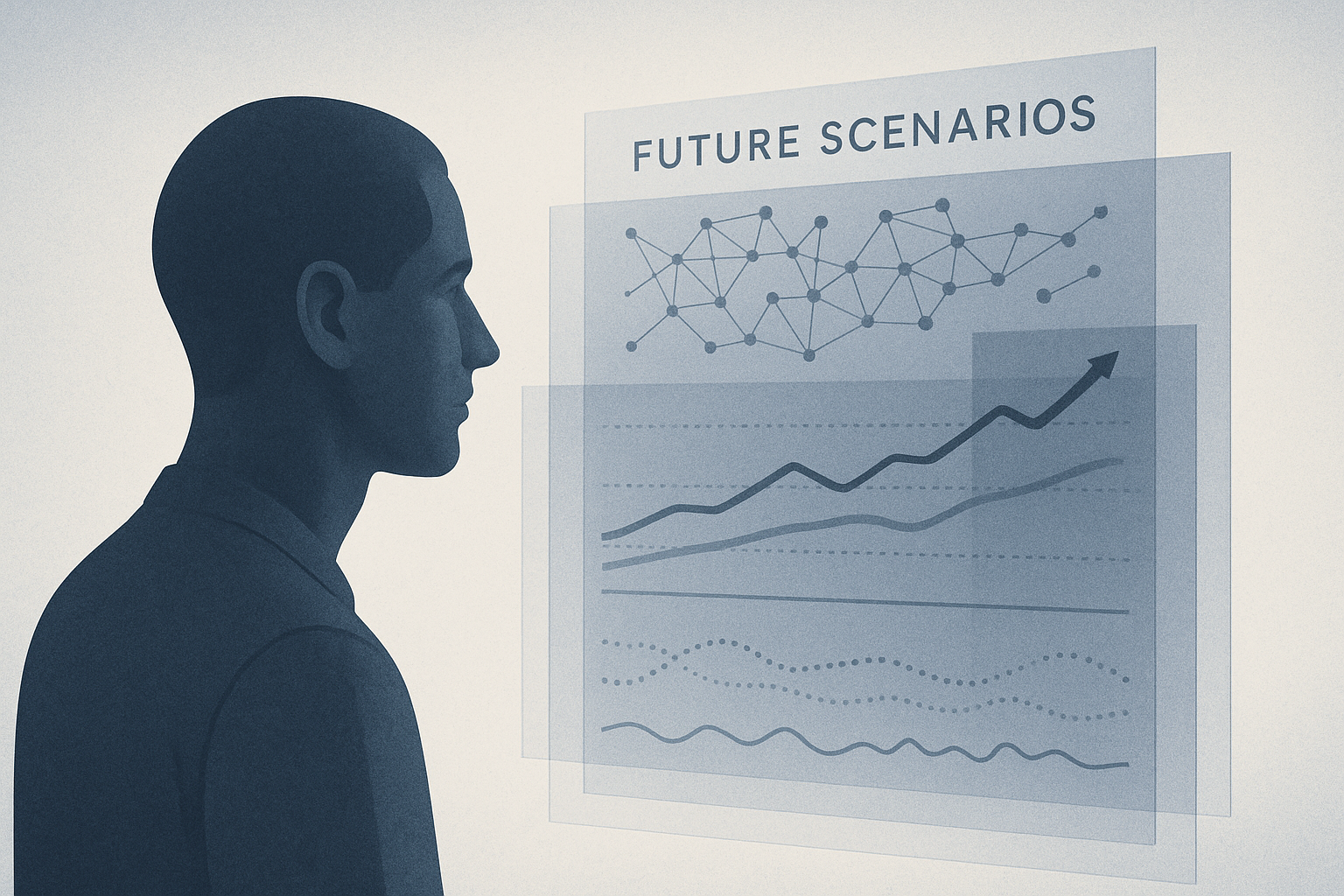
Why this test exists
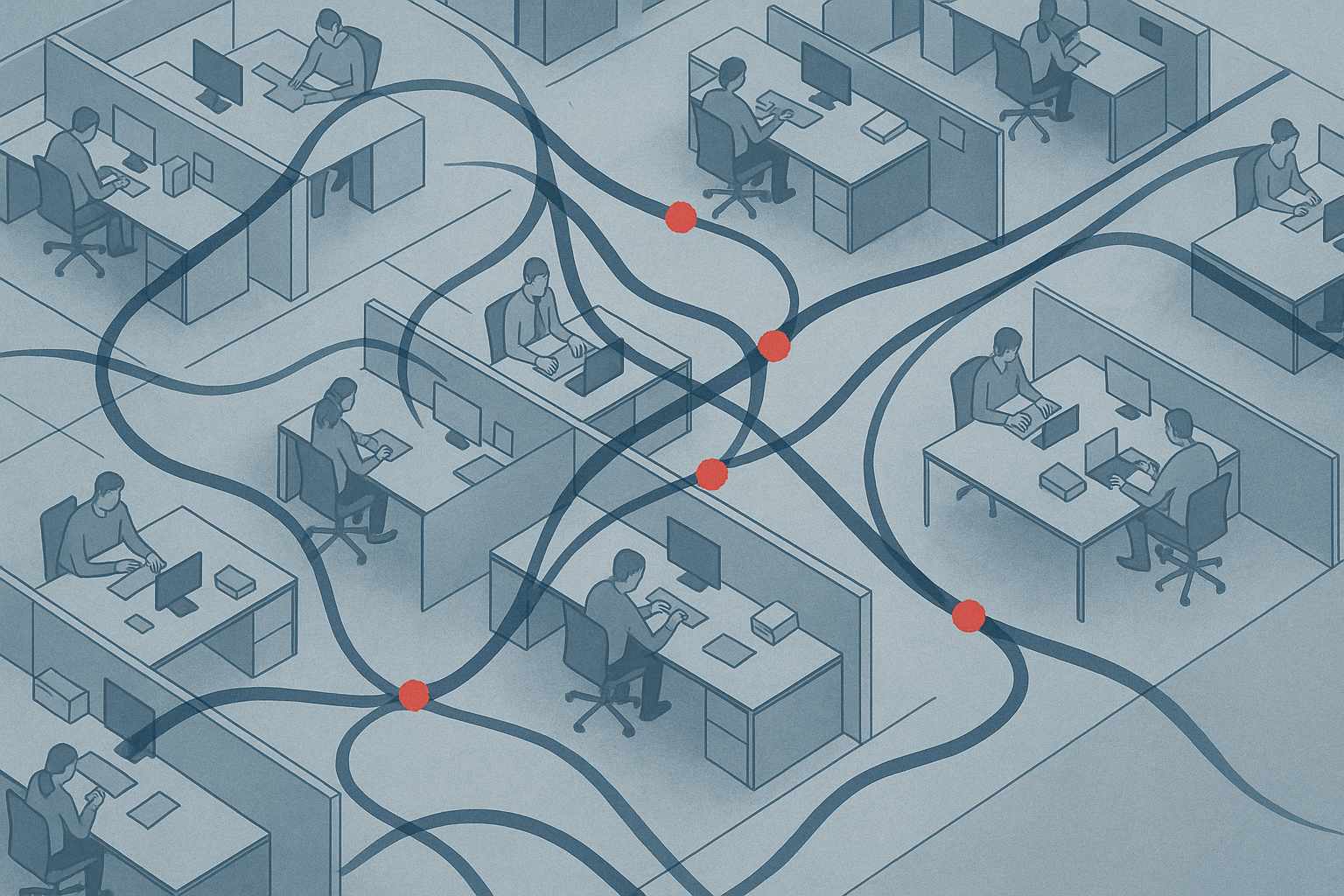
Organizational tensions rarely show up as “open conflict.” More often, they appear as recurring micro-frictions: ambiguity, interruptions, conflicting demands, postponed decisions, opaque communication, misaligned expectations. The problem isn’t only relational: it’s physiological (prolonged activation), cognitive (the burden of monitoring and interpretation), and behavioral (avoidance, over-adaptation, rigidity).
This test doesn’t measure “how good you are at handling stress.” It measures how much the environment is asking your system to compensate—with energy, attention, and recovery.
What it assesses (and what it doesn’t)
It assesses
- Signals of organizational tension (explicit and latent) and how often they occur.
- Stress load linked to demands, uncertainty, conflict, and perceived control.
- Recovery debt: the extent to which your actual recovery is insufficient relative to what you’re expending.
- Cognitive overload: fragmented attention, decision fatigue, informational noise.
It does not assess
- Clinical diagnoses (anxiety, depression, burnout) or fitness for work.
- Individual “fault.” If critical patterns emerge, the baseline hypothesis is: the system is asking too much, or asking in an incoherent way.
How to answer to get a useful profile
- Answer with the last 4 weeks in mind, not your worst day.
- If you work across multiple contexts (projects/roles), think of the most representative one.
- If you’re torn between two options, choose the one that describes what happens most often, not what “should” happen.
Note: some questions may seem similar. That’s intentional: they help distinguish relational tension, process tension, and cognitive tension, which often overlap but are not the same thing.
How to read the results (interpretive logic)
The test produces three main axes:
- Stress load: how much activation and pressure you’re sustaining to make work function.
- Recovery debt: the extent to which your recovery (sleep, decompression, breaks, boundaries) isn’t offsetting what you’re expending.
- Cognitive overload: how much mental capacity is being absorbed by interruptions, ambiguity, context switching, and unresolved decisions.
Three typical patterns:
- High stress + Low recovery: risk of chronic strain (irritability, reduced tolerance, somatic symptoms).
- High cognitive overload even with “moderate” stress: often indicates disorganization (processes, priorities, channels) more than sheer pressure.
- High stress with low overload: clear, linear pressure (a lot of work, but well-defined). Here the issue is sustainability, not confusion.
If you’d like to explore further in a complementary way, you can also use: {{internal_link:work-related-stress}} and {{internal_link:work-cognitive-load}}.
Ethics and boundaries
If signs of severe distress emerge (persistent insomnia, panic attacks, intrusive thoughts, substance use to cope), this test can help you name the pattern, but it does not replace professional support. In corporate contexts, personal data must be handled confidentially: the goal is to increase autonomy and clarity, not to expose vulnerabilities.