Emotional Regulation & Psychological Well-Being

Difficulty managing intense emotions: a map of load, recovery, and cognitive overload

16 questions 8 min84 people have taken this test
Difficulty managing intense emotions: a map of load, recovery, and cognitive overload

Identify hidden patterns in managing intense emotions: stress load, recovery debt, and cognitive overload. Results oriented toward awareness and autonomy.

Sign up or log in to take the test

Registration is required to start any test.

What this test analyzes

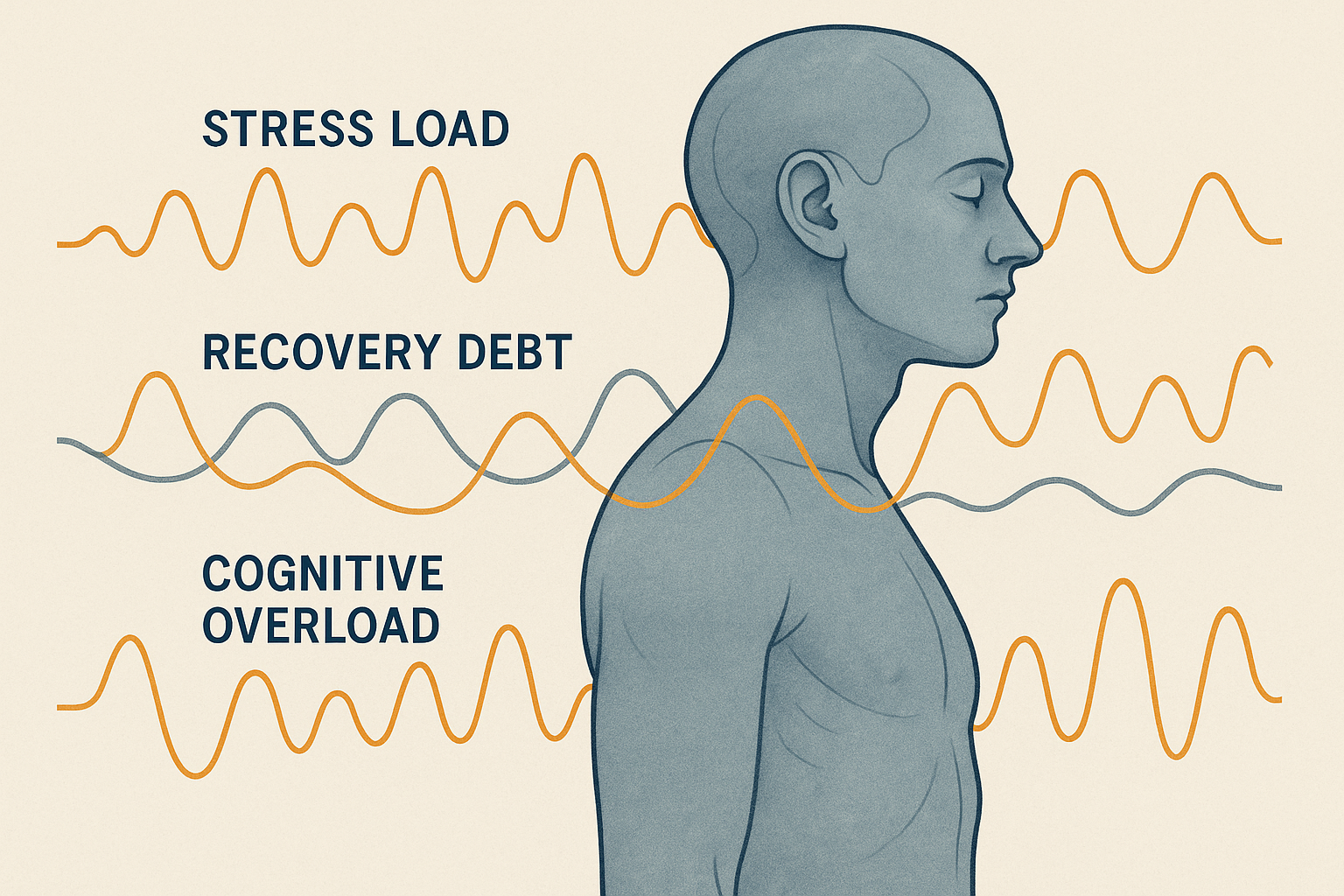
Stress load
Overall pressure and perceived demands that reduce the capacity for emotional regulation.
Recovery debt
Physiological and emotional backlog (sleep deprivation, missed breaks, and insufficient decompression) that prolongs stress activation and reduces resilience.
Cognitive overload
Saturation of mental capacity (rumination, multitasking, decision fatigue) that reduces self-control and limits decision-making.

Why this test exists (and what it really measures)

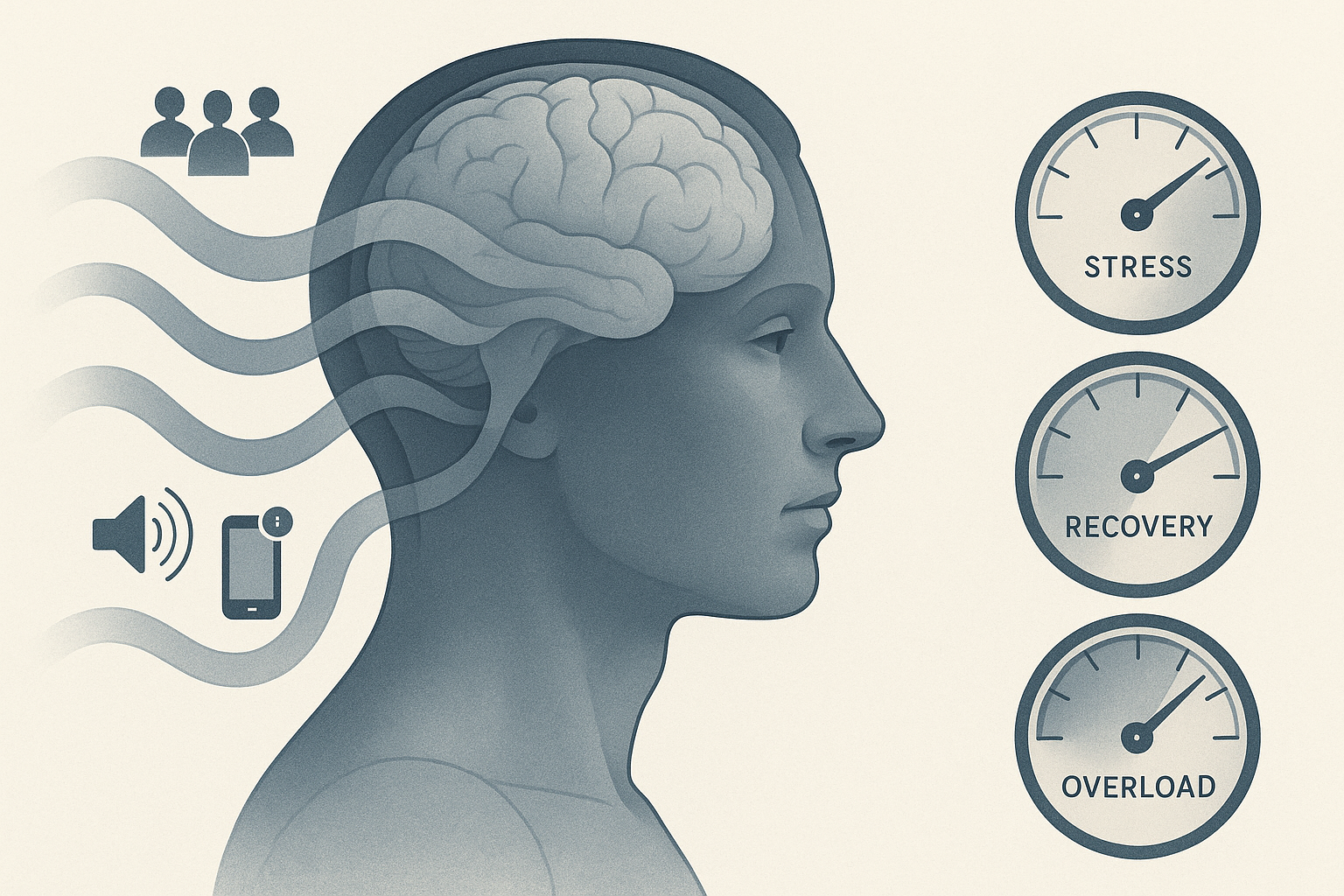
When an emotion feels intense, it isn’t “too much”: it’s too costly for your system in that moment. That cost doesn’t depend only on the event itself, but on the balance between load (how much you’re demanding of your body-mind), recovery (how much you’re paying that cost back), and available cognitive capacity (how much mental bandwidth is left to choose, inhibit impulses, and make meaning).

This test doesn’t assess whether you’re “sensitive” or “strong.” It maps three axes that often explain why, on certain days or in certain contexts, emotions become unmanageable: rapid escalation, disproportionate reactions, shutdown, outbursts, sudden crying, irritability, a need for control, avoidance, or emotional numbing.

The three profiling axes (required)

  1. Stress load (axis_stress_load)
    Measures how much pressure you’re accumulating: external demands, conflicts, over-responsibility, uncertainty, continuous stimulation. A high load lowers the threshold at which emotion “breaks through.”

  2. Recovery debt (axis_recovery_debt)
    Measures how far behind your system is: non-restorative sleep, ineffective breaks, incomplete emotional recovery, persistent somatic tension. A high debt makes rapid, less easily modulated reactions more likely.

  3. Cognitive overload (axis_cognitive_overload)
    Measures how much “mental RAM” is taken up: rumination, multitasking, decision fatigue, overanalysis, constant monitoring of yourself or others. When it’s high, your ability to choose a response decreases and automatic reactions increase.

How to answer (to get a useful profile)

  • Answer with the last 2–4 weeks in mind, not a single episode.
  • If you see yourself in two options, choose the one that describes what happens most often or has the greater impact.
  • Don’t aim for consistency: inconsistency is information (e.g., “high control” + “sudden outbursts”).

What you’ll get at the end

A profile that highlights:

  • which axis is driving the loss of regulation (load, recovery, or overload);
  • typical patterns: escalation, avoidance, numbing, hyper-control, rumination, impulsivity;
  • indicators of physiological/behavioral imbalance that often go unnoticed (sleep, tension, reactivity, cognitive rigidity).

If you want to go deeper after the test: Emotional regulation: principles and mechanisms and Stress and recovery: how to read the body’s signals.

Limitations and responsibility

This tool is for self-reflection, not diagnosis. If intense emotions are associated with thoughts of self-harm, significant dissociation, substance abuse, or a marked impairment in functioning, it’s advisable to consult a qualified professional.

Frequently asked questions

Does this test measure “emotional sensitivity”?
No. It measures conditions that make loss of regulation more likely: stress load, recovery debt, and cognitive overload. Sensitivity can be a trait, but unmanageability is often a state linked to available resources and context.
Why do you include sleep and recovery in a test about emotions?
Because emotional regulation also depends on physiological processes: sleep quality, parasympathetic recovery, somatic tension, and the capacity for down-regulation. A recovery debt lowers the tolerance threshold and increases reactivity and impulsivity.
What’s the difference between stress load and cognitive overload?
Stress load refers to overall pressure (demands, conflict, uncertainty). Cognitive overload refers to saturation of mental capacity (rumination, multitasking, constant decision-making). They can coexist, but they require different strategies.
If I score high on all three axes, what does it mean?
It indicates a condition of systemic vulnerability: the load is high, recovery is insufficient, and cognitive bandwidth is taken up. In these cases, the initial goal isn’t to “manage better” through willpower, but to reduce costs and increase resources in a measurable way.
Is it normal to alternate between over-control and loss of control?
Yes, and it’s a common pattern. Over-control can work as compensation as long as resources hold up; when the system crosses the threshold (fatigue, stimuli, conflict), regulation collapses and rapid reactions or avoidance appear.
Can the test help me understand if I’m ruminating too much?
Yes. Several questions distinguish rumination (repetitive, non-productive thinking) from problem solving. Rumination increases cognitive overload and keeps the emotion active even when the event is over.
How stable are the results?
The axes describe a state over the past few weeks. If sleep, workload, conflicts, or digital habits change, scores can change quickly. Repeating the test after 3–4 weeks is useful to check trends.
What should I do if some questions activate me emotionally?
Stop. Notice physical signals (shortness of breath, tension, rapid heartbeat, nausea), reduce stimulation, and resume only when activation goes down. If activation is intense or frequent, consider professional support: it’s not a failure, it’s system hygiene.

Recommended tests

All tests