What this test measures (and what it doesn’t)
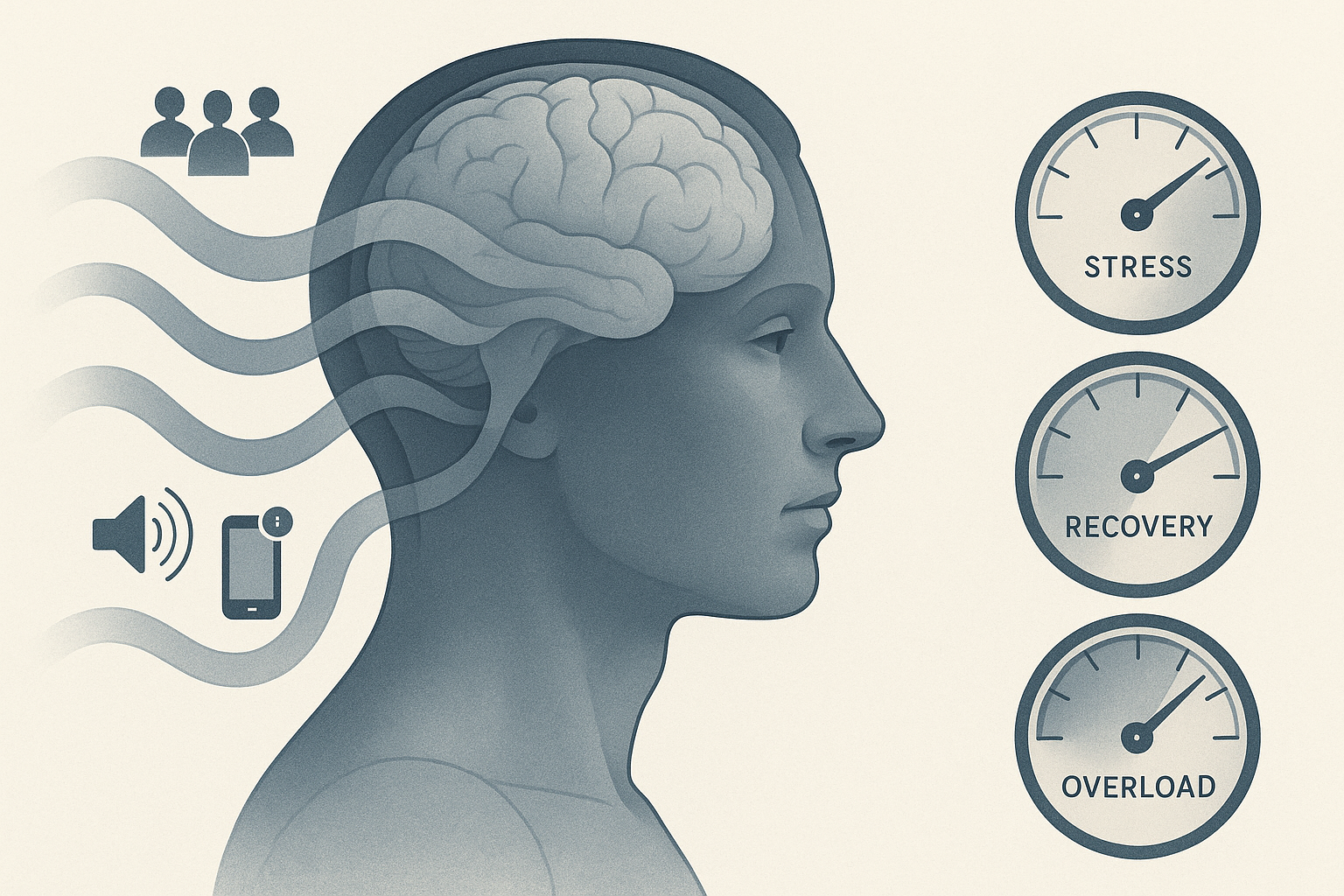
This test explores accumulated emotional stress as a psychophysiological phenomenon—not just “how stressed you are,” but how stress builds up over time and which areas it tends to throw out of balance. The goal is to help you identify recurring patterns and blind spots that often stay invisible until they show up as symptoms or automatic behaviors.
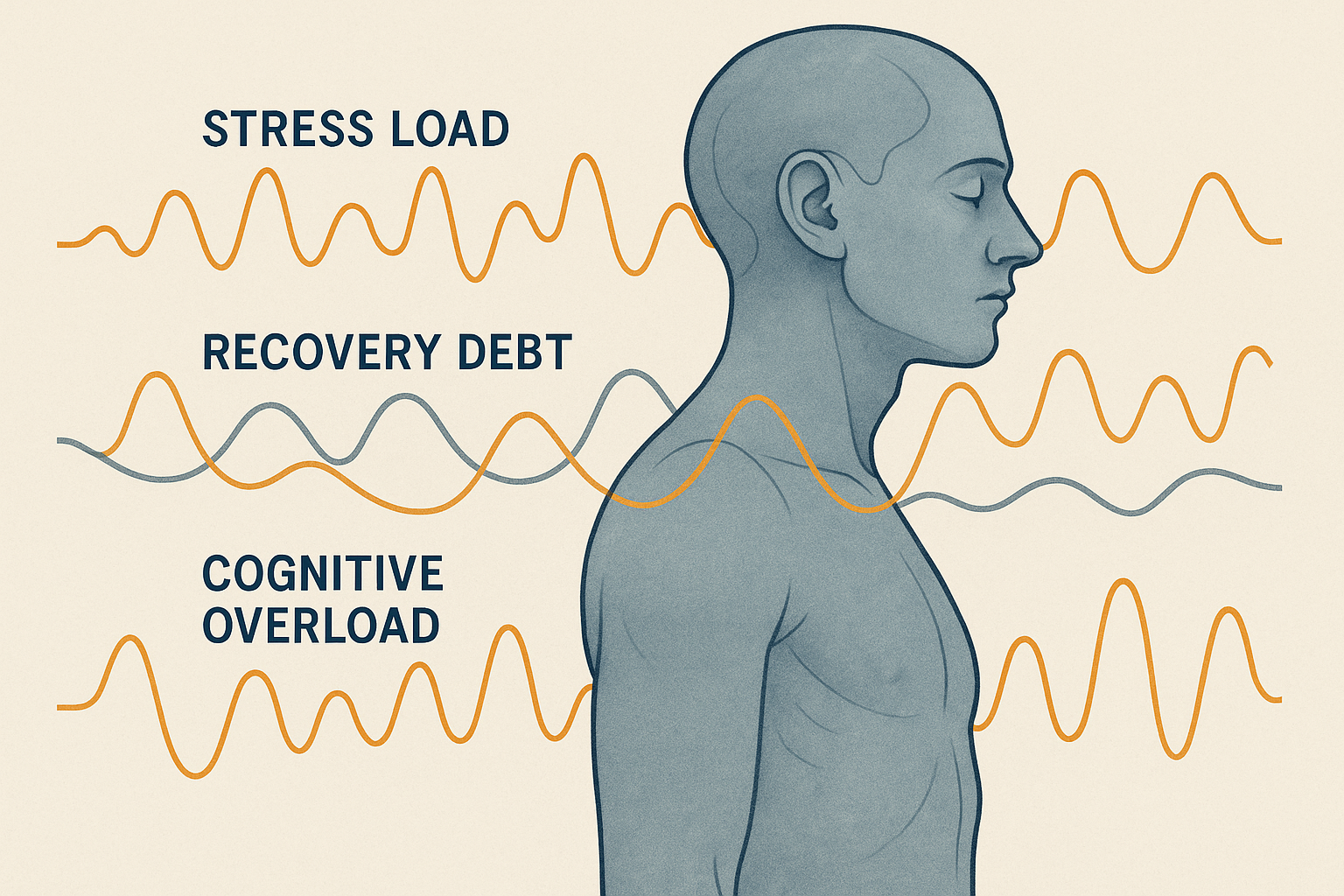
This test is not a diagnostic tool and does not replace a clinical assessment. It is designed to provide an operational map across three profiling axes: stress load, recovery debt, and cognitive overload.
The three axes: how to read stress “in depth”
1) Stress load (axis_stress_load)
This reflects the intensity and frequency of stressful stimuli (internal and external) and your tendency to stay in a state of activation. It measures not only events, but also self-imposed pressure, anticipation, and emotional reactivity.
2) Recovery debt (axis_recovery_debt)
This indicates how much your system (sleep, body, attention, emotions) is “paying interest” due to insufficient recovery. A high debt doesn’t mean weakness; it often signals that you’ve been operating beyond your threshold for too long, to the point of normalizing warning signs.
3) Cognitive overload (axis_cognitive_overload)
This measures the saturation of mental resources: too many decisions, too many variables to keep track of, too many micro-interruptions. When it’s high, emotional regulation worsens not because of a “lack of willpower,” but because of depleted self-control capacity.
Why emotional stress accumulates (even when “everything seems under control”)
Emotional stress tends to accumulate when:
- activation is chronic (urgency, hypervigilance, underlying irritability);
- recovery is fragmented (non-restorative sleep, non-regenerative breaks, “maintenance” weekends);
- the mind stays busy (rumination, compulsive planning, control, multitasking);
- emotions are managed more through containment strategies than through processing (pushing through, minimizing, rationalizing).
The typical result is efficient functioning on the surface, but with subtle signs: reduced tolerance, less flexibility, difficulty “switching off,” and disproportionate reactions to minor triggers.
Completion instructions
Answer with the last 2–4 weeks in mind. If you’ve experienced an exceptional event (bereavement, illness, extreme deadlines), answer by considering both the event and your typical functioning before/after it. Don’t look for the “right” answer: what matters here is the consistent answer, not the ideal one.
How to use the result
The value of the test isn’t the score, but the configuration of the three axes:
- High load + Low recovery: risk of chronic stress; the priority is to reduce inputs and increase genuine recovery.
- Medium load + High cognitive overload: the issue may be attention management (too many decisions, too many open loops).
- High load + High overload: irritability, impulsivity, or shutdown are common; structural simplification is needed.
- Recovery debt with non-extreme load: a sign that the system isn’t “resetting” even when it could; it’s useful to examine sleep quality, breaks, and decompression.
If you want to go deeper on recovery, you can also use this internal placeholder: Deep dive into psychophysiological recovery.
Safety note
If, in recent weeks, you’ve had thoughts of extreme self-devaluation, persistent despair, frequent panic attacks, or severe insomnia, consider speaking with a professional. This test can help you describe what’s going on, but it isn’t intended to address acute situations.