Emotional Regulation & Psychological Well-Being
High emotional sensitivity: stress, recovery, and cognitive overload
Assess how emotional sensitivity intertwines with stress load, recovery debt, and cognitive overload. A structured test to recognize patterns, imbalances, and self-regulation levers.
Why this test exists
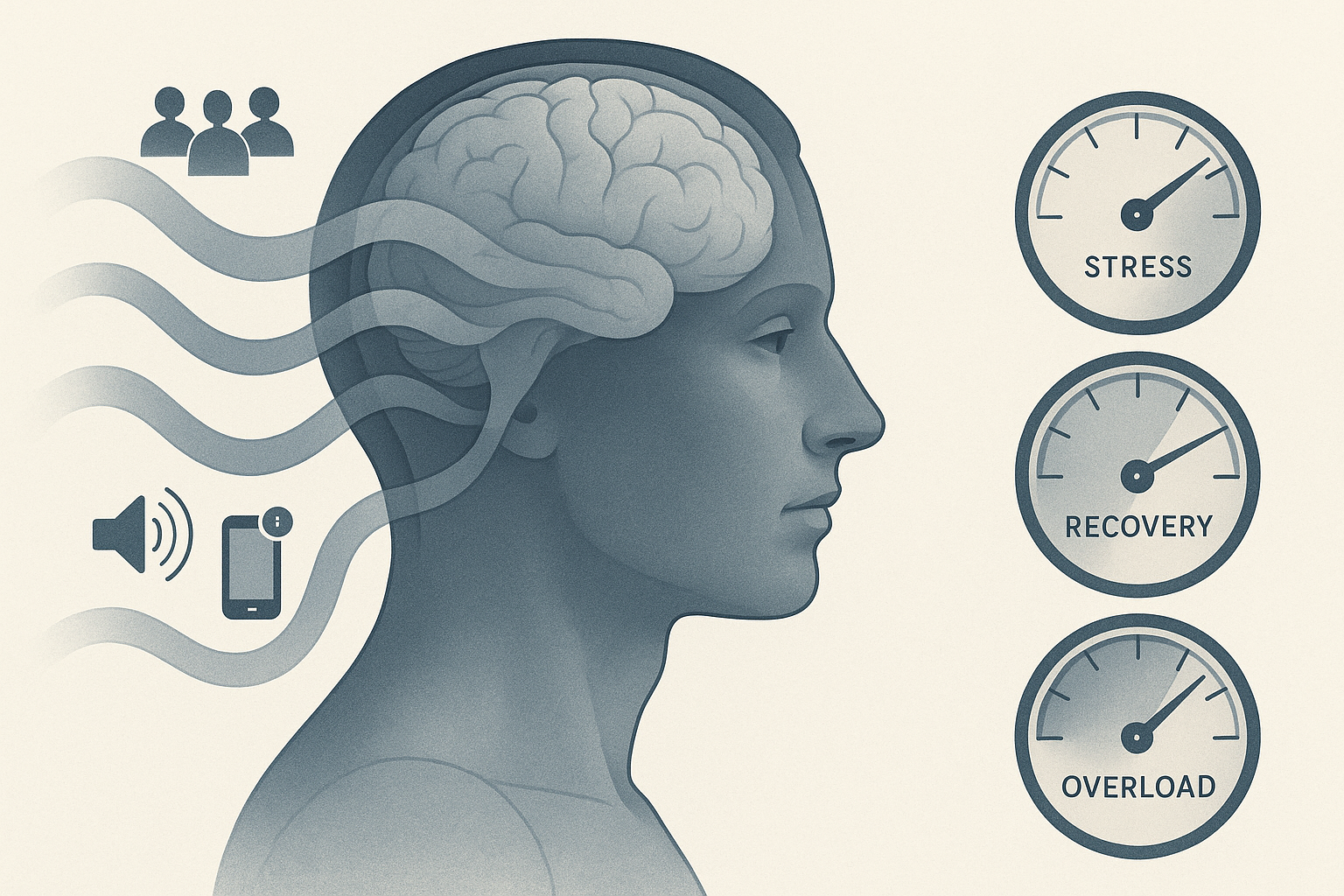
High emotional sensitivity is neither “good” nor “bad”: it’s a greater permeability to internal signals (sensations, emotions, thoughts) and external ones (tone of voice, micro-expressions, social context, implicit conflicts). For many people, this permeability fosters intuition, empathy, and perceptual precision. For others—or at different times in the same person’s life—it can become hyper-reactivity, mental fatigue, and difficulty bouncing back.
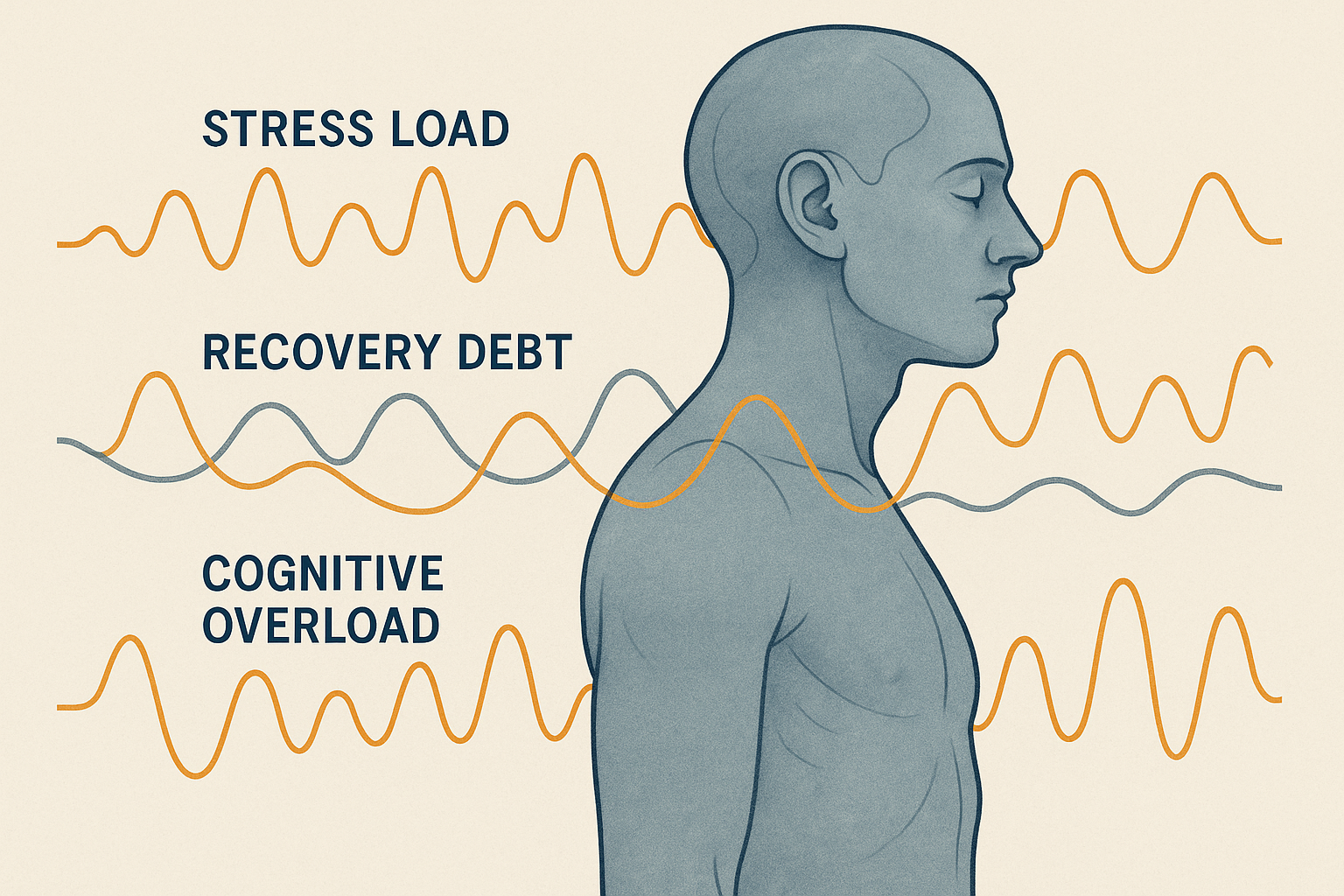
This test doesn’t measure “how sensitive you are” as an identity label. Instead, it measures how sensitivity behaves under three measurable pressures:
- Stress load: how much activation your days demand and how often you stay in alert mode.
- Recovery debt: how much recovery you’re missing (sleep, decompression, attentional restoration) relative to what you expend.
- Cognitive overload: how much mental “bandwidth” is taken up by stimuli, decisions, rumination, and multitasking.
What you’ll get (in practical terms)
At the end, you’ll receive a profile across three axes plus an integrated interpretation. The goal is to help you:
- spot hidden patterns (e.g., sensitivity that rises when recovery drops, or when decision load crosses a threshold);
- separate sensitivity from state (stress/sleep/overload can mimic or amplify sensitivity);
- identify realistic leverage points (reducing inputs, protecting recovery, cognitive hygiene) without generic advice.
How to answer (to improve accuracy)
- Answer with the last 2–3 weeks in mind, not a single day.
- If you’re going through an exceptional period (bereavement, exams, a job change), answer anyway: the test is useful precisely because it helps you read the impact of your current state.
- If you’re torn between two options, choose the one that describes what happens more often, not what you wish would happen.
Responsibility note: this tool is not diagnostic and does not replace a clinical assessment. If you notice thoughts of self-harm, frequent panic attacks, or a marked decline in functioning, consider seeking professional support.
Interpretation: three axes, one dynamic
High emotional sensitivity becomes especially challenging when these combine:
- High stress → an alert system that activates more easily;
- Insufficient recovery → a lower tolerance threshold and greater reactivity;
- Cognitive overload → less capacity to inhibit, filter, and “let go.”
In practice, it’s not just “feeling a lot,” but how much it costs you to feel a lot—and how quickly you recover.
Related deep dives (if useful)
Frequently asked questions
Does high emotional sensitivity mean being “fragile”?
No. It indicates greater responsiveness to emotional and social stimuli. Fragility concerns the ability to maintain functioning and recover under stress. A person can be very sensitive and at the same time stable if they have recovery capacity and a manageable cognitive load.
How do I distinguish emotional sensitivity from anxiety or chronic stress?
Sensitivity is a relatively stable trait; anxiety and stress are states that can increase reactivity, rumination, and hypervigilance. If you notice that your “sensitivity” increases mainly when you sleep worse, have more decisions to make, or are under pressure, it’s likely that your state (stress/recovery/overload) is amplifying the trait.
Why do you also measure recovery debt?
Because recovery is what restores your tolerance threshold and executive control. With a recovery debt, normal stimuli can feel intrusive and emotions become harder to modulate. For many people, reducing recovery debt produces faster improvements than any single “technique” on its own.
Can cognitive overload make everything feel more emotional?
Yes. When cognitive bandwidth is saturated (multitasking, notifications, decision fatigue, rumination), the ability to filter stimuli and inhibit automatic responses decreases. The result is a higher perceived emotional intensity and greater difficulty “putting things in perspective.”
If the test indicates high stress, what should I do right away?
The first step isn’t to “manage emotions better,” but to reduce baseline activation and protect recovery: sleep, breaks without input, reducing avoidable conflicts and decision load. Then it makes sense to work on boundaries, communication, and regulation strategies.
Can this test replace a psychological evaluation?
No. It’s a self-analysis tool to identify patterns and risk areas (stress, recovery, overload) that influence emotional sensitivity. If symptoms are intense, persistent, or disabling, a professional evaluation is the most appropriate choice.
How often does it make sense to repeat the test?
Every 3–6 weeks, or after significant changes (a new job, changes in sleep, periods of conflict). Repeating it too often can confuse interpretation because it captures day-to-day fluctuations more than trends.