Why this test exists
Frequent hunger and difficulty feeling full aren’t always a “willpower problem.” They’re often the result of a regulatory system (metabolic, neuroendocrine, cognitive, and behavioral) operating under less-than-optimal conditions.
This test does not provide a diagnosis and does not replace a clinical evaluation. Its purpose is to make patterns visible that often remain implicit: how stress changes food seeking, how insufficient recovery alters the perception of hunger, and how mental overload reduces self-regulation capacity.
What we measure (three required axes)
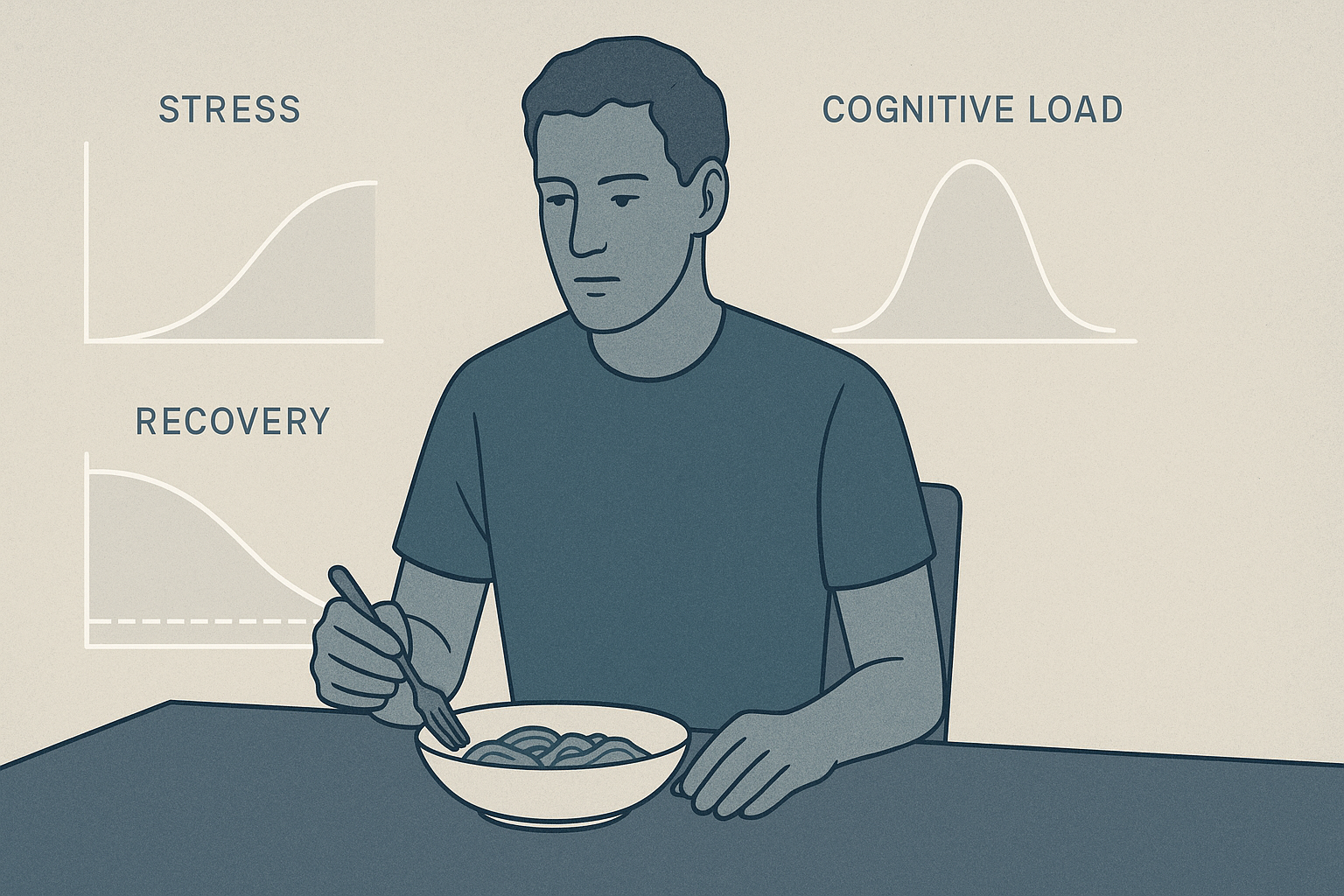
1) Stress load (axis_stress_load)
When stress is high, the body may shift toward faster, more energy-dense choices, become more reactive to food cues, and grow less sensitive to satiety signals. This isn’t “weakness”—it’s a biological threat-management strategy, often activated out of context.
2) Recovery debt (axis_recovery_debt)
Recovery isn’t just sleep: it includes the quality of your rest, real breaks, sustainable rhythms, and the ability to “switch off” alertness. Recovery debt can increase perceived hunger, reduce frustration tolerance, and make episodes of automatic eating more likely.
3) Cognitive overload (axis_cognitive_overload)
When attention is fragmented and the mind is multitasking, the accuracy with which you perceive internal signals (interoception) decreases, and the likelihood of eating to “regulate” mental states increases: tiredness, boredom, tension, confusion.
How to use the results
- Don’t look for a single cause. Frequent hunger is often multifactorial: meal timing, protein/fiber density, stress, sleep, environmental cues, habits.
- Notice recurring patterns. The value of the test is identifying when and under what conditions satiety “doesn’t arrive.”
- Intervene at the bottleneck. If the main driver is stress or recovery, optimizing diet alone may not be enough (and may increase frustration).
Before you start: signs that warrant clinical attention
If you recognize one or more of the items below, consider speaking with a healthcare professional (physician, dietitian, psychologist):
- rapid, unintentional weight loss or gain
- intense thirst, frequent urination, marked fatigue
- recurring binge episodes with loss of control
- self-induced vomiting, laxative use, prolonged rigid restriction
- significant abdominal pain, persistent gastrointestinal symptoms
Methodological note (what you’re actually answering)
The questions are designed to distinguish between:
- physiological hunger (rhythms, meal composition, bodily signals)
- reactive hunger (stress, emotions, cues, context)
- decision-fatigue hunger (cognitive overload, fragmented attention)
Answer with the last 2 weeks in mind, not a single “abnormal” day.
Related deep dives (optional): Stress and appetite regulation · Sleep, recovery, and hunger signals