Why this test exists
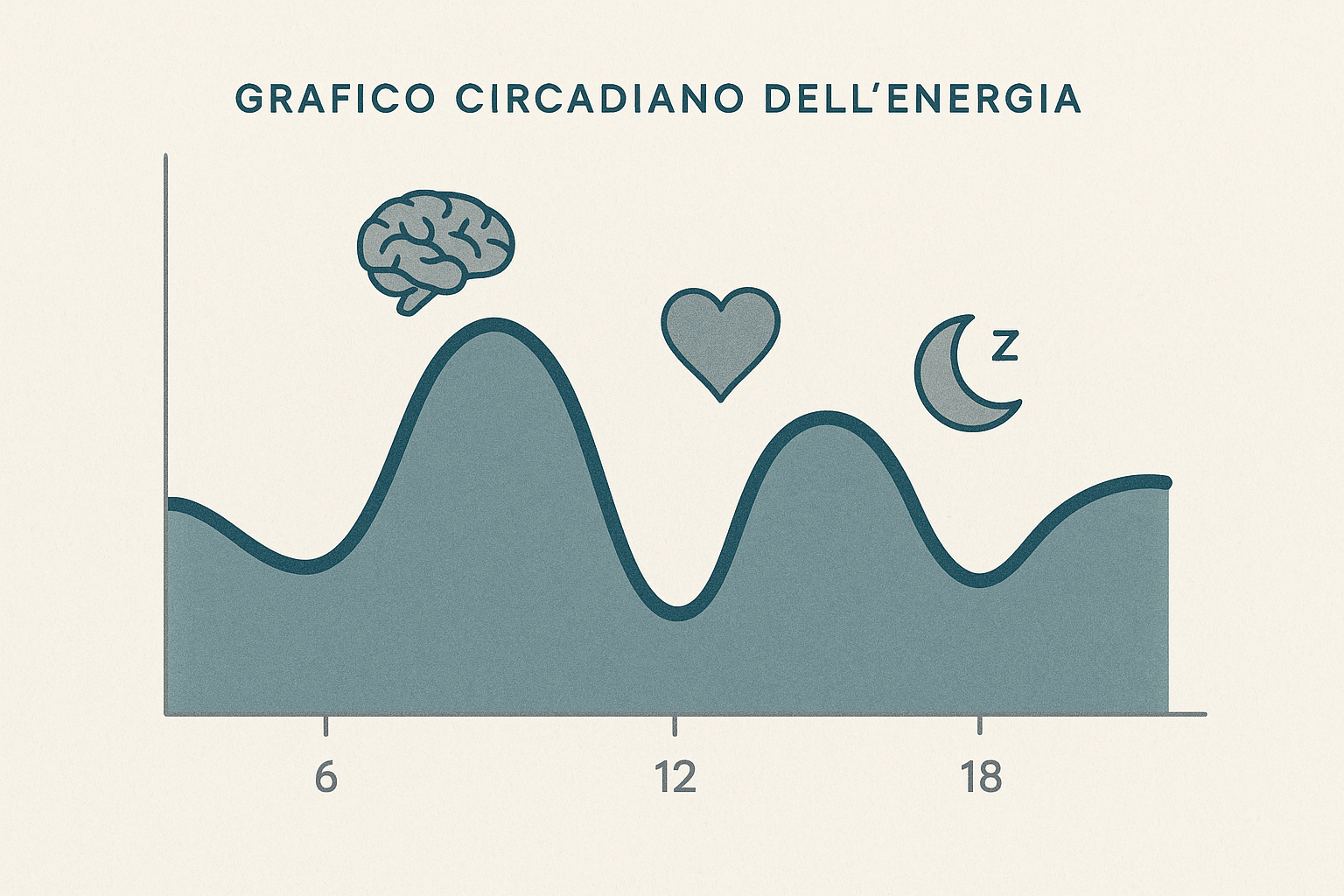
Energy fluctuations aren’t just “tiredness”: they’re often a pattern that emerges from the interaction between physiology (sleep, nutrition, hydration, circadian rhythm), mental load, stress, and recovery habits. This test does not provide a diagnosis and does not replace a clinical evaluation, but it helps you spot recurring patterns and breaking points that, if ignored, can become habitual.
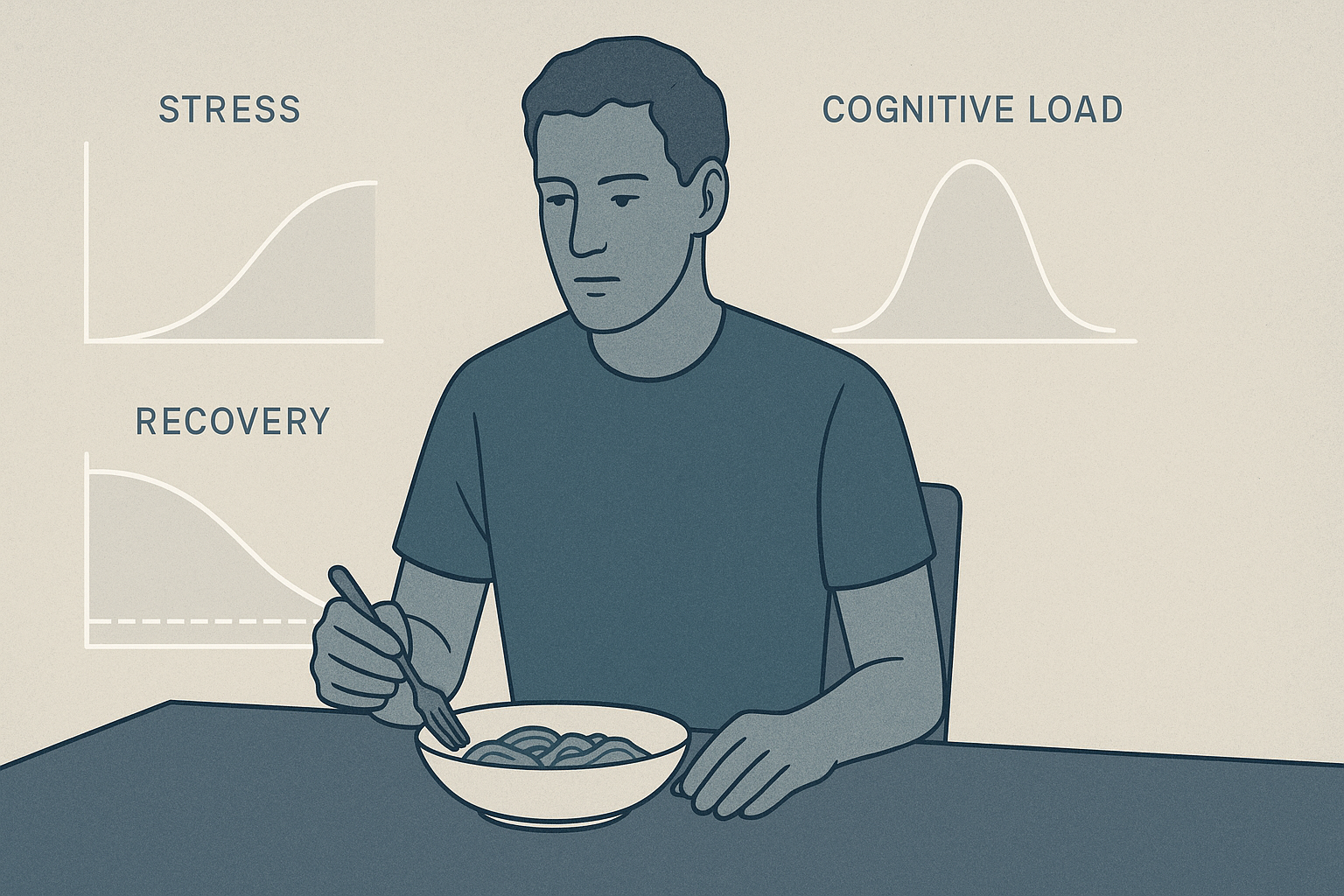
The focus is on three profiling axes: stress load, recovery debt, and cognitive overload. Daily energy is often their most reliable “warning light.”
What we measure (and what we don’t)
We measure
- Energy stability: how consistently your energy stays usable, without spikes and crashes.
- Reactivity: how much your energy depends on external stimuli (caffeine, sugar, urgency, pressure).
- Recovery: how quickly you become “functional” again after stress, meals, intense work, or too little sleep.
- Cognitive load: how much energy your mind uses up due to fragmentation, multitasking, and continuous decision-making.
We don’t measure
- Specific conditions (e.g., thyroid disorders, anemia, sleep apnea, diabetes). If you suspect a medical issue, you need a professional evaluation.
- “Willpower” or motivation: here we observe mechanisms, not judgments.
How to answer for a useful profile
- Think about the last 2–3 weeks, not your best or worst day.
- Answer based on typical days (workdays and non-workdays), not exceptions.
- If you’re torn between two options, choose the one that describes what happens most often.
If you want to go deeper after the test, you can compare the results with a broader assessment of your profile in the Umanindex Profile.
Interpretation: what a “crash” can mean
An energy dip can have different signatures. Some are more consistent with recovery debt (too little sleep, incomplete recovery), others with stress load (hyperactivation, constant tension), and others with cognitive overload (too many decisions, a fragmented context). They often coexist.
Three signals to watch
- Timing: does the dip always happen at the same time, or is it unpredictable?
- Triggers: does it come after meals, meetings, complex tasks, conflict, screen time?
- Recoverability: do you bounce back with a short break, or do you need to “shut down” for hours?
Limits and safety
If energy fluctuations are associated with unintentional weight loss, tachycardia, shortness of breath, significant dizziness, fainting, intense thirst, uncontrollable sleepiness, or if they worsen rapidly, it’s wise to talk to your doctor. This test is designed to increase awareness, not to replace clinical evaluation.
What you get at the end
- A profile across the three axes: axis_stress_load, axis_recovery_debt, axis_cognitive_overload.
- An interpretation of the most likely patterns behind your dips and peaks.
- Practical, non-generic guidance on what to observe and what to test in a controlled way (micro-changes, not revolutions).
If you want to connect these results to a broader map of stress and recovery, you can also use the Stress & Recovery Check.