Why this test exists (and what it really measures)
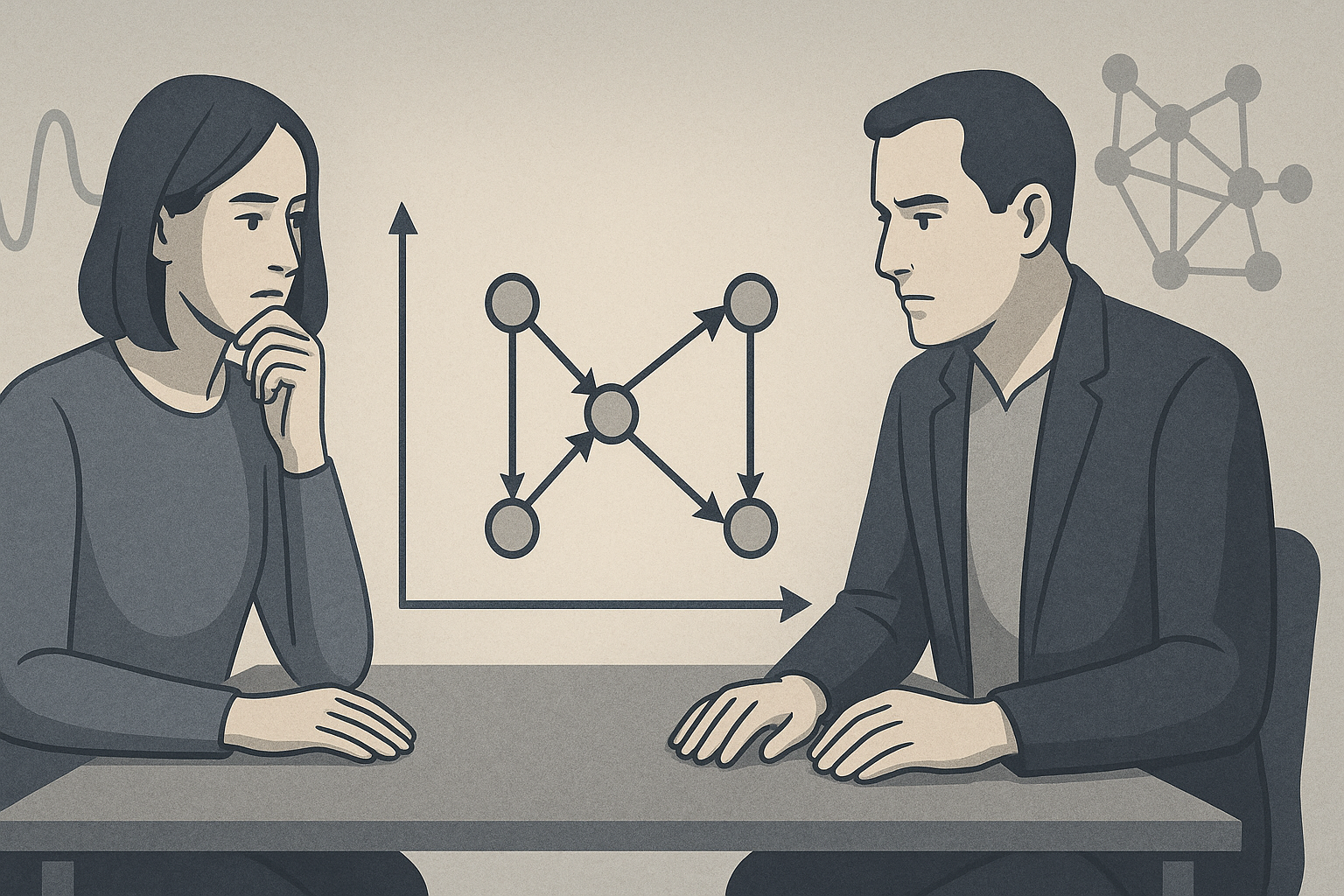
Disagreements aren’t a problem in themselves; they become destructive when the system (cognitive, emotional, and physiological) shifts into defense mode. In that mode, three things change: attention (it narrows), interpretation (it polarizes), and behavior (it becomes rigid).
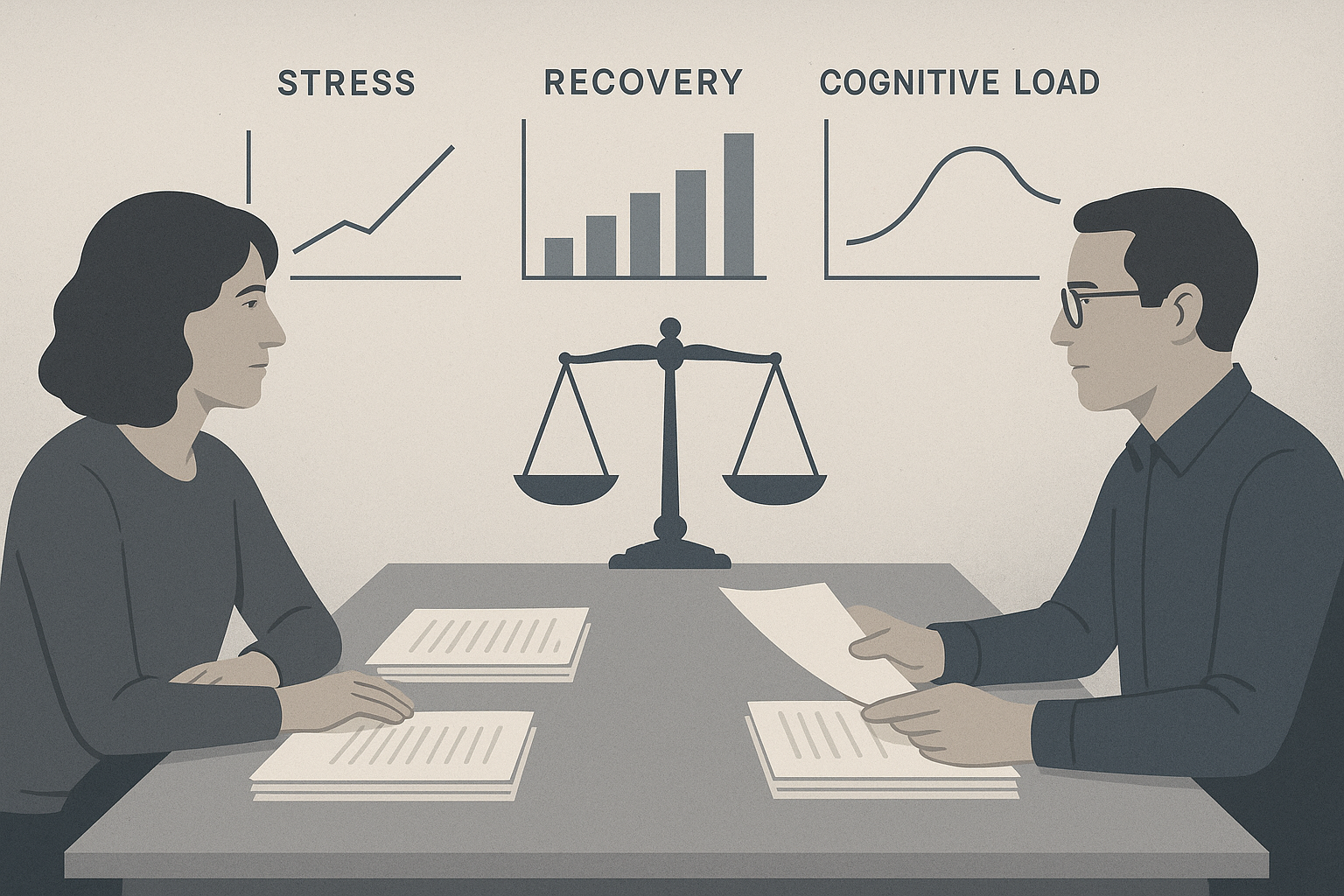
This test doesn’t assess “how good you are at arguing.” Instead, it maps the recurring patterns you use to deal with disagreement and links them to three psychophysiological axes that often determine the outcome of a difficult conversation:
- Stress load: how quickly conflict triggers alert and defensive reactions.
- Recovery debt: how much energy you have left after repeated tension (and how long you need to return to stability).
- Cognitive overload: how much complexity you can handle without losing precision, listening, and flexibility.
What you’ll get at the end
The report summarizes:
- your disagreement-management profile (your dominant tendency and the conditions under which it derails);
- risk indicators (e.g., rapid escalation, chronic avoidance, argumentative rigidity, “concessions” that later turn into resentment);
- practical levers to improve the quality of the exchange: observable micro-actions, not generic advice.
How to answer (so you don’t skew the results)
- Think of real disagreements from the last 30–60 days (work, partner, family).
- Answer based on what you actually do, not what you believe is right.
- If you see yourself in two options, choose the one that happens more often under pressure.
Methodological note: many questions are designed to distinguish between stated competence and behavior under stress. It’s normal to find some options “uncomfortable”—those are the most diagnostic.
Three early conflict signals worth recognizing
1) Attentional narrowing
As tension rises, attention locks onto a few cues (tone, a sentence, a detail) and loses the broader context. This increases the likelihood of rigid interpretations.
2) Rapid attributions
“They’re doing it on purpose,” “they don’t get it,” “they’re incompetent.” Dispositional attributions (about the person) replace situational ones (about the context). It’s an escalation accelerator.
3) Unprocessed compromises
Agreements made just to end the conversation, without real alignment. Over time, they become relational debt: resentment, cynicism, disengagement.
When this test is particularly useful
- If you notice you avoid confrontations and then blow up later.
- If you “win” arguments but lose collaboration.
- If you feel drained after a conflict or ruminate for hours/days.
- If you manage people or projects and notice recurring friction around priorities, responsibilities, and standards.
Interpretation: what a high/low score means on the axes
Stress load (axis-stress-load)
High: rapid activation, reactivity, difficulty maintaining tone and precision. Low: greater stability, but watch out for underestimating others’ signals of tension.
Recovery debt (axis-recovery-debt)
High: after disagreements, you need a long time to regain clarity; irritability and rumination may build up. Low: efficient recovery; risk: moving on too quickly without processing.
Cognitive overload (axis-cognitive-overload)
High: in conflict, you lose the ability to hold goals, constraints, emotions, and data together; simplifications and either/or thinking increase. Low: strong complexity management; risk: overanalyzing, which can slow decisions and irritate more direct counterparts.