Natural Rhythms & Environmental Exposure
Test: Evening artificial light imbalance (circadian rhythm, stress, and recovery)
Assess how much evening exposure to artificial light (screens and indoor lighting) is disrupting your circadian rhythm, stress load, recovery debt, and cognitive overload. Results with profiling axes and practical signals to watch for.
Why this test exists
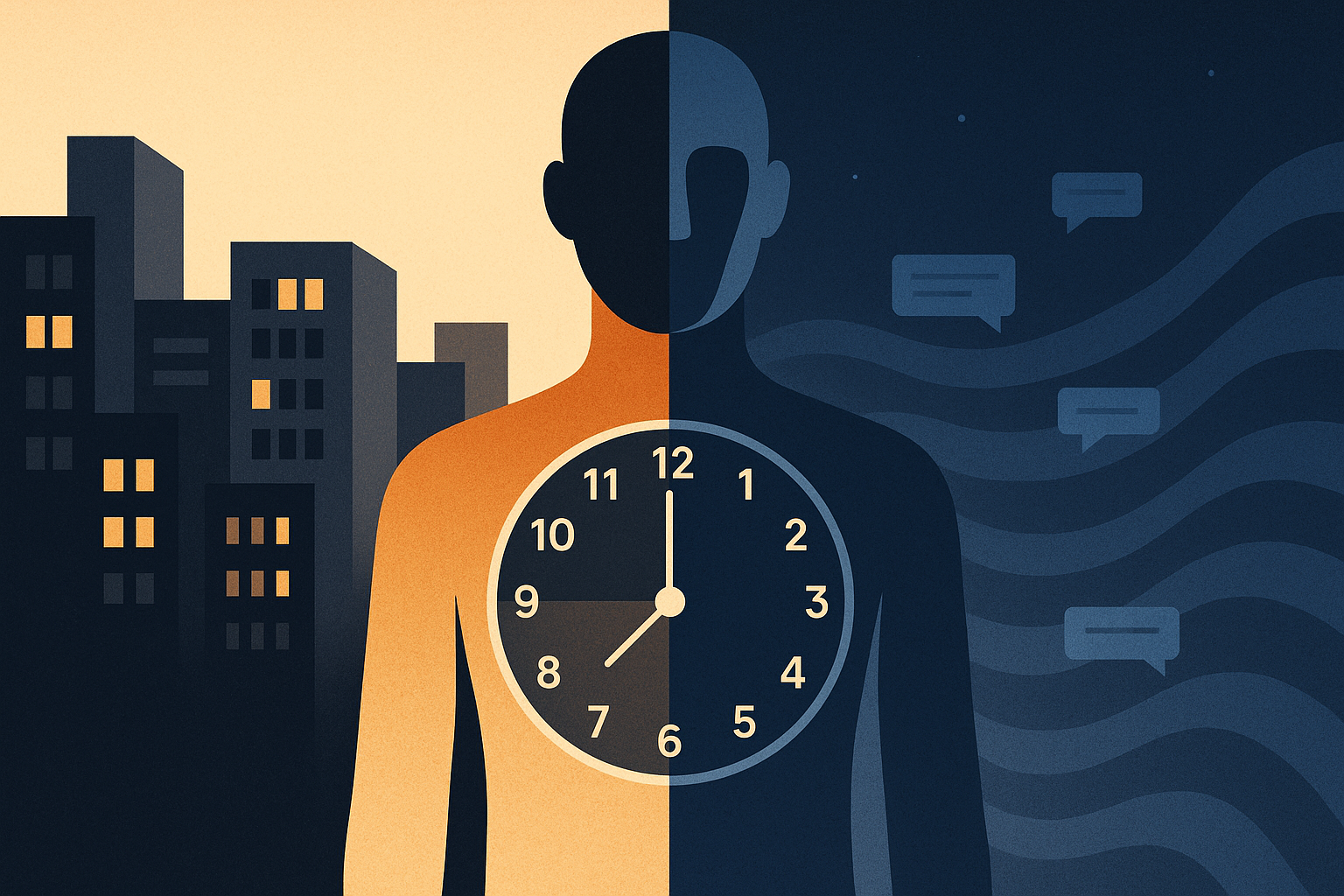
Evening light isn’t a “lifestyle” detail—it’s a biological signal. When the environment stays bright after sunset (cool-toned bulbs, screens, signage, urban lighting), your circadian system may receive a mixed message: “it’s still daytime.” This can delay your internal clock, reduce sleep pressure, impair recovery quality, and increase the likelihood of evening hyperarousal.
This test doesn’t measure “how disciplined you are,” but rather how much your evening ecosystem (light, activities, mental load) is creating a risk profile: trouble falling asleep, fragmented sleep, waking unrefreshed, irritability, evening hunger, reduced mental clarity, and heightened reactivity to stress.
What it assesses (operationally)
- Evening light exposure: intensity, spectrum (cool/blue), duration, distance from the eyes, and context (screens vs. ambient lighting).
- Wind-down window: how much real space exists between “stimulation” and “sleep.”
- Signals of circadian misalignment: daytime sleepiness, late-night hunger, awakenings, and shifts in sleep timing.
- Interaction with stress and cognitive load: when light amplifies a system that’s already saturated (mental work, notifications, decision fatigue).
How to answer to get a useful profile
- Answer based on the last 2 weeks, not your “ideal evening.”
- If you’re unsure between two options, choose the one that happens more often.
- Consider workdays and weekends separately: variability is data, not an error.
Note: this test is not diagnostic and does not replace a clinical assessment. If you have persistent insomnia, significant snoring, suspected sleep apnea, marked daytime sleepiness, or take medications that affect sleep, interpret the results with a professional.
What you’ll get at the end
A profile across three required axes:
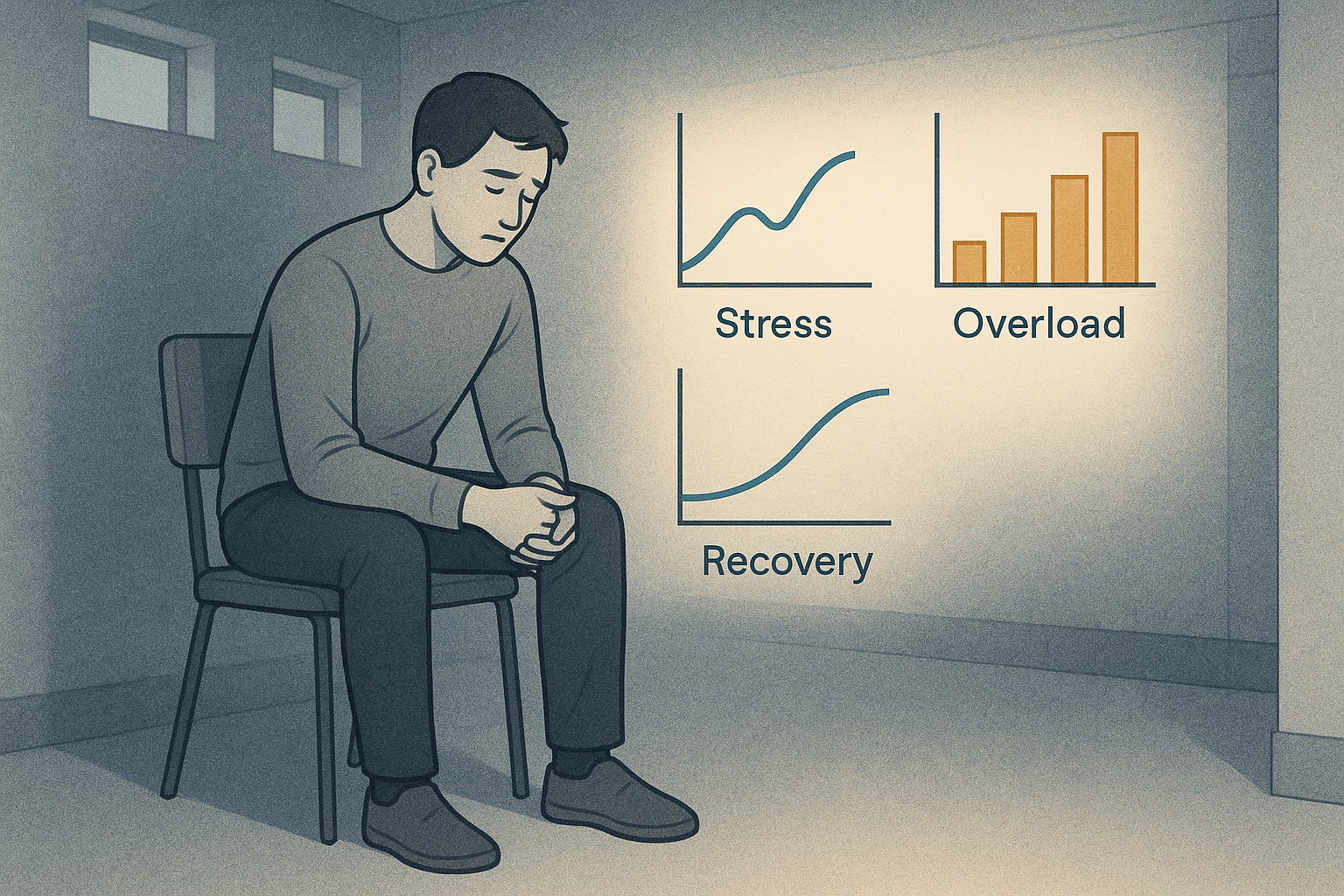
- axis_stress_load: how much your system reaches the evening already “loaded,” and how much light keeps it activated.
- axis_recovery_debt: signs of insufficient recovery and accumulation (unrefreshing sleep, awakenings, morning inertia).
- axis_cognitive_overload: evening mental saturation (notifications, multitasking, high information-density content).
In addition, the test highlights patterns (e.g., “low light but screens close to the face,” “weekend shift,” “content-driven hyperarousal”) and realistic leverage points.
Frequently asked questions
Is “blue light” really the main problem?
It’s part of the problem, but not the only one. Spectrum matters (blue/cyan components), but so do intensity, duration, distance from the eyes, and timing. A screen close to your face at high brightness can have more impact than a warm lamp far away. Also, light acts together with cognitive and emotional stimuli (content, work, notifications), which can keep the alert system active even if the light is moderate.
If I use “night shift” filters or filter glasses, am I all set?
Reducing the blue component can help, but it doesn’t eliminate the effect: intensity, proximity, and above all mental activation remain. If you’re reading work emails or highly stimulating content, the issue can become more “neurocognitive” than purely “photobiological.” The test is designed precisely to distinguish these contributions.
Why do I get hungry in the evening when I’m in front of screens?
For many people, the combination of evening light, stress, and fatigue increases the drive for quick gratification and can push the eating window later. It’s not just “willpower”: it’s an interaction between circadian signals, impulse regulation, and decision load. If the test shows high axis_cognitive_overload and axis_stress_load, evening hunger can be a consistent signal.
Is it normal to fall asleep late but sleep well?
It can be, if your chronotype is naturally more evening-oriented and your sleep is stable, sufficient, and restorative. The critical point is misalignment: when your internal timing runs late but obligations force you to wake up early, a recovery debt builds up. The test evaluates the presence of axis_recovery_debt signals (morning inertia, daytime sleepiness, awakenings, perceived quality).
How long before sleep should I reduce light?
There isn’t a universal number. In general, a 60–120 minute window with lower light and less activating activities is often sufficient for many people, but individual sensitivity varies. If the test indicates high vulnerability (recovery debt and evening hyperarousal), the window may need to be more protected and consistent.
Why do I wake up at 3–4 a.m. and then struggle to fall back asleep?
It can depend on many causes (stress, temperature, alcohol, blood sugar, noise, sleep disorders). Evening light can contribute by shifting the rhythm and fragmenting sleep architecture, especially if paired with cognitive hyperarousal. If the test shows elevated axis_stress_load and axis_cognitive_overload, that awakening may be a sign of a system that’s “still on alert.”
Does home lighting matter even if I don’t use screens?
Yes. Very bright, cool lamps (high color temperature) late in the evening can keep the “daytime” signal high. Even without screens, an environment that’s too brightly lit can delay sleepiness and reduce the quality of the transition into sleep. The test includes specific questions about ambient lighting and household habits.
Can this test tell me if I have a sleep disorder?
No. However, it can highlight patterns consistent with circadian misalignment, recovery debt, or evening hyperarousal and suggest which variables to observe more precisely. If symptoms are intense or persistent, clinical evaluation remains the reference.