Why this test exists
Modern life tends to compress and fragment the signals that regulate biological rhythms: natural light, darkness, meals, movement, breaks, silence, predictability. The result isn’t just “tiredness”: repeated patterns often emerge (evening hyperarousal, non-restorative sleep, irritability, reduced attention, cravings, difficulty “switching off”) and get normalized until they become the new baseline.
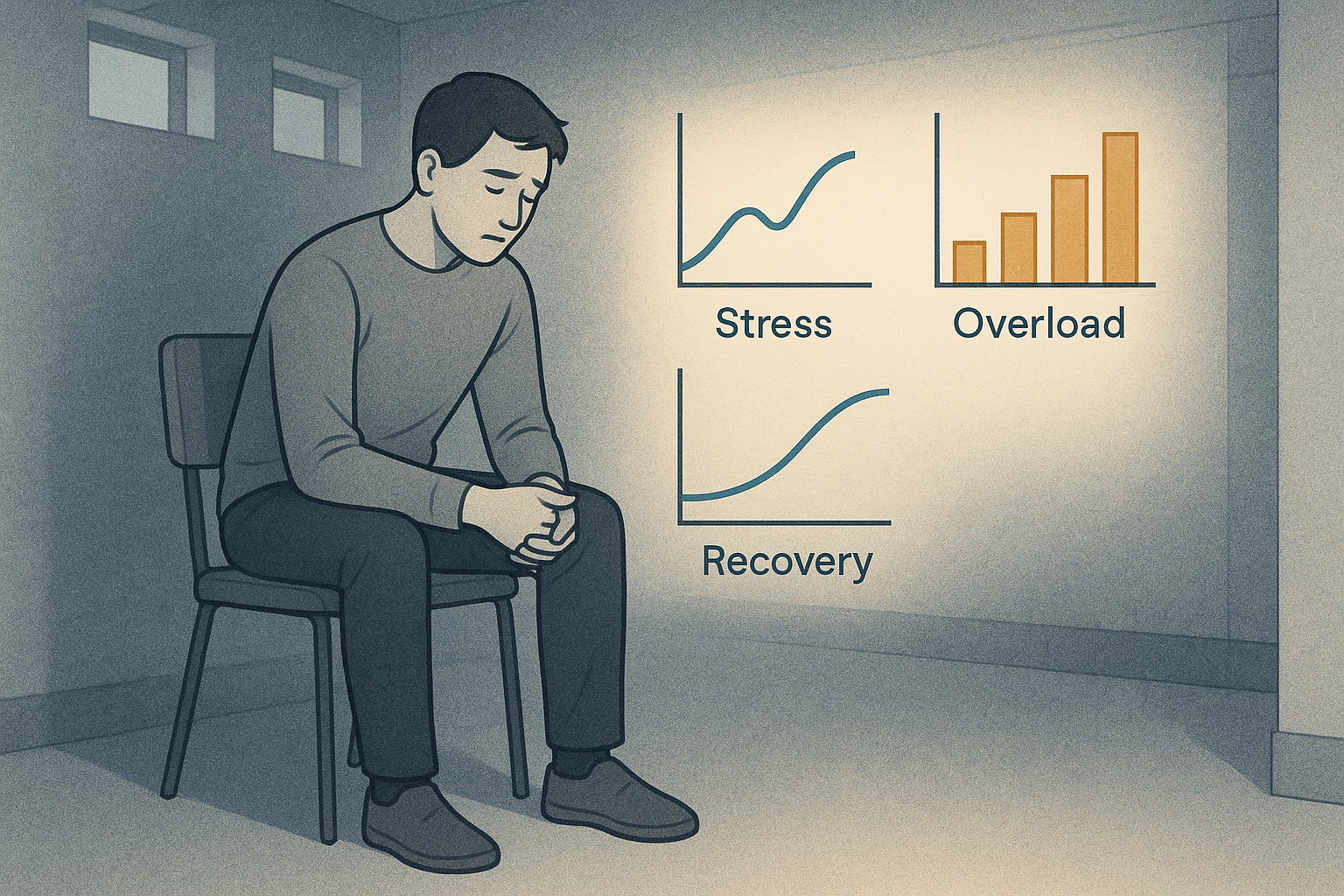
This test doesn’t measure “how disciplined you are.” Instead, it maps three dimensions that, together, describe an important part of everyday biological rhythm disruption:
- Stress load: how much activation (physiological and mental) you’re sustaining.
- Recovery debt: how much recovery you’re missing compared to what you’re spending.
- Cognitive overload: how much attentional and decision pressure you’re managing.
What you’ll get
At the end, you’ll receive a concise, easy-to-read profile, with indicators of:
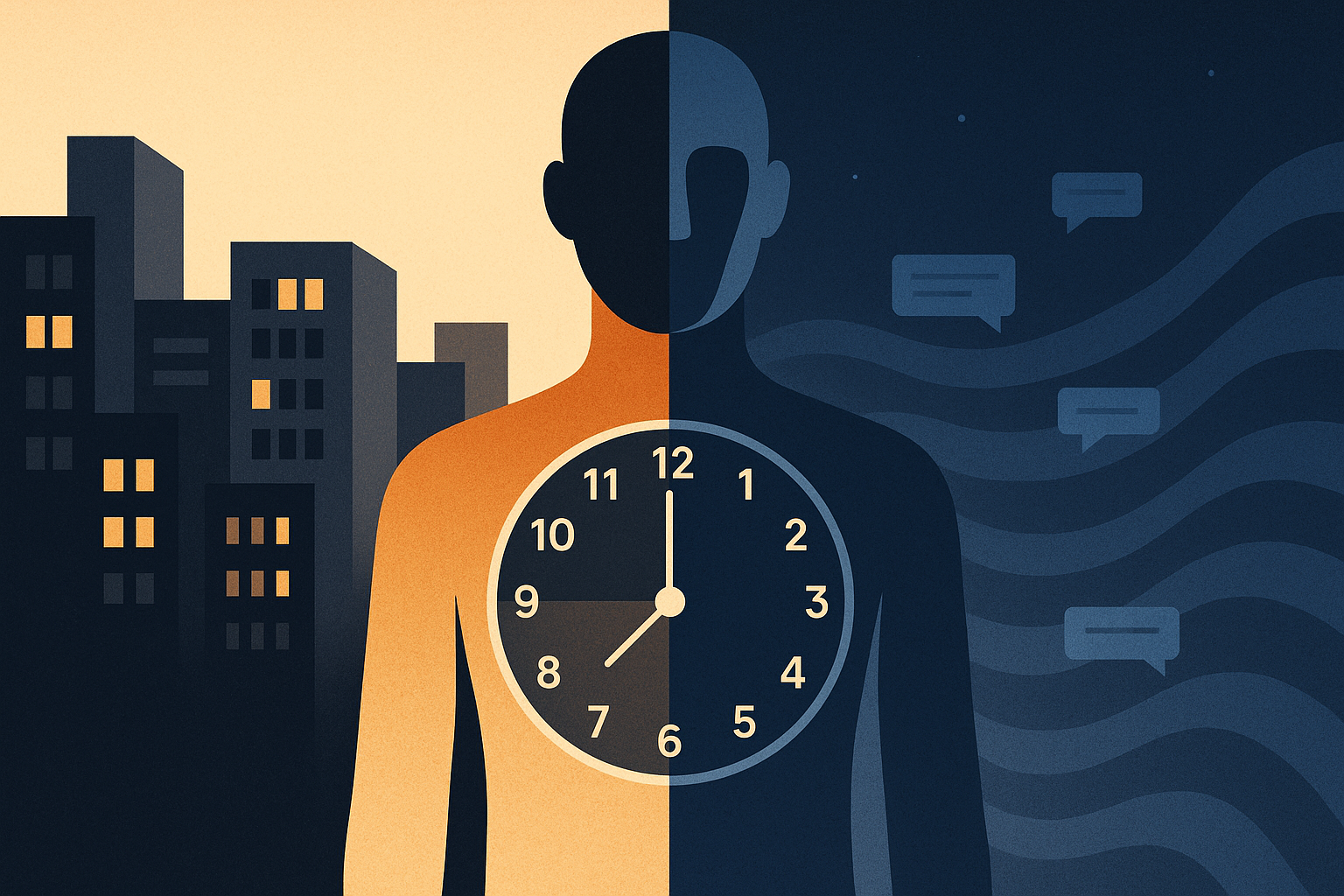
- likely misalignment between social schedules and biological needs (social jet lag);
- signs of hyperarousal (difficulty winding down) vs. hypoarousal (fatigue and brain fog);
- areas where your day is “stealing” recovery (sleep, breaks, light, nutrition, information load).
This is not a diagnosis. It’s an operational map to increase awareness and autonomy—so you can understand where to intervene before your body does it for you.
How to answer (to get a useful result)
- Answer with the last 2–3 weeks in mind, not your “ideal day.”
- If you have very different periods (e.g., shift work), choose the most frequent one.
- When you’re unsure, choose the option that describes what happens most often, not what “should” happen.
If you want to go deeper after the test: circadian rhythm guide and stress–recovery model.
What the test looks at (in a non-trivial way)
1) Environmental signals (zeitgebers) and their consistency
Light, darkness, meal timing, physical activity, and routines are “time cues” that synchronize biological systems. When they’re inconsistent or too weak (lots of artificial light in the evening, little natural light in the morning, irregular meals), the body can remain in a gray zone: neither fully activated nor fully recovered.
2) Recovery architecture
Recovery isn’t just sleeping “a certain number of hours.” Continuity matters, perceived quality matters, the ability to decompress before sleep matters, and the presence of real micro-breaks during the day matters. Recovery debt often shows up as reduced tolerance: less emotional margin, more reactivity, more mistakes.
3) Cognitive load and fragmentation
Notifications, multitasking, rapid context switching, and constant decision-making increase attentional costs. This can keep activation levels high even when you’re “not doing anything physical,” interfering with sleep and with the feeling of being rested.
Safety note
If you have persistent severe insomnia, suspected sleep apnea (significant snoring with breathing pauses), dangerous daytime sleepiness, or intense depressive/anxious symptoms, consider speaking with a healthcare professional. This test can help you describe the problem more clearly, not replace a clinical assessment.