Why this test exists
The rollout of new digital tools (collaboration suites, ticketing systems, CRMs, AI assistants, new security policies, new communication platforms) is not just a matter of technical skill. It is a load event that changes your attention, working memory, the rhythm of interruptions, the quality of recovery, and your sense of control.
This test does not measure “how good you are with technology.” It measures how your system (cognitive, behavioral, and physiological) is absorbing the change—and where invisible costs are building up.
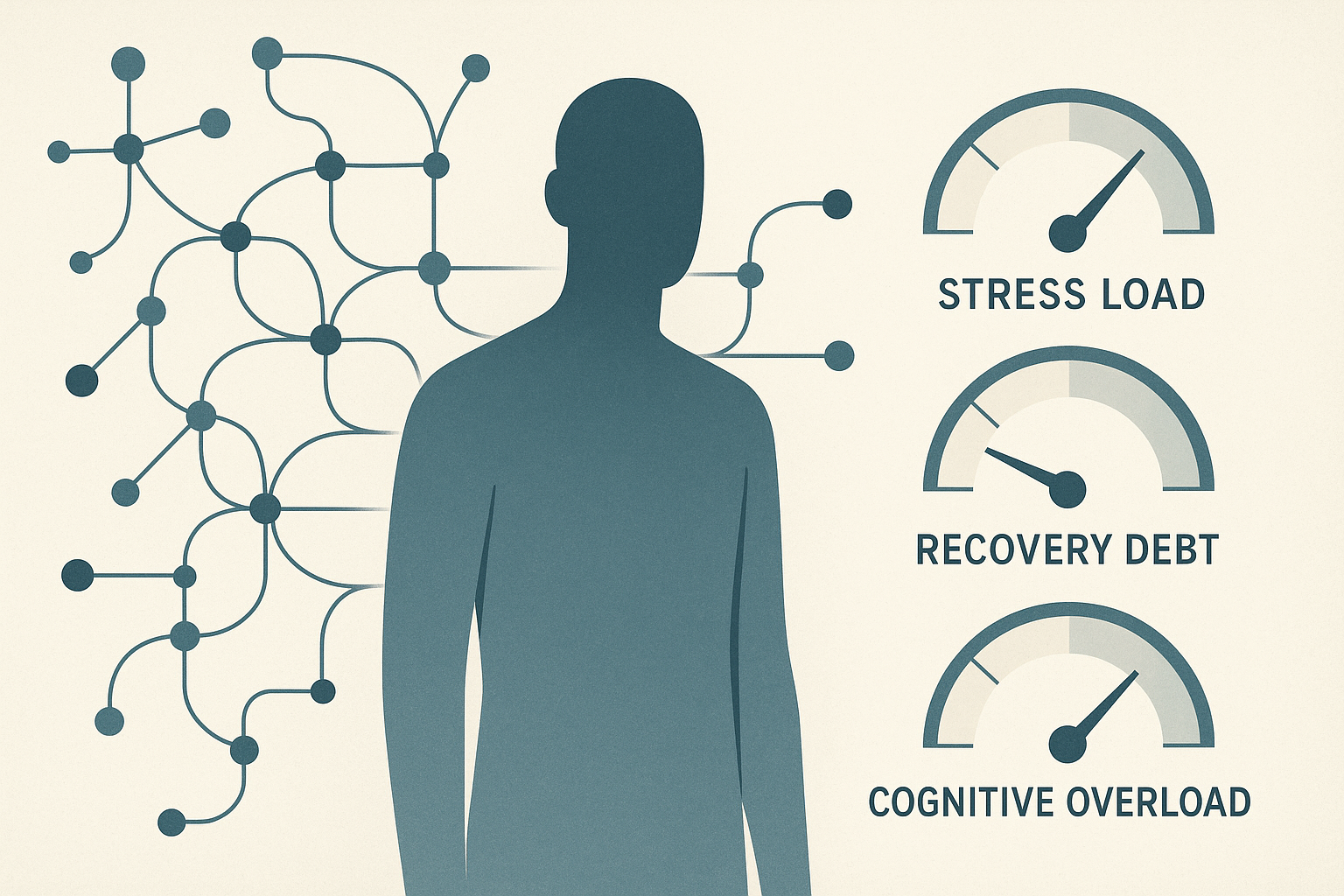
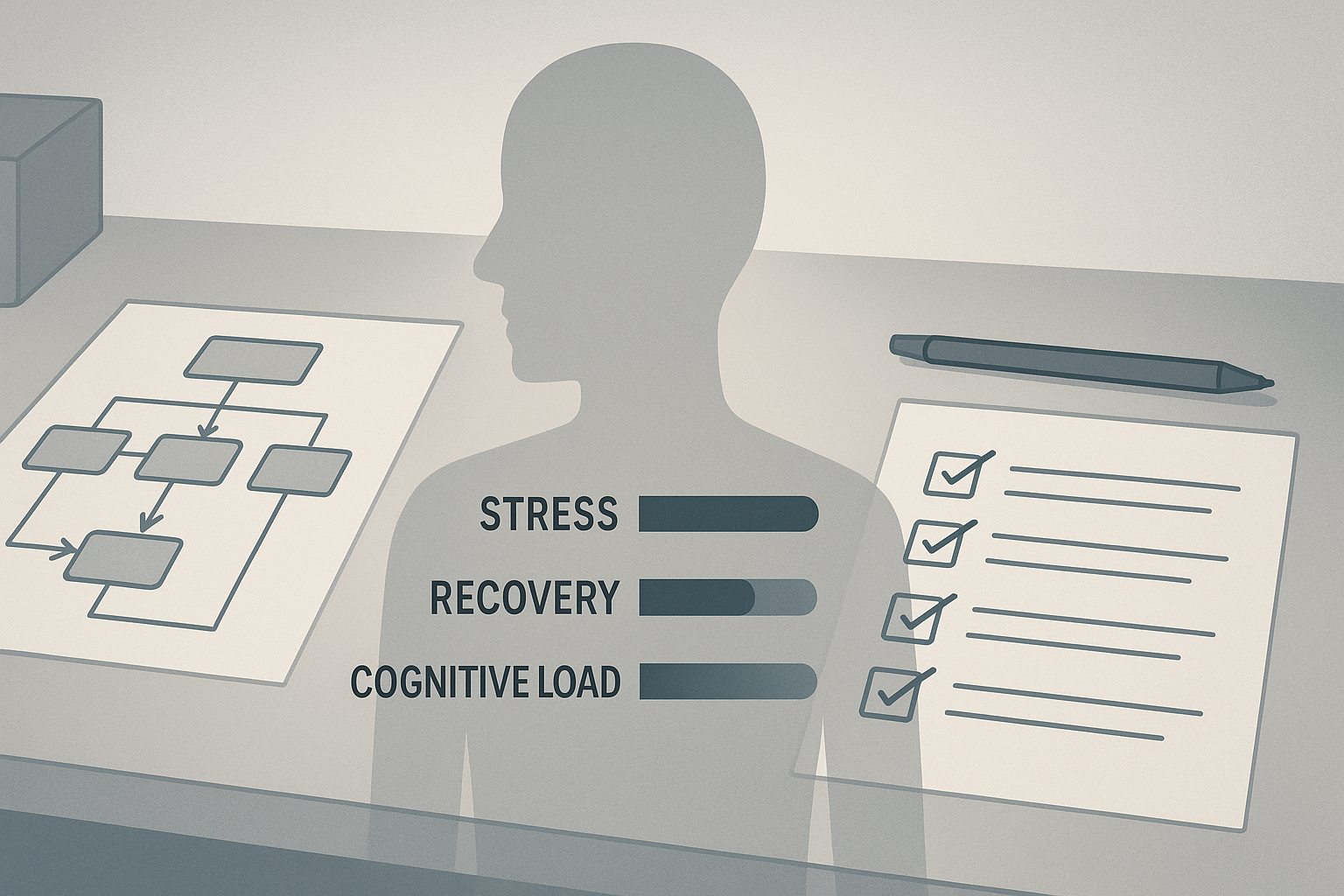
What it assesses (3 mandatory axes)
- Stress load (axis_stress_load): the intensity and frequency of signals of pressure, urgency, hypervigilance, and emotional friction related to the tools.
- Recovery debt (axis_recovery_debt): how much recovery (sleep, breaks, decompression) is insufficient relative to the load; signs of carryover and “not switching off.”
- Cognitive overload (axis_cognitive_overload): working-memory saturation, constant context switching, difficulty prioritizing, more errors, and slower decision-making.
How to answer (to get a useful profile)
Answer with the last 2–4 weeks in mind—when you had to use or integrate new digital tools. If the change is more recent, answer based on the last week. Don’t look for the “right” answer: choose the one that is most descriptive of how you actually function.
Note: some questions distinguish between objective load (number of tools, notifications, requests) and subjective load (perceived control, clarity, predictability). Both matter.
Interpretation: what a high score means
1) High stress load
This doesn’t indicate “fragility.” It indicates that the change is triggering an alert pattern. In digital contexts, this often stems from unfiltered urgency, ambiguous processes, fear of making a traceable mistake, and continuous exposure to requests.
2) High recovery debt
This is a sign of insufficient recovery relative to the load. It can show up as unrefreshing sleep, difficulty switching off, “low-threshold” irritability, a drop in motivation, and reduced tolerance for friction.
3) High cognitive overload
This is a sign of working-memory saturation and higher switching costs. It typically leads to forgetfulness, trivial mistakes, “smart” procrastination (I avoid it because it costs too much), and an excess of micro-decisions.
Hidden patterns this test can bring to light
- High competence, high load: you know how to use the tools, but you pay for it with attention and recovery (often due to hyper-responsibility or a lack of boundaries).
- Moderate load, high overload: few tools, but poorly integrated; ambiguous processes; too many exceptions; unmanaged notifications.
- High stress, low recovery: the problem isn’t the tool, but the continuity of work (lack of decompression, implicit on-call availability).
- High overload, low stress: you feel “calm,” but you’re slowing down and accumulating errors; risk of a silent decline in performance.
What you’ll do after the test
The results are useful if you turn them into testable hypotheses: which conditions increase the load? Which reduce recovery? Which activities generate the most context switching? If you want to go deeper, you can compare this profile with other indicators on stress and load or with a broader perspective on digital hygiene and attention.
Limits and proper use
This test is not a diagnostic tool and does not replace a clinical assessment. It is designed to increase awareness and autonomy: to identify friction points and recovery debts that are often treated as normal.