Focus & Cognitive Overload
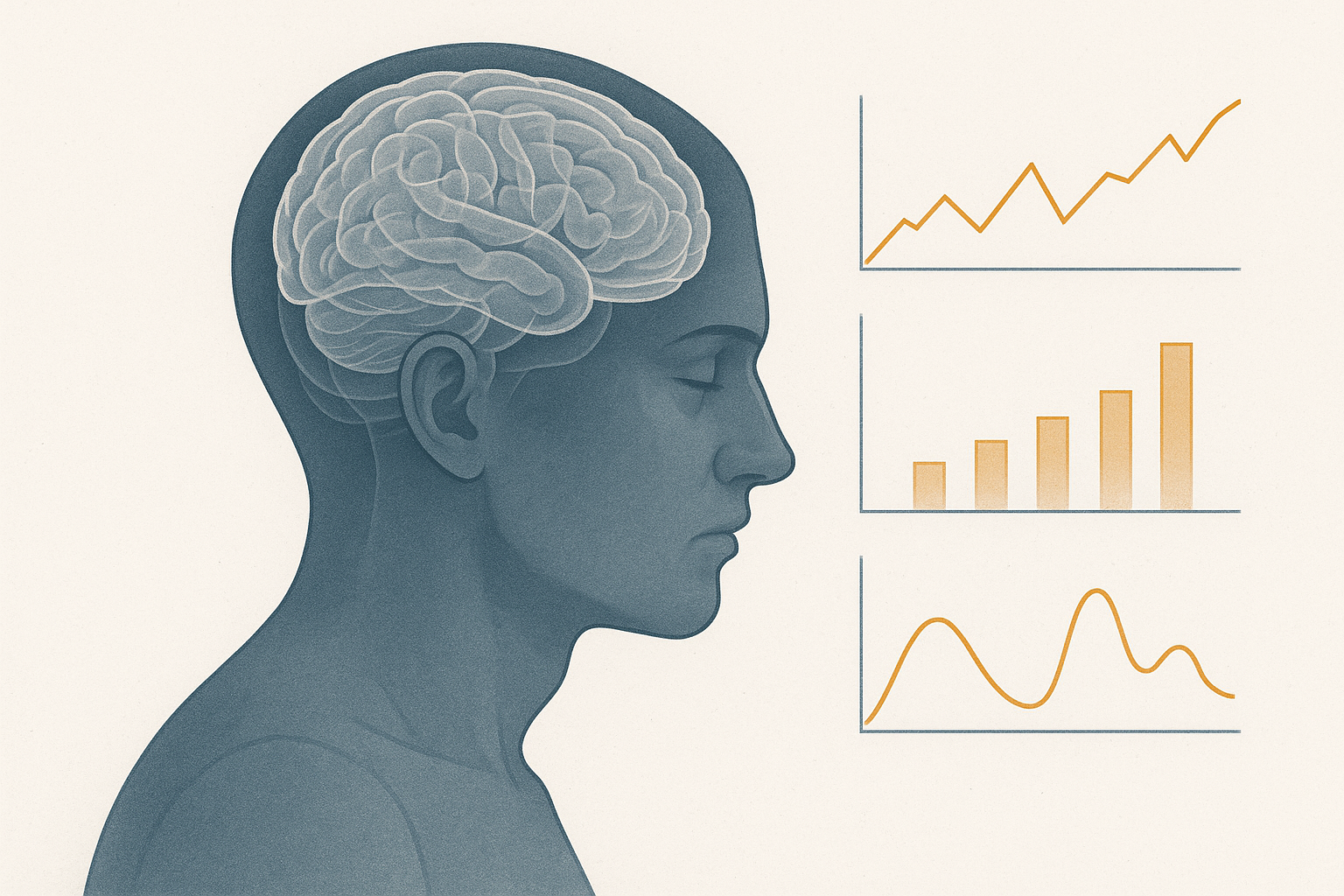
Difficulty maintaining attention: a map of load, recovery, and cognitive overload
Assess the patterns that reduce your attention: stress load, recovery debt, and cognitive overload. Results oriented toward awareness and personal autonomy.
Why this test
Difficulty sustaining attention is rarely a matter of “lack of willpower.” More often, it’s the result of a system carrying too much load, getting too little recovery, or dealing with too much simultaneous complexity. This test doesn’t measure “how good you are at concentrating”: it reconstructs the conditions that make focus unstable and identifies recurring patterns that, over time, become automatic.
The interpretation model is based on three axes:
- Stress load (axis_stress_load): how much physiological and psychological pressure you’re carrying.
- Recovery debt (axis_recovery_debt): how much recovery you’re missing compared with what your system needs.
- Cognitive overload (axis_cognitive_overload): how much information, decision-making, and task-switching you’re demanding of your mind.
What you’ll get
- A map of the factors that destabilize attention (not a label).
- Indicators of physiological and behavioral imbalance consistent with your response profile.
- An interpretation oriented toward autonomy: what to monitor, what to reduce, what to protect.
How to answer (to improve accuracy)
- Refer to the last 14 days, not “how you are in general.”
- Answer with real contexts in mind (work/study, home, social life).
- If you’re unsure between two options, choose the one that describes what happens more often.
Note: this test is not a diagnostic tool and does not replace a clinical evaluation. If attention difficulties are sudden, severe, or associated with significant symptoms (severe insomnia, persistently low mood, panic attacks, substance use), consider speaking with a professional.
Interpretation: three common paths to losing focus
1) Focus “interrupted” by stress
When your system is on alert, attention tends to become vigilant: it scans for threats, anticipates problems, checks. This can look like productivity, but it often reduces your ability to stay with a single task.
2) Focus “drained” by recovery debt
When recovery is insufficient, the mind can sustain attention only by increasing effort. Micro-lapses, mistakes, the need for quick stimulation, and “relief” procrastination become more frequent.
3) Focus “fragmented” by cognitive overload
Too many inputs, too many decisions, and too much switching consume executive resources. The issue isn’t complexity itself, but simultaneous competition among tasks, notifications, thoughts, and unclear priorities.
Before you start: signals to observe (without judgment)
- Start-up time: how long it takes you to “get into” the task.
- Stamina: how long you can stay on task without switching windows/activities.
- Quality: how many corrections, repetitions, and re-reads you need.
- Recovery: how quickly you return to focus after an interruption.
These indicators will be referenced in the final report to connect your answers to observable behaviors.
Frequently asked questions
Does this test measure ADHD or other attention disorders?
No. The test is not diagnostic and does not identify specific disorders. It is meant to map conditions and patterns (stress, recovery, overload) that can reduce attention even in the absence of a diagnosis. If symptoms have been present for years, are pervasive, and significantly interfere with study/work/relationships, a clinical evaluation is the appropriate path.
Why do you consider stress, recovery, and cognitive overload separately?
Because they produce “loss of focus” through different mechanisms: stress increases vigilance and reactivity; recovery debt reduces energy and executive control; cognitive overload fragments attention due to excessive input and switching. Separating them helps avoid generic interventions and understand where you can act with the greatest leverage.
How long should I expect before my attention improves?
It depends on which axis is dominant. If recovery debt prevails, changes to sleep, breaks, and workload can show signs within 7–14 days. If cognitive overload prevails, reducing switching and clarifying priorities can improve stamina even within a few days. If high stress prevails, stabilization may take longer because it involves physiological regulation and context.
Why can I sometimes focus extremely well on some things and not at all on others?
Attention is not a single trait: it is modulated by meaning, novelty, reward, perceived threat, and energy cost. It’s common to have hyperfocus on highly salient activities and poor stamina on tasks with low immediate reward, especially when stress or recovery debt reduces the ability to “stay the course” without stimulation.
Do notifications and multitasking really matter, or is it exaggerated?
They matter because they increase the cost of switching: every interruption takes time to rebuild the task’s mental context (goal, status, next action). Even frequent micro-interruptions can reduce quality and increase decision fatigue, with a cumulative effect on cognitive overload.
If the result indicates high recovery debt, does it mean I just need to “rest more” and that’s it?
Not necessarily “more,” but better and consistently. Recovery debt is about the gap between demands and your capacity to restore: it can depend on fragmented sleep, ineffective breaks, evening hyperarousal, or continuous load without decompression. The final report highlights which signals in your responses point to one of these causes.
How reliable are my answers if my days are very variable?
Variability is useful data, not a problem. That’s why the reference is the last 14 days: it reduces the effect of extreme days. If variability is high, it often indicates a system that is sensitive to context, sleep, nutrition, emotional load, or day structure—elements that emerge especially on the stress and recovery axes.
What should I do if the test suggests very high stress?
Use the result as a priority signal: temporarily reduce exposure to non-essential demands, protect recovery windows, and assess whether there are persistent factors (conflicts, workload, worries) that require structural interventions. If intense symptoms or rapid worsening are present, a professional consultation is recommended.