Mental Resilience & Adaptability

Difficult transitions: stress, recovery, and cognitive overload

15 questions 9 min40 people have taken this test
Difficult transitions: stress, recovery, and cognitive overload

Assess how you handle periods of transition (job changes, relationships, cities, roles). Identify stress load, recovery debt, and cognitive overload with a structured test designed to support autonomy.

Sign up or log in to take the test

Registration is required to start any test.

What this test analyzes

Stress load
Measures perceived pressure and sustained activation (urgency, threat, hyper-responsibility) during the transition.
Recovery debt
Estimates the gap between energy expended and energy restored (through sleep, decompression, the ability to switch off, and genuine recovery).
Cognitive overload
Assesses working-memory overload and decision fatigue (rumination, fragmented attention, difficulty prioritizing).

Why transitions test you (even when “everything is fine”)

A transition isn’t just an external event (a new job, the end of a relationship, a move, a change in role). It’s a period in which the brain has to reorganize its predictions, habits, functional identity, and support networks. That takes physiological energy and regulatory capacity.

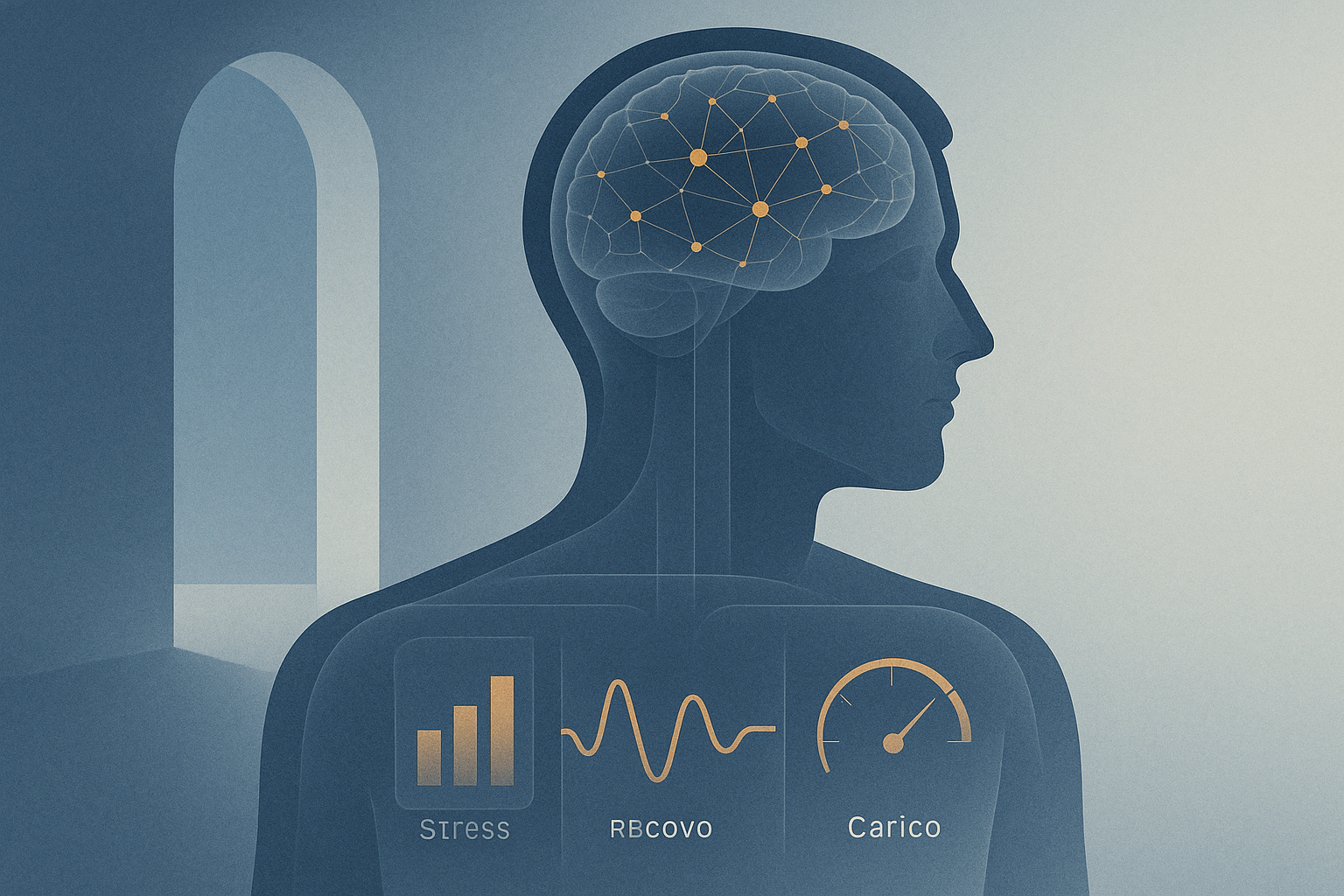
Many difficulties don’t come from a “lack of willpower,” but from three measurable dynamics:

  • Stress load: how much pressure (external and internal) you’re carrying.
  • Recovery debt: how much energy you’re “front-loading” without replenishing it (sleep, decompression, real breaks).
  • Cognitive overload: how many decisions, variables, and micro-problems you’re holding in working memory, leading to fatigue and reduced clarity.

What this test measures (and what it doesn’t)

This test is designed to help you spot patterns that often remain invisible during change: early signs of overload, coping strategies that work in the short term but cost you in the medium term, and points where the system (body-mind) is asking for recovery.

It is not a diagnostic tool and does not replace a clinical assessment. It’s a self-assessment system—useful if you answer accurately, without “optimizing” your self-image.

Instructions for completion

  1. Answer with the last 3–4 weeks in mind (not just the last day).
  2. If you’re in an active transition, answer based on your current state; if you’re not, think back to your most recent significant transition.
  3. If you’re torn between two options, choose the one that describes what happens more often, not what “should” happen.

How to read the results: three axes, one underlying dynamic

The results are structured along three core axes:

  • axis_stress_load: intensity and continuity of the load (pressure, urgency, perceived threat, hyper-responsibility).
  • axis_recovery_debt: the quality/quantity of recovery relative to expenditure (sleep, breaks, decompression, ability to “switch off”).
  • axis_cognitive_overload: working-memory saturation (decision fatigue, rumination, fragmented attention).

A transition becomes difficult especially when high stress + insufficient recovery + cognitive overload reinforce one another. The test helps you understand where the loop is tightening.

Typical (non-obvious) signs of difficulty during a transition

  • Reduced tolerance for uncertainty: a need to close decisions too early or, conversely, decision paralysis.
  • Micro-avoidance: small but frequent delays (emails, phone calls, logistical choices) that increase mental noise.
  • “False” recovery: free time that doesn’t actually restore you (scrolling, bingeing, over-optimizing routines).
  • Rigidity: increased control and perfectionism in response to unstable variables.
  • Somatization: tension, gastrointestinal issues, headaches, fragmented sleep.

If you want to go deeper

You can complement this test with additional self-assessment tools on umanindex:

Safety note

If, in recent weeks, you’ve had persistent thoughts of extreme self-devaluation, thoughts of self-harm, frequent panic attacks, or severe insomnia, consider speaking with a professional. This test can help you describe what you’re experiencing more clearly, but it is not a clinical intervention.


Frequently asked questions

What exactly is meant by “transition” in this test?
A transition is a period in which multiple variables change at the same time (role, routine, relationships, operational identity, context). The change doesn’t have to be “dramatic”: even a promotion, a new team, or returning after a break can trigger a significant adaptation load.
Why do I feel worse when the transition seems “positive”?
Because the regulation system doesn’t respond only to the emotional valence of an event, but to the amount of uncertainty and the number of decisions required. A positive change can increase responsibility, social exposure, complexity, and internal pressure, generating stress and overload even in the absence of obvious “problems.”
What is the difference between stress load and cognitive overload?
Stress load concerns perceived pressure and the activation response (urgency, threat, hypervigilance). Cognitive overload concerns the saturation of mental resources: too many decisions, too many variables to keep in mind, fragmented attention. They can coexist, but they are not the same thing.
What does “recovery debt” mean, and how does it show up?
It’s the gap between energy spent and energy restored. It shows up as unrefreshing sleep, difficulty “switching off,” irritability, reduced motivation, increased sensitivity to stimuli and conflict, and a need for compensatory strategies (caffeine, over-control, procrastination).
How reliable are the results if I’m having a particularly intense week?
The test is calibrated to the last 3–4 weeks precisely to reduce the effect of isolated spikes. However, if you’re in an exceptionally intense phase (deadlines, moving, bereavement), the results will accurately describe your current condition, but may not represent your “baseline” functioning.
Can this test tell me if I have anxiety or burnout?
No. However, it can highlight profiles consistent with burnout risk (high stress + low recovery) or with anxious patterns (hyperactivation, rumination, intolerance of uncertainty). If scores are high and persistent, it makes sense to consider a clinical consultation.
What can I do if high cognitive overload emerges?
The goal isn’t to “think better,” but to reduce the number of simultaneous items in working memory. In practice: externalize (lists, calendars, notes), reduce repetitive decisions, create interruption-free windows, and define decision criteria before evaluating options. The test helps you understand whether this is the main lever in your case.
Do the results change over time?
Yes. The three axes are sensitive to sleep, workload, relationship quality, physical health, and contextual stability. Repeating the test after 3–6 weeks can show whether you’re regaining adaptability or accumulating debt.

Recommended tests

All tests