Anxiety & Emotional Hyperactivation
Constant anxiety: a map of load, recovery, and cognitive overload
Assess persistent anxiety by distinguishing stress load, recovery debt, and cognitive overload. A self-analysis test to identify patterns, imbalances, and maintaining factors.
Why “constant” anxiety isn’t just an emotion
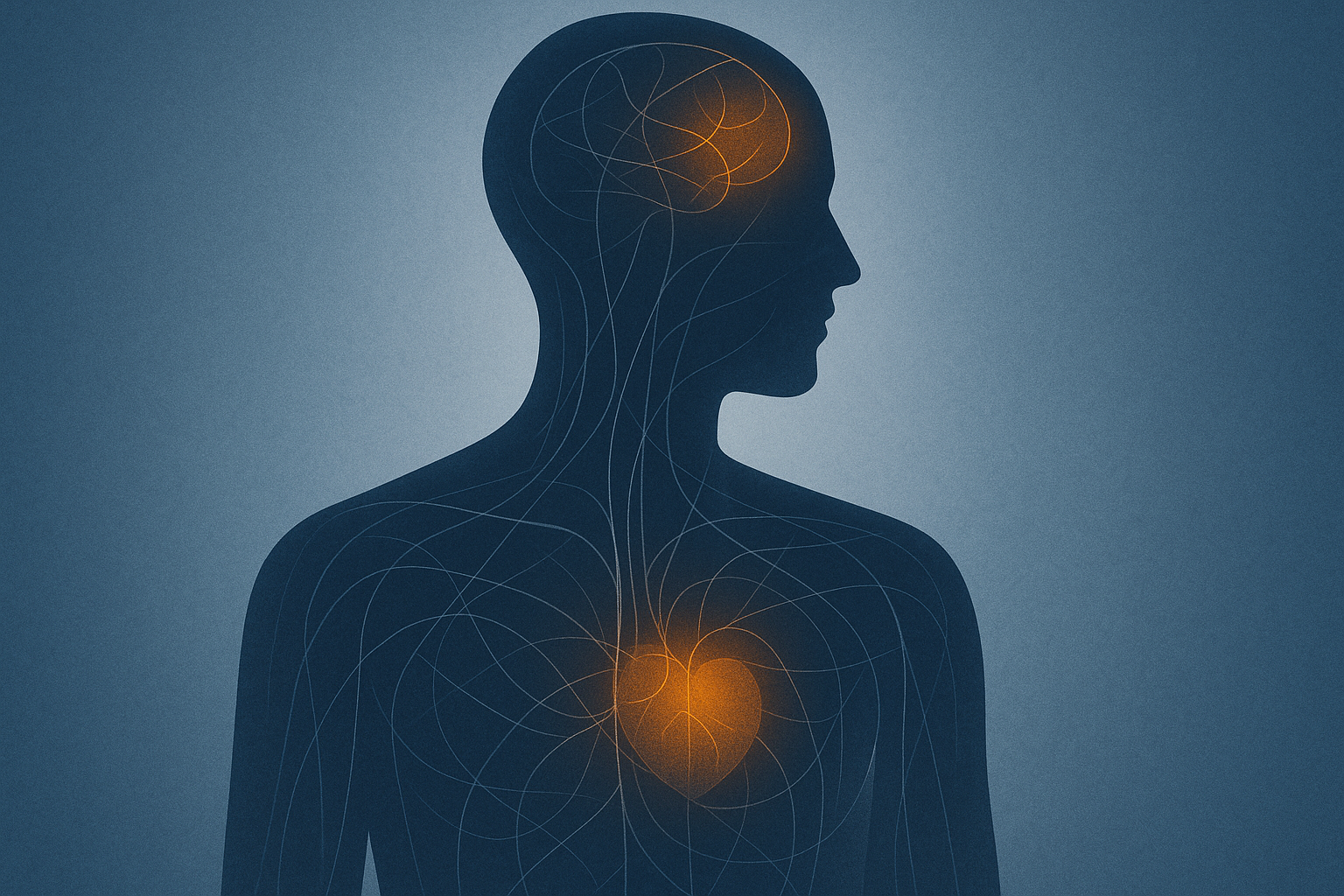
When anxiety becomes a steady background hum, it often doesn’t map onto a single event or a clearly defined fear. It’s more like an alert setting that involves the body, attention, working memory, and the ability to recover. This test isn’t meant to “label you,” but to separate different components that, when conflated, can make coping strategies ineffective.
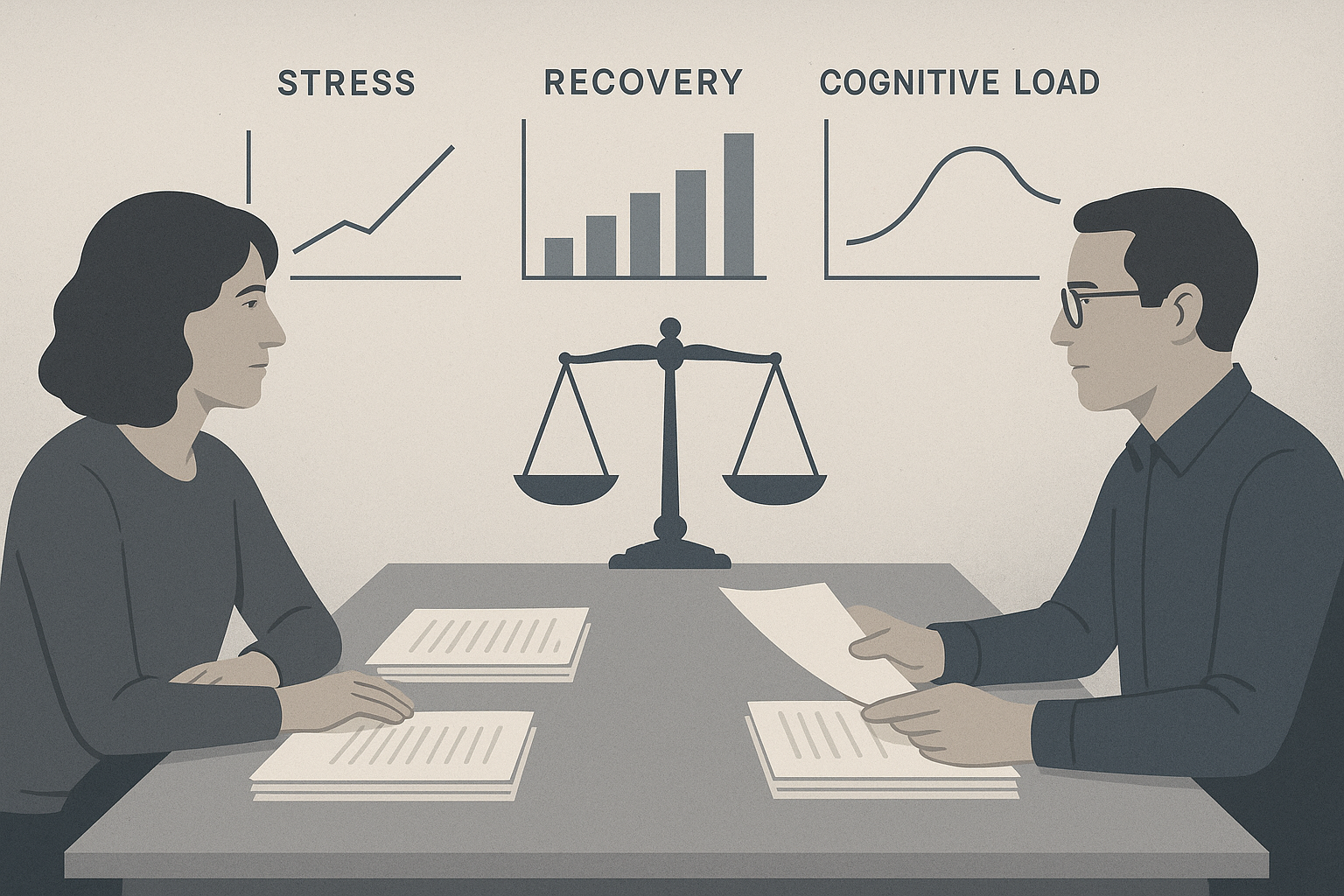
The umanindex platform uses three mandatory interpretive axes:
- Stress load (axis_stress_load): how much real and perceived pressure you’re carrying (demands, urgency, conflict, responsibility, uncertainty).
- Recovery debt (axis_recovery_debt): how far “behind” your system is on sleep, breaks, decompression, and physiological and mental restoration.
- Cognitive overload (axis_cognitive_overload): how much attentional capacity and executive control is being consumed by multitasking, rumination, decision-making, hypervigilance, and managing complexity.
What you’ll get (in concrete terms)
At the end, your profile highlights maintenance patterns typical of persistent anxiety, for example:
- High stress + low recovery: anxiety as a signal of physiological saturation (not a “lack of willpower”).
- Moderate stress + high overload: anxiety driven by hypercontrol, rumination, and fragmented attention.
- High stress + high overload: risk of escalation (irritability, insomnia, somatization, reduced decision-making).
The value of the test lies in making measurable what is often experienced as vague: “I’m always anxious.”
Instructions for completion
- Answer with the last 14 days in mind (not your worst day).
- If you’re torn between two options, choose the one that’s more frequent.
- Don’t aim for a coherent narrative: what matters here is the behavioral trace (sleep, attention, reactions, choices).
How to interpret the results (without oversimplifying)
A high score doesn’t mean “this is just how you are.” It means that, during this period, your system is operating with a certain alert setting. Constant anxiety can be maintained by:
- Physiological factors: insufficient sleep, irregular rhythms, stimulants, chronic muscle tension, hyperarousal.
- Cognitive factors: rumination, anticipation, excessive control, difficulty mentally “closing” tasks.
- Environmental factors: prolonged demands, ambiguity, conflict, hyperconnectivity, lack of boundaries.
If you’d like to go deeper after the test, you can consult: Guide: stress and recovery and Cognitive hygiene and overload.
Safety note and limitations
This test is a self-assessment tool and does not replace a clinical evaluation. If your anxiety is associated with frequent panic attacks, thoughts of self-harm, substance misuse, or significantly interferes with work, relationships, or sleep, consider speaking with a qualified professional. If you’re in immediate danger, contact emergency services in your area.
Frequently asked questions
What’s the difference between constant anxiety and “normal” stress?
Stress is a response to demands perceived as challenging; it can be episodic and compatible with good recovery. Constant anxiety tends to keep a level of alertness even when the trigger isn’t present or isn’t proportionate, often with rumination, hypervigilance, and difficulty “switching off” the system.
Why does the test separate stress load, recovery debt, and cognitive overload?
Because they can produce similar symptoms (tension, irritability, insomnia, difficulty concentrating) but require different levers. Anxiety sustained by a recovery deficit won’t resolve with cognitive techniques alone; anxiety driven by cognitive overload can persist even with a moderate external workload.
Can I have high anxiety even if “nothing is happening” to me?
Yes. The alert system can stay active due to neurophysiological habit, insufficient recovery, cognitive overcontrol, or continuous exposure to micro-stimuli (notifications, rapid decisions, fragmentation). The test is designed precisely to identify which component is maintaining the activation.
How much does sleep matter in the results?
A lot. Sleep is a central regulator of emotional reactivity, stress threshold, and executive capacity. A recovery debt can amplify anxiety by making threatening interpretations, irritability, and concentration difficulties more likely.
Can the test indicate whether I have an anxiety disorder?
No. It can highlight patterns consistent with hyperactivation and maintaining factors, but it does not provide a diagnosis. If symptoms are intense, persistent, and impairing, a clinical evaluation remains the reference point.
How often does it make sense to repeat the test?
Generally every 2–4 weeks, or after a significant change (new demands, sleep changes, travel periods, job changes). Repeating it too often can confuse interpretation because anxiety also fluctuates due to day-to-day variables.
What does it mean if I have high cognitive overload but a medium stress load?
It often indicates that the pressure doesn’t come only from external events, but from how the mind is handling complexity and uncertainty: multitasking, rumination, control, difficulty closing thought loops. In these cases, reducing fragmentation and improving decision architecture can have a greater impact than “doing fewer things.”
If my recovery debt is high, do I just need to rest more?
Rest is necessary but not always sufficient. The quality of recovery also matters (sleep continuity, real decompression, breaks without stimuli, regular rhythms). Also, if the stress load remains unchanged, recovery may not “close the debt”: you also need to intervene on boundaries, priorities, and demands.