Why this test exists
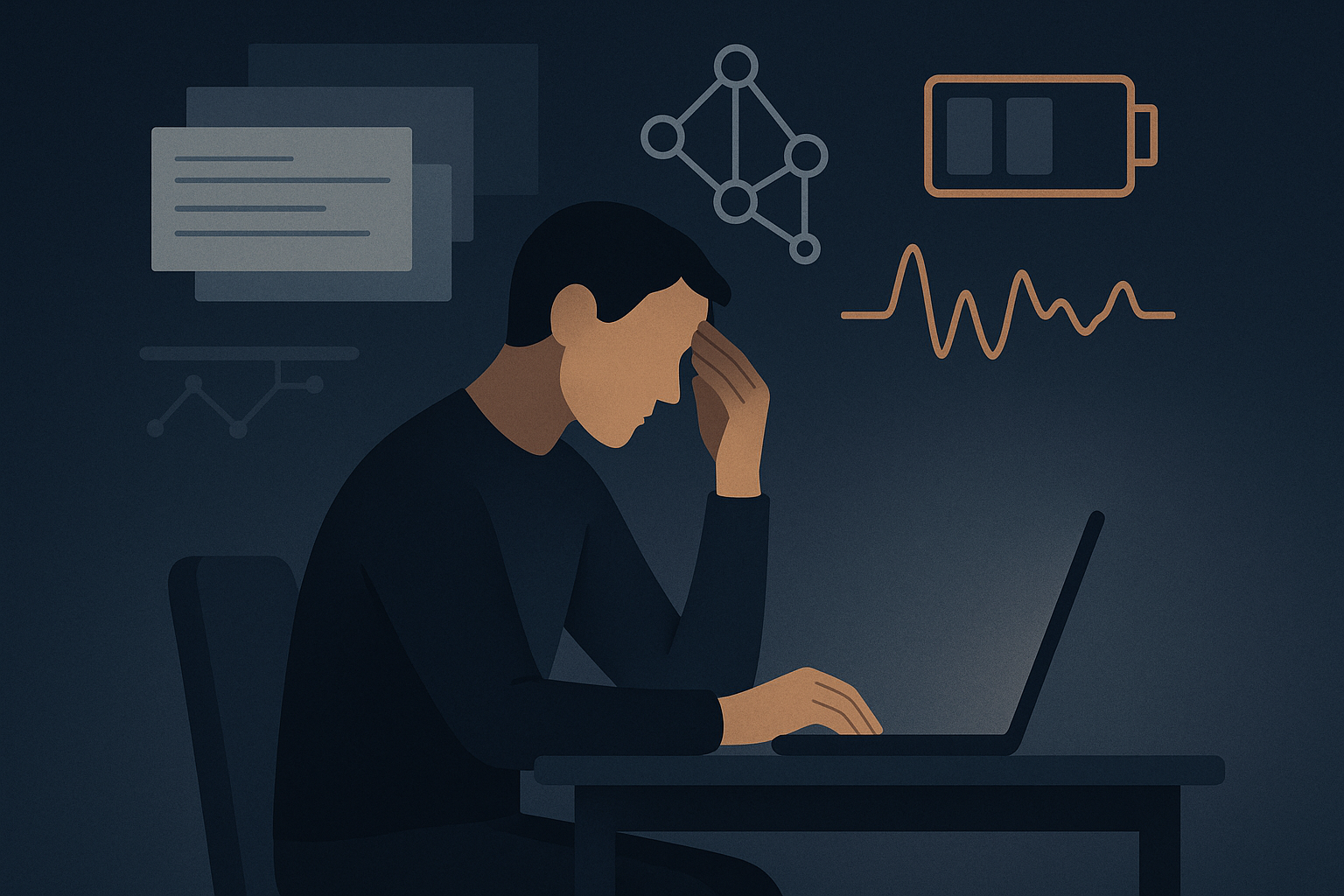
Stress-related muscle tension isn’t just “stiffness”: it’s often a regulation pattern. The body increases muscle tone to stabilize, contain, prepare for action, or compensate for prolonged mental load. When this setup becomes chronic, it can lead to pain, reduced mobility, headaches, sleep disturbances, and a drop in cognitive performance.
This test does not provide a diagnosis and does not replace a clinical assessment. Its purpose is to build a functional map: where tension accumulates, when it increases, what maintains it, and how much recovery you’re “paying back later.”
What we measure (and what we don’t)
Three profiling axes
- Stress load (axis_stress_load): the intensity and continuity of stressors, plus physiological reactivity.
- Recovery debt (axis_recovery_debt): how much the system struggles to return to baseline (sleep, breaks, decompression, morning stiffness).
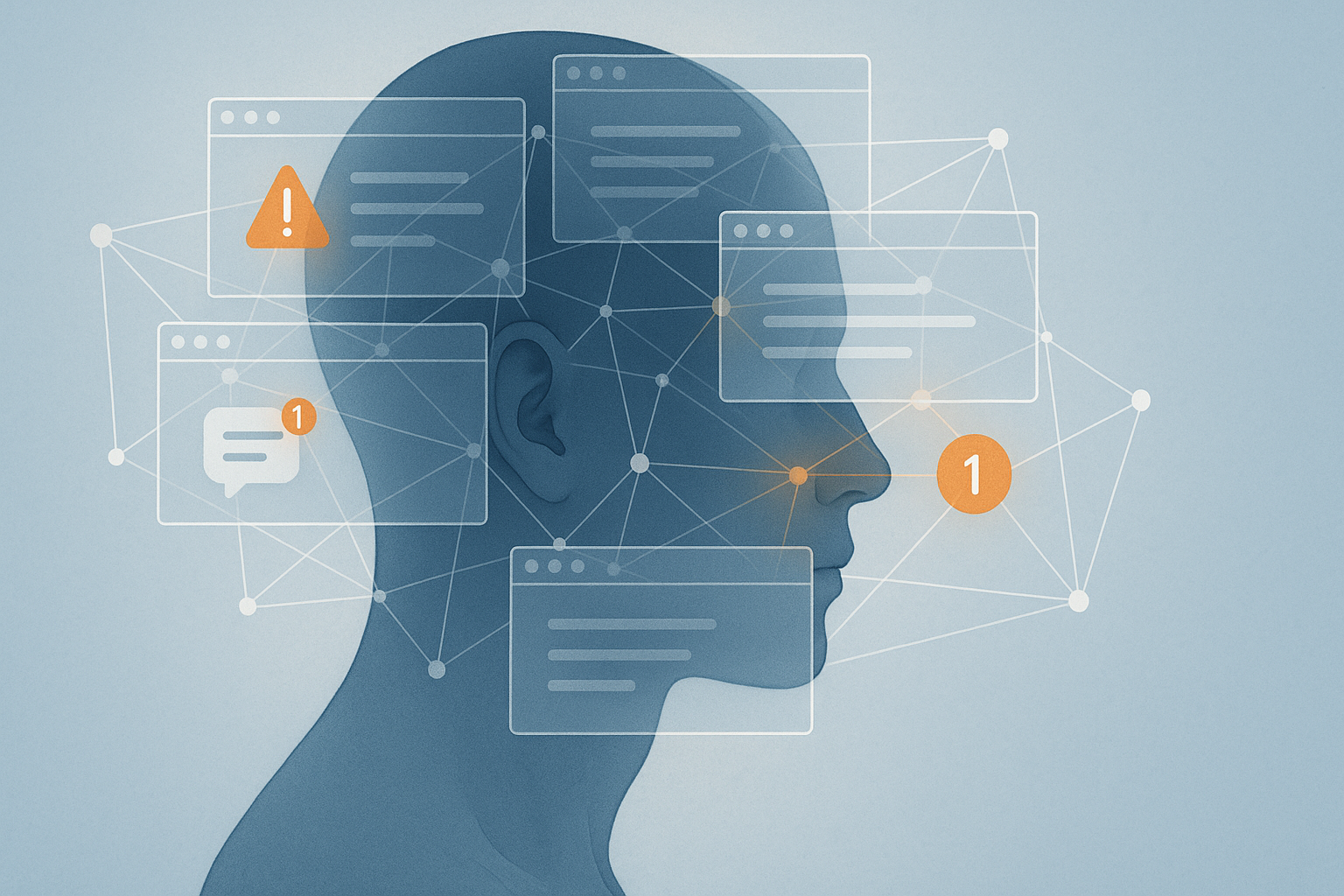
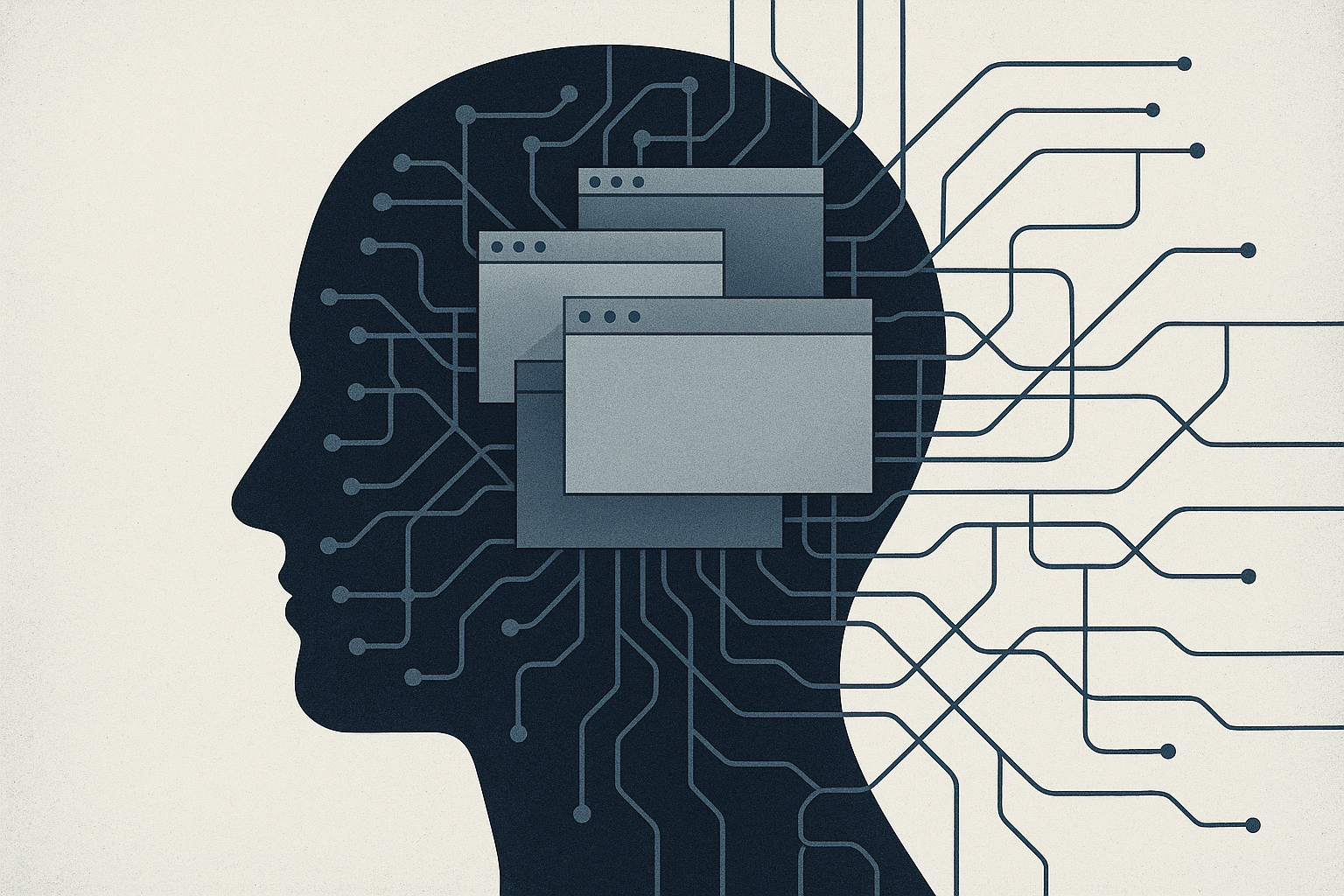
- Cognitive overload (axis_cognitive_overload): attentional fragmentation, rumination, overcontrol, difficulty “switching off” your thoughts.
Expected output
You’ll get a profile that links muscle tension and stress regulation. The goal is to identify realistic levers: reduce load, increase recovery, or decrease cognitive overload. Tension often persists because people address the symptom (occasional stretching) without changing the mechanism that fuels it.
How to answer to get a useful result
- Answer with the last 2 weeks in mind, not “in general.”
- If you’ve had an acute event (flu, injury, moving house), factor it in: it can affect sleep and muscle tone.
- If you’re torn between two options, choose the one that best reflects what happens most often in terms of frequency.
Interpretation: what tension can mean
Common body patterns (non-diagnostic)
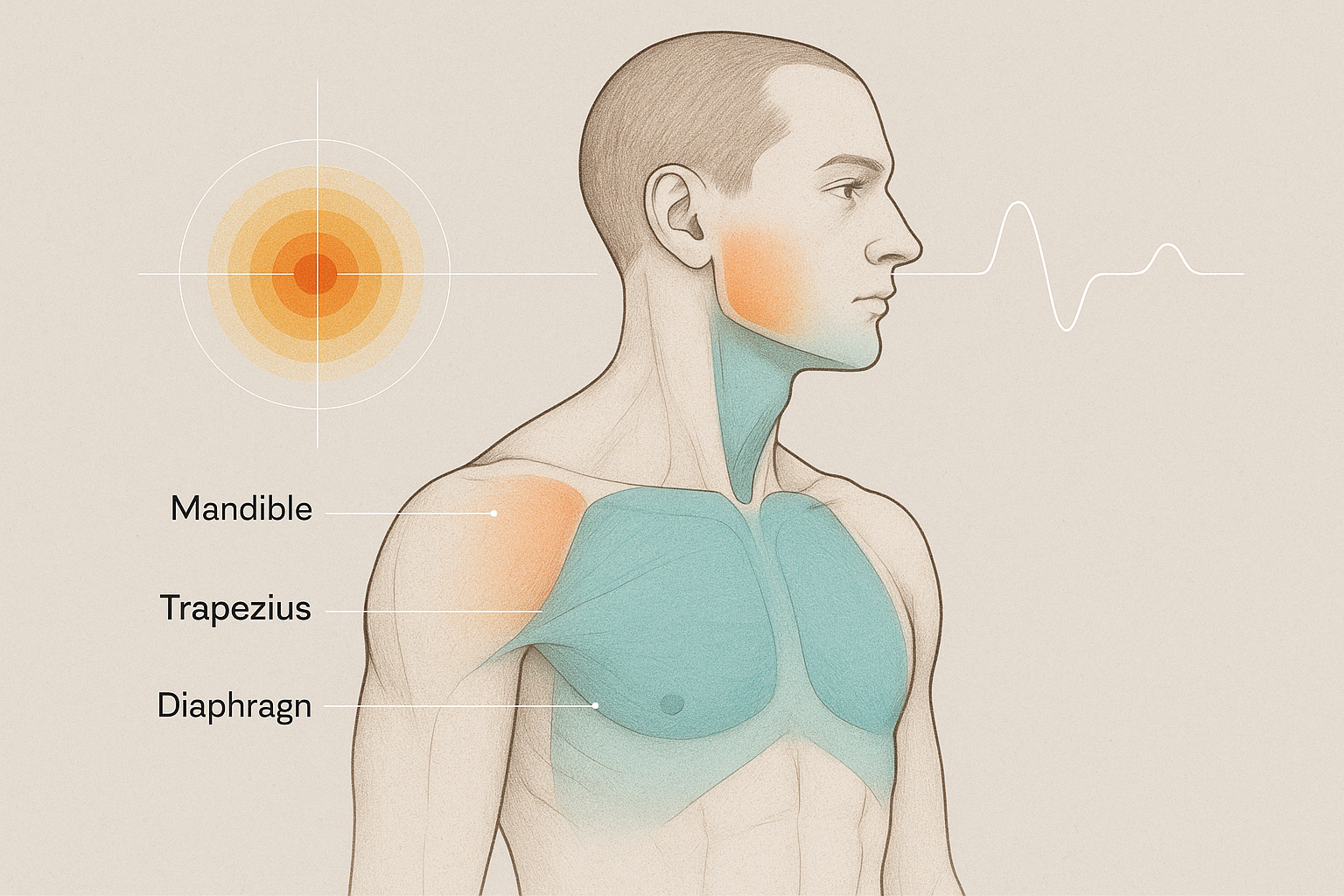
- Neck/shoulders: vigilance, sustained load, a “protective” posture, computer work without micro-breaks.
- Jaw (clenching/bruxism): control, emotional holding, nighttime activation, non-restorative sleep.
- Diaphragm/chest: upper-chest breathing, somatic anxiety, difficulty “letting go.”
- Lower back: fatigue, postural compensation, elevated baseline tension, insufficient recovery.
The point isn’t “where it hurts,” but when it increases and what maintains it: load, recovery, or cognitive overload.
When it makes sense to follow up with a professional
Consider a medical, physiotherapy, or dental consultation if you have one or more of the following: persistent nighttime pain, tingling or loss of strength, new or worsening headaches, joint locking, clenching with dental damage, fever, or unexplained weight loss. If tension is associated with intense anxiety or significant insomnia, psychological support may also help.
Recommended next steps (not generic)
- Reduce cognitive friction: keep a single priority list, create notification-free windows, and do an intentional end-of-day shutdown (5 minutes).
- Micro-recovery: take 2–3 short breaks per day (2–4 minutes) with gentle mobility and a long exhale. The goal is to lower muscle tone, not to “stretch” forcefully.
- Baseline signal: choose one simple indicator (morning stiffness, clenching, raised shoulders) and track it for 7 days.
If you want a broader read, you can combine this with the stress profile or the sleep and recovery test.