Why this test exists
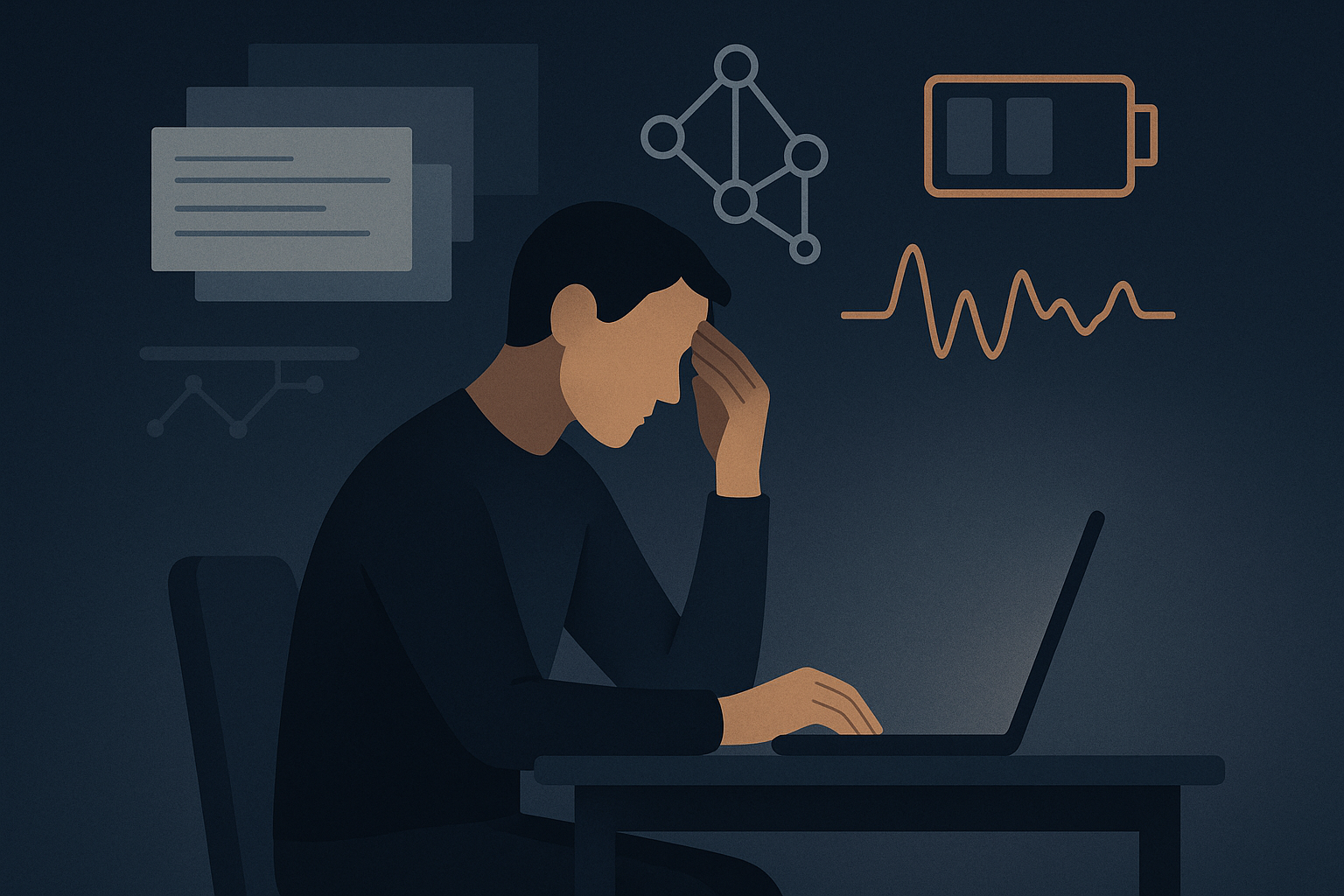
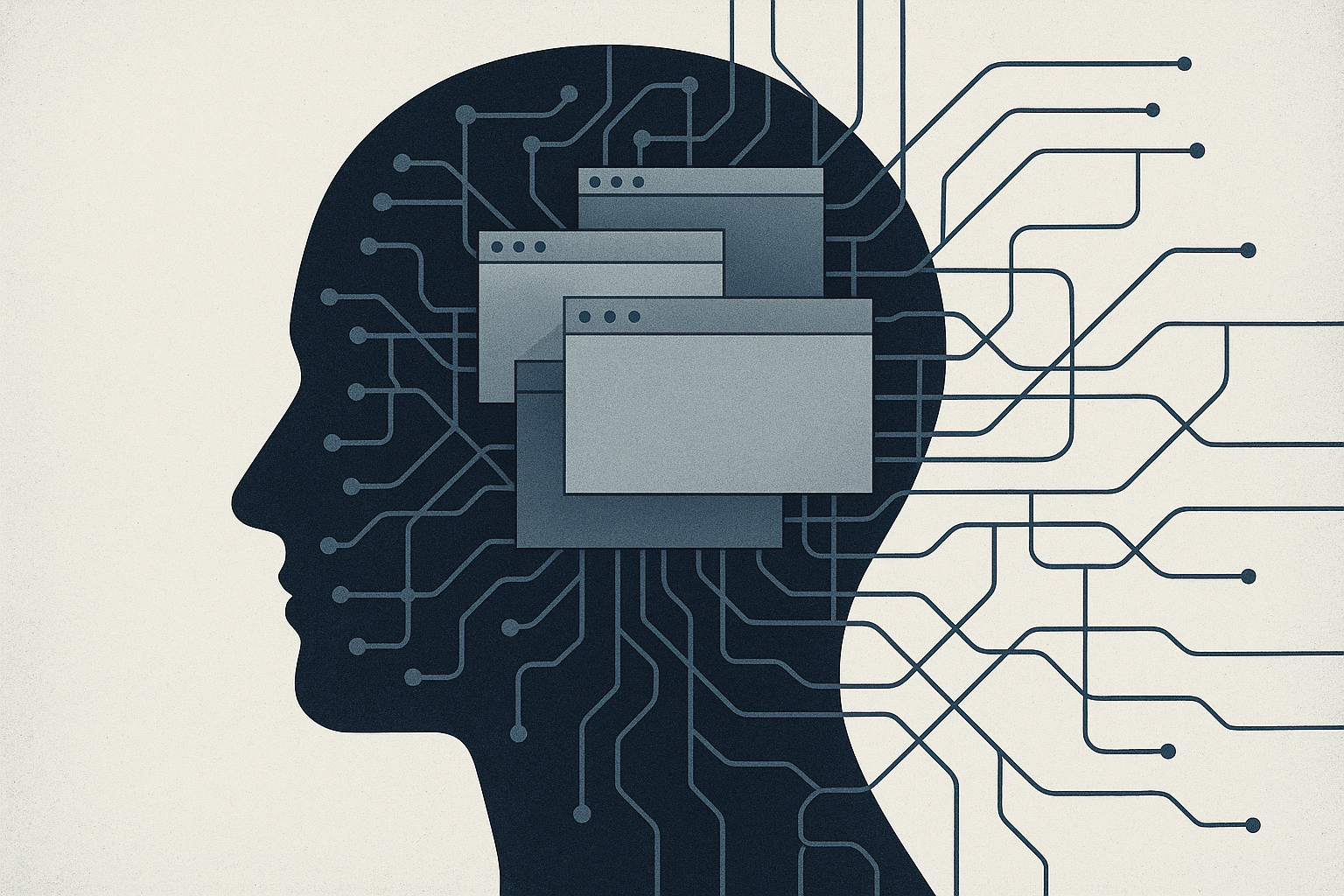
Multitasking isn’t just “doing a lot of things.” It’s repeated context switching: moving from one request to another, from one window to another, from one problem to another. This constant switching has a measurable cost: it reduces the quality of attention, increases errors, amplifies decision fatigue, and can alter the physiological signals of recovery.
This test doesn’t assess your productivity. It assesses the load profile you’re placing on the mind–body system and how effectively you’re able to recover. The goal is to make visible patterns that are often normalized (“it’s just a busy period”) until they become chronic.
What it measures (and what it doesn’t)
Profiling axes
- Stress load (axis_stress_load): intensity and continuity of demands, time pressure, reactivity, and a sense of urgency.
- Recovery debt (axis_recovery_debt): quality of rest, decompression, ability to “switch off,” signs of incomplete recovery.
- Cognitive overload (axis_cognitive_overload): attentional fragmentation, switching costs, working-memory saturation, mental noise.
Not a diagnosis
The result does not replace a clinical assessment. It is meant to guide observation: which conditions fuel overload, which signals sustain it, and where to intervene with greater precision.
How to answer to get a useful profile
- Consider the last 14 days, not your ideal “typical” day.
- Answer based on frequency and impact, not how it “should” be.
- If you work in a high-interruption environment, don’t normalize it: describe what actually happens.
Interpretation: three recurring profiles
1) High load + low recovery
Multitasking becomes a stress accelerator: attention fragments, the body stays in alert mode, and recovery doesn’t compensate. The main risk here is chronicity (irritability, insomnia, sustained performance decline).
2) High cognitive overload with “moderate” stress
You don’t always feel “under pressure,” but your mind is full: too many micro-decisions, too many open windows, too many things to remember. The risk is silent fatigue: procrastination, trivial mistakes, difficulty getting started.
3) High perceived stress, but overload isn’t dominant
Here, the problem may be more related to urgency, responsibility, and perceived threat than to fragmentation. Multitasking becomes a symptom (an attempt at control) rather than the primary cause.
Signals not to ignore
- Mental noise even in the absence of stimuli (thoughts that “spin” without moving forward).
- Ineffective recovery: you sleep but don’t feel restored.
- Reactivity to interruptions: irritation, snapping, the need to check.
- Reduced depth: you do many things, but few reach a “finished well” state.
What you’ll do with the result
The value of the test lies in linking observable behaviors (interruptions, switching, notifications, micro-tasks) to functional effects (fatigue, errors, insomnia, irritability, reduced clarity). Based on the profile, you can choose targeted interventions: reducing interruptions, redesigning attention windows, active recovery, sleep hygiene, managing decision load.
If you want to go deeper, you can compare this profile with other related tests: Stress and recovery and Attention and focus.