Stress

Test: Stress from digital overstimulation (load, recovery, cognitive overload)

18 questions 8 min56 people have taken this test
Test: Stress from digital overstimulation (load, recovery, cognitive overload)

Assess how notifications, multitasking, and continuous content consumption affect stress, recovery debt, and cognitive overload. Results geared toward awareness and autonomy.

Sign up or log in to take the test

Registration is required to start any test.

What this test analyzes

Stress load
Index of pressure and reactivity triggered by the digital ecosystem: perceived urgency, underlying tension, irritability, and difficulty delaying gratification.
Recovery debt
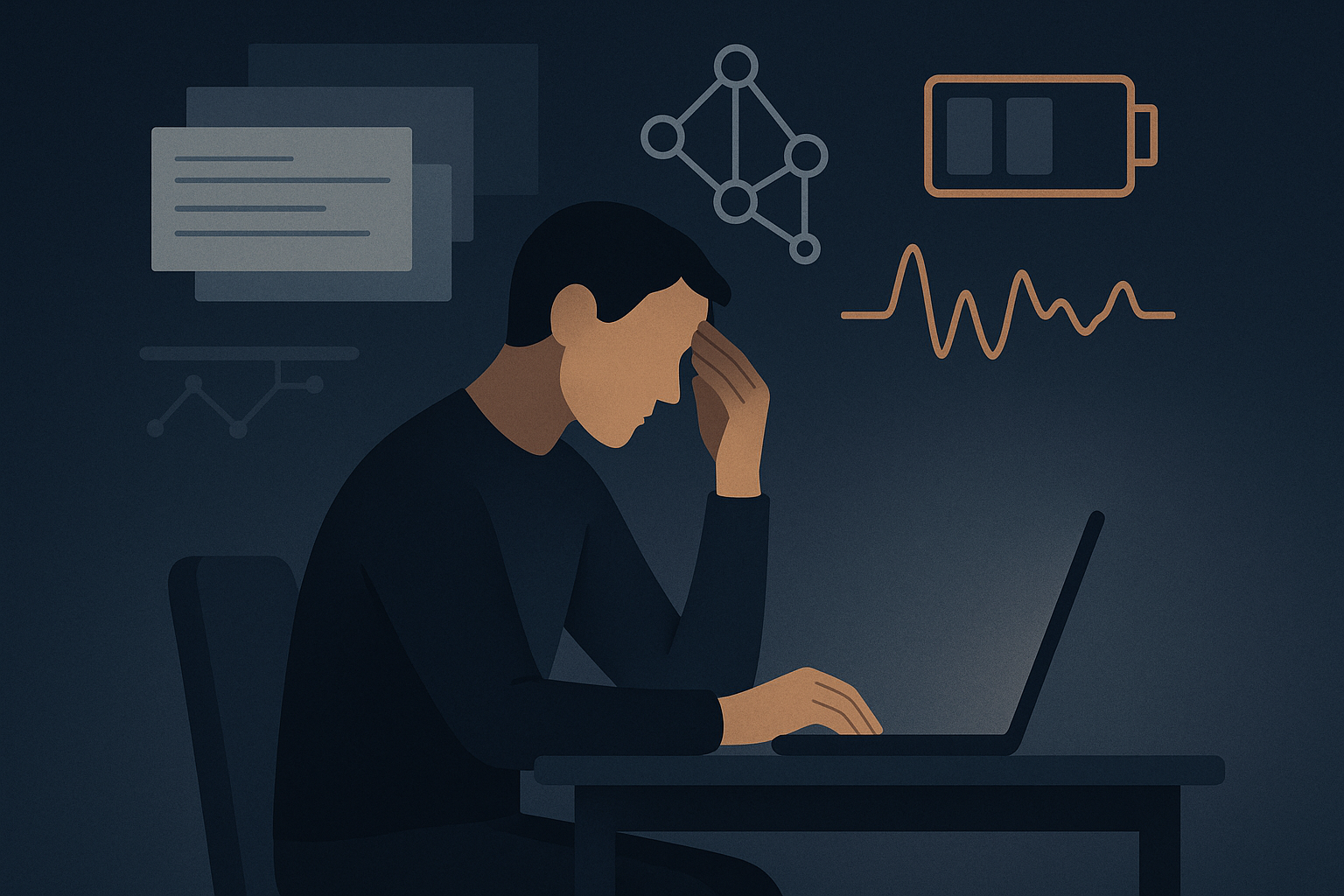
Index of inadequate recovery relative to the workload: shallower or fragmented sleep, ineffective decompression, difficulty “switching off,” and non-restorative breaks.
Cognitive overload
Index of attentional and executive overload: frequent task switching, reduced continuity, preventable errors, unstable working memory, and difficulty with slow-paced tasks.

Why take a digital overstimulation test

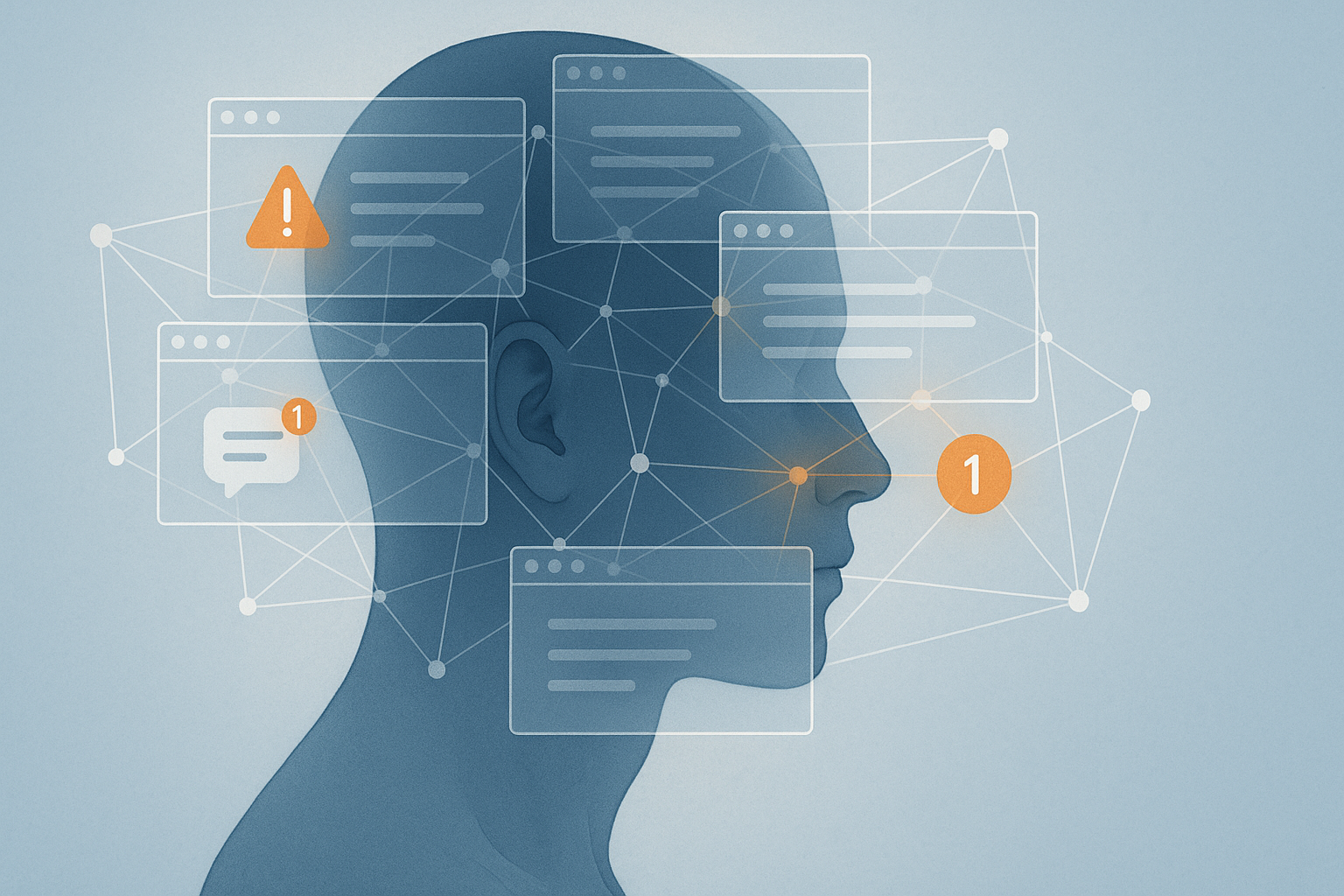
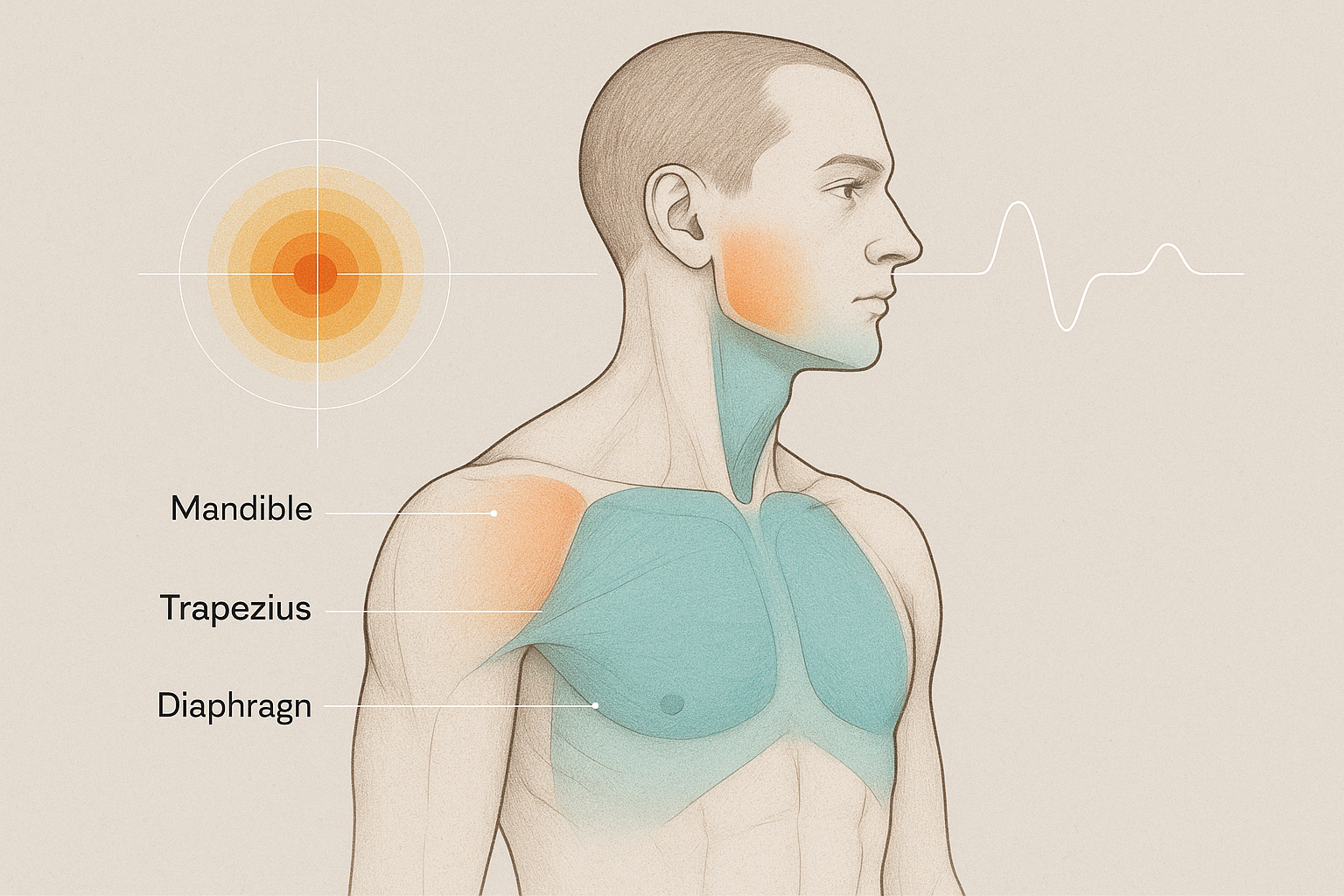
Digital overstimulation isn’t just “too much screen time” in a generic sense: it’s a high-frequency input environment (notifications, feeds, messages, micro-interruptions, task switching) that can change how the nervous system regulates attention, arousal, and recovery. The effects aren’t always obvious: they often show up as a mix of background tension, mental fatigue, and reduced sleep quality.

This test is designed to highlight three measurable, useful dimensions:

  • Stress load (axis_stress_load): how much the digital ecosystem increases pressure, urgency, reactivity, and fragmentation.
  • Recovery debt (axis_recovery_debt): how much recovery (sleep, breaks, decompression) falls short relative to the load.
  • Cognitive overload (axis_cognitive_overload): how much your mind is operating beyond optimal capacity (too many contexts, too many decisions, too many interruptions).

What it measures (and what it doesn’t)

It measures behavioral patterns and subjective signals consistent with attentional overload and incomplete recovery. It does not measure clinical diagnoses (anxiety, depression, ADHD, sleep disorders). If symptoms are intense, persistent, or interfere with work or relationships, treat the test as an orienting signal, not a conclusion.

How to fill it out

  1. Answer with the last 2 weeks in mind (not “how you are in general”).
  2. If a question feels ambiguous, choose the option that describes what happens most often.
  3. Don’t optimize your self-image: the usefulness of the result depends on accuracy.

How to read the results (interpretive logic)

The final profile combines three axes. Some common configurations:

  • High stress + Low recovery: risk of “functional chronic tension” (you keep going, but at an increasing cost).
  • High cognitive overload + Medium stress: performance is possible but fragile; mistakes, procrastination, and irritability increase as complexity rises.
  • Recovery debt with not-very-high stress: often linked to micro-erosion of rest (fragmented sleep, non-restorative breaks, decompression replaced by scrolling).

To go deeper, you can compare this profile with other tests on the platform: Sleep and recovery and Attention and focus.

Practical indicators to track (without fooling yourself)

During the week after the test, track these indicators: you don’t need “good intentions,” you need measurability.

  • Start latency: how much time passes between intending to start a task and actually starting.
  • Switching: how many times you change context in 30 minutes (app, tab, chat, email).
  • Real recovery: after a break, do you come back clearer-headed, or just “less bored”?
  • Reactivity: how often you interrupt yourself to respond immediately, even when there’s no objective urgency.

Methodological note (why the questions are phrased this way)

The questions alternate between: (1) exposure (frequency and intensity of stimuli), (2) response (tension, irritability, urgency), (3) cognitive cost (errors, working memory, decision fatigue), and (4) recovery (sleep, decompression, ability to “switch off”). This reduces the risk of answers based only on vague, general impressions.
Frequently asked questions

What exactly is meant by “digital overstimulation”?
It is a condition in which the amount and frequency of digital inputs (notifications, feeds, messages, task switching) exceed the attentional system’s capacity to maintain continuity and the recovery system’s capacity to bring arousal back to baseline levels. It does not depend only on screen time, but on the fragmentation and unpredictability of stimuli.
If I work on a computer all day, does the test automatically penalize me?
No. The test distinguishes between unavoidable exposure (work) and patterns that increase load and overload: unnecessary interruptions, reactive multitasking, lack of focus blocks, decompression replaced by continuous consumption. Two people with the same screen time can have very different profiles.
What is the difference between stress, recovery debt, and cognitive overload?
Stress (load) concerns pressure, urgency, and physiological/psychological activation. Recovery debt concerns insufficient sleep and restorative breaks relative to the load. Cognitive overload concerns saturation of working memory and attention (too many contexts, too many decisions, too many interruptions), with a drop in executive quality.
Can I have high cognitive overload without feeling “stressed”?
Yes. Some people maintain a relatively stable emotional tone but pay in terms of errors, slower decision-making, procrastination, difficulty keeping track, and a need for stimuli to “reactivate.” In these cases, the overload is more operational than emotional.
How reliable is a self-assessment test?
It is useful for identifying recurring patterns and areas of perceived imbalance, especially if it refers to a short period (the last 2 weeks). It does not replace objective measures (sleep, HRV, notification logs) or clinical assessments. Its strength is making visible behaviors and costs that are often normalized.
What can I do if the result indicates high recovery debt?
The first step is to distinguish between: (1) insufficient recovery in quantity (too little sleep/too few breaks) and (2) insufficient recovery in quality (breaks full of stimuli, sleep fragmented by checking, decompression replaced by scrolling). The test helps identify which of the two is more likely in your case, so you can intervene in a targeted way.
Can the test indicate a smartphone addiction problem?
It may flag behaviors consistent with loss of control (compulsive checking, use to modulate internal states, interference with sleep and tasks), but it is not a diagnostic tool. If use significantly compromises functioning or relationships, it is advisable to consult a professional.
How often does it make sense to repeat the test?
Every 2–4 weeks, especially if you are changing habits (notifications, focus windows, evening routine). Shorter intervals risk measuring day-to-day fluctuations; longer intervals make it difficult to link changes to specific causes.

Recommended tests

All tests