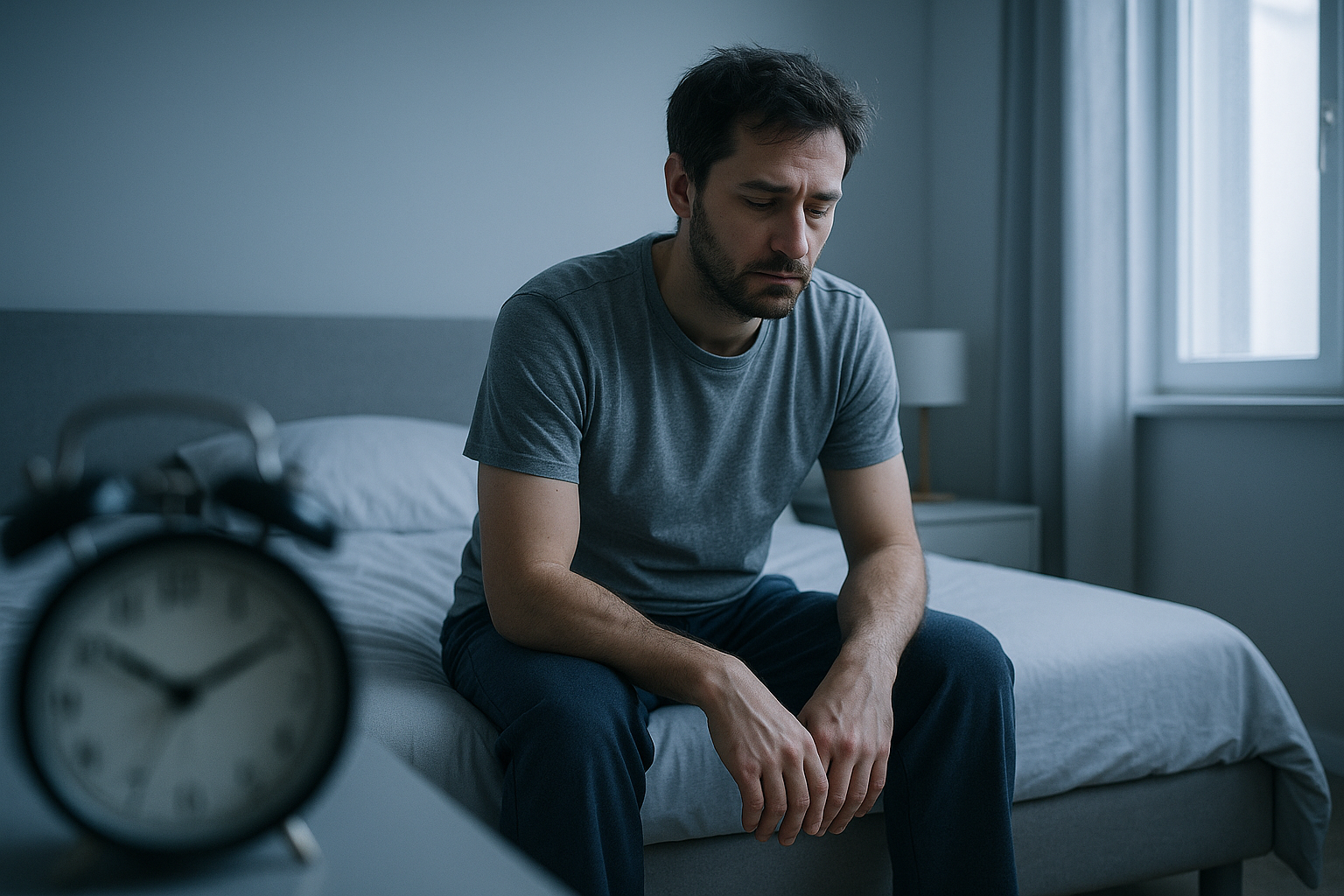
Premium test to understand why you wake up tired even after 8 hours: stress load, recovery debt, and cognitive overload. Results with patterns and practical levers.
Why you can wake up tired even after 8 hours
Sleep duration is only one variable. Feeling refreshed depends on continuity (micro-awakenings), depth (sleep pressure and sleep architecture), circadian alignment (biological timing), and the neurophysiological load you accumulate during the day. This test doesn’t look for “one single cause”: it builds a probability map of the factors that make sleep non-restorative.
What this test measures (3 mandatory axes)
- Stress load (axis_stress_load): how much your system stays in activation mode (hyperarousal) even when it “should” switch off.
- Recovery debt (axis_recovery_debt): how much physiological “back pay” you’re carrying (fragmented sleep, incomplete recovery, fatigue buildup).
- Cognitive overload (axis_cognitive_overload): how much your mind stays engaged (rumination, multitasking, decision fatigue), reducing the quality of your evening wind-down.
The result is not a diagnosis. It’s an actionable profile to identify patterns, imbalances, and realistic levers for change.
How to answer to get a reliable profile
- Answer with the last 2 weeks in mind, not your “worst night” or your “best night.”
- If you use trackers or apps, don’t force the data: what matters here is functional perception (energy, mental clarity, emotional stability).
- If you work shifts or keep irregular hours, answer based on your most common pattern.
Interpretation: what “8 hours” means in your case
Eight hours can mean:
- 8 hours in bed (but with long sleep latency and awakenings): recovery is often insufficient.
- 8 hours of fragmented sleep: disrupted architecture, more light sleep, less continuity.
- 8 hours at an unfavorable circadian phase: you fall asleep late relative to your chronotype and wake up “in full inertia.”
- 8 hours with hyperarousal: the body rests, but the nervous system never truly downshifts.
This test aims to distinguish between these scenarios, because they require different strategies.
Signs that deserve attention (without alarmism)
If morning tiredness persists, consider that it may be driven by factors that aren’t only “sleep-related”: disrupted nighttime breathing, pain, medications/substances, anemia or thyroid dysfunction, low mood, chronic stress. The test helps you understand how much the overall picture fits stress/recovery/cognition—and when it makes sense to consider a clinical consultation.
Related deep-dives (if useful): non-restorative sleep, stress and recovery.
What you get at the end
- A profile across the 3 axes with risk indicators and likely patterns.
- A list of high-yield levers (what to change first) and low-yield levers (what not to waste time chasing).
- A set of 7-day micro-experiments to test hypotheses (not generic advice).
Frequently asked questions
If I sleep 8 hours, why do I wake up feeling like I didn’t sleep?
Because duration doesn’t guarantee quality. You can have fragmented sleep (micro-awakenings), hyperarousal (high physiological activation), circadian misalignment (a schedule that doesn’t fit your chronotype), or an accumulated recovery debt. The test estimates which combination is most likely in your case.
Can this test replace a medical evaluation?
No. It’s a self-analysis tool to identify patterns and intervention priorities. If signs emerge that are consistent with sleep-related breathing disorders, persistent pain, marked daytime sleepiness, or rapid worsening, it’s advisable to discuss it with a professional.
What’s the difference between fatigue and sleepiness?
Sleepiness is the tendency to fall asleep (reduced alertness). Fatigue is reduced energy/efficiency without necessarily falling asleep. Waking up “heavy” with a foggy mind can be sleep inertia or incomplete recovery; intense daytime sleepiness may suggest fragmentation or insufficient quality.
How much do stress and rumination matter compared to caffeine and screens?
It depends on the profile. For many people, the limiting factor isn’t the screen light itself, but the cognitive/emotional activation associated with it (decisions, conflict, mental work). The test separates behaviors (e.g., caffeine, alcohol, timing) from internal load (hyperarousal and cognitive overload).
If I wake up tired but then feel better after 1–2 hours, what does that indicate?
It often indicates sleep inertia (waking in an unfavorable phase) or a system that takes time to “rev up.” If, instead, the fatigue stays steady all day, it’s more consistent with recovery debt or a high stress load.
Is it normal to wake up during the night and not remember it?
Yes. Brief micro-awakenings may not be remembered, but they reduce continuity and depth of sleep. Indirect clues: dry mouth, needing to urinate often, a feeling of light sleep, unrefreshing sleep.
How long does it take to see improvements if I change my habits?
Some signals (time to fall asleep, perceived quality) can improve in 3–7 days. Recovering accumulated debt can take 2–4 weeks, especially if stress remains high or if sleep timing is unstable.
If I exercise regularly, why can nighttime recovery still be poor?
Training and recovery aren’t the same. High loads, intense late-evening workouts, a calorie deficit, alcohol, or stress can keep activation high. The test assesses whether your fatigue is more “metabolic” (recovery debt) or more “neurocognitive” (hyperarousal and overload).